
AI Smart Devices Are Upgrading Gadget Life Fast
 Vortixel
8 minutes read
Vortixel
8 minutes read
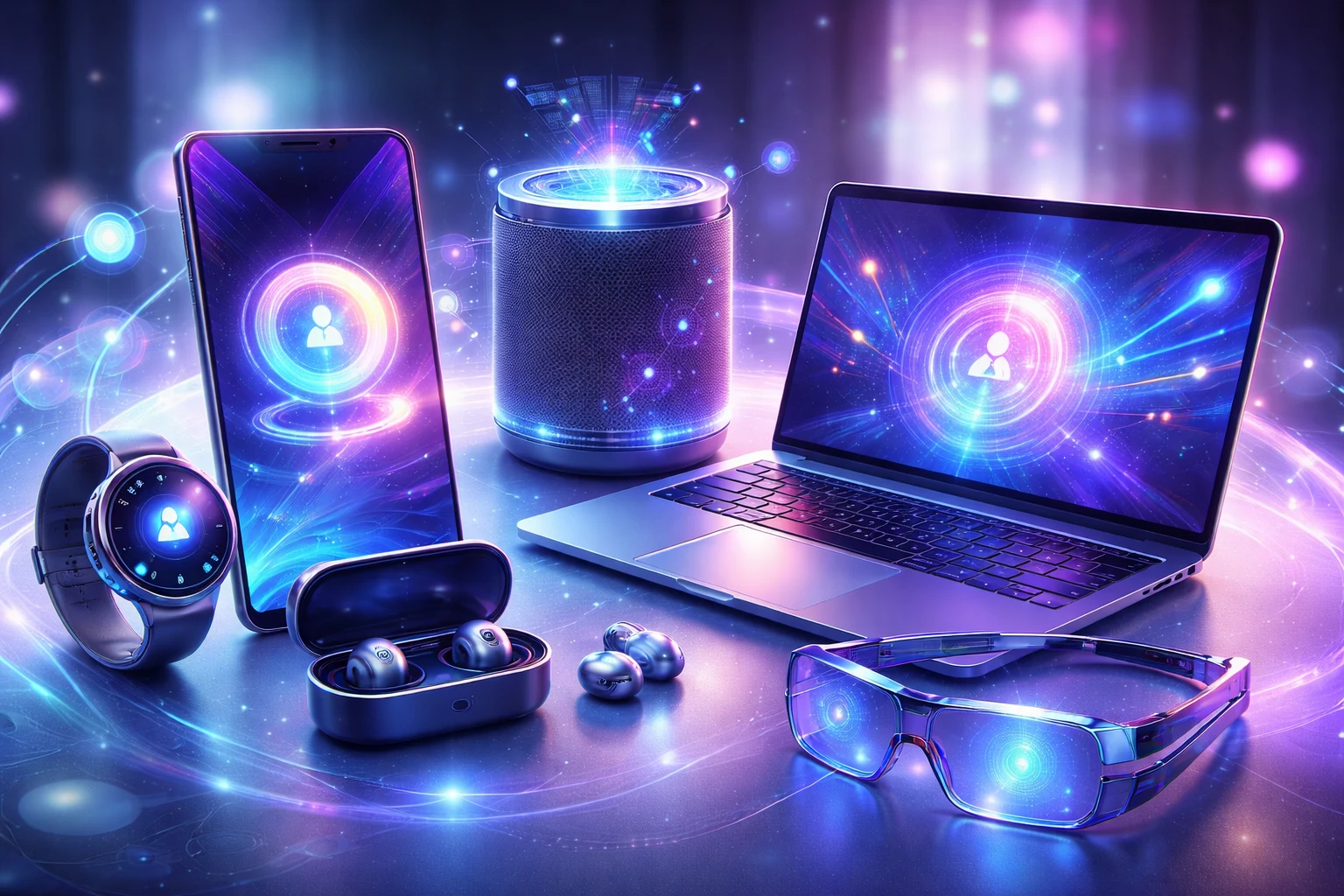
The gadget world is entering a new era, and this time the spotlight is no longer only on bigger screens, sharper cameras, or faster charging. The biggest shift happening right now is the rise of AI smart devices that can think, learn habits, automate tasks, and deliver more personal experiences. From smartphones and laptops to earbuds, wearables, smart glasses, and home devices, artificial intelligence is transforming everyday gadgets into something smarter, faster, and more useful. What used to feel futuristic now feels normal, and the trend is only getting stronger in 2026.
Consumers today are no longer impressed by raw specs alone. A phone with more megapixels means less if it cannot organize your day, optimize battery life, summarize meetings, or instantly edit content. This is exactly why AI devices are becoming the new premium standard. Brands are racing to integrate machine learning, on-device assistants, predictive software, and generative tools into their products. In simple terms, gadgets are leveling up from hardware tools into digital companions.
This market shift matters because it changes how people buy technology. Instead of asking how much RAM or storage a device has, buyers are starting to ask smarter questions. Can it write emails? Can it translate live conversations? Can it remove noise during calls? Can it automate workflow tasks? Can it understand my habits? If the answer is yes, the gadget suddenly becomes more valuable.
For users, creators, students, professionals, and casual consumers, this is one of the most exciting moments in tech. The future is not just smart devices. The future is AI-powered smart gadgets that adapt to people in real time.
Why AI Devices Are Exploding in 2026
Several trends are pushing this movement forward. First, AI chips are getting more efficient. Processors from major brands now include dedicated neural engines designed to handle AI tasks directly on the device. That means faster responses, better privacy, and less need to send data to the cloud.
Second, users now expect convenience. People are busy, overloaded with notifications, and constantly multitasking. Devices that can reduce friction instantly win attention. If a phone can summarize 100 messages in seconds, that becomes a killer feature.
Third, software ecosystems are more mature. In earlier years, many AI features felt like demos. In 2026, they feel practical. AI can now sort photos intelligently, detect scams, improve calls, suggest writing changes, generate presentations, schedule routines, and even coach productivity habits.
Fourth, competition is intense. Every major tech brand wants to own the AI hardware conversation. That means consumers benefit from faster innovation and more options.
Smartphones Are Becoming Personal AI Assistants
The smartphone remains the center of digital life, so naturally it is the biggest battlefield for AI innovation. Today’s premium phones are doing far more than calling, texting, and social media.
Modern AI smartphones can now:
- Rewrite messages in different tones
- Summarize long emails instantly
- Remove unwanted objects from photos
- Generate wallpapers based on prompts
- Translate calls in real time
- Optimize battery use based on habits
- Detect suspicious links or scam messages
- Organize files automatically
- Suggest better camera framing
This matters because users interact with phones hundreds of times per day. Even small AI improvements save time constantly.
Instead of needing five apps to do five jobs, one AI phone can do everything faster. That is why flagship devices in 2026 are positioning themselves less as phones and more as intelligent life hubs.
Laptops Are Quietly Becoming Productivity Monsters
Phones get the headlines, but laptops may be seeing the most dramatic AI transformation. Students, office workers, freelancers, coders, editors, and creators are demanding machines that do more than run programs.
New AI laptops now offer:
- Auto-transcription during meetings
- Background noise removal
- Webcam eye-contact correction
- Battery optimization based on workflow
- Smart file search using natural language
- Writing assistance across apps
- Image generation tools
- Fast local AI processing without cloud delay
This is huge for professionals. Imagine searching thousands of files by typing, “Find the sales deck I edited last month with the blue chart.” AI can now help with that.
The result is clear. Productivity devices are no longer about typing speed alone. They are about how much friction AI removes from work.
Wearables Are Getting Smarter Than Ever
Wearables used to focus mainly on steps, heart rate, and notifications. That is changing fast. AI is helping watches, rings, earbuds, and health bands become more predictive and useful.
Examples include:
- Sleep coaching based on behavior trends
- Stress alerts before burnout signs worsen
- Personalized workout recommendations
- Adaptive audio modes in earbuds
- Real-time language translation through earbuds
- Smarter voice commands
- Context-aware reminders
This creates a more seamless relationship between humans and technology. Devices no longer wait for commands. They begin to anticipate needs.
That is the true promise of AI smart gadgets.
Smart Home Devices Are Finally Becoming Useful
For years, some smart home products felt like gimmicks. People bought them, used them for a week, then forgot them. AI is changing that story.
Modern smart homes can now learn patterns such as:
- Preferred room temperatures
- Lighting moods by time of day
- Security behavior anomalies
- Energy-saving opportunities
- Grocery restock reminders
- Voice preferences for family members
- Smarter automation routines
Instead of manually setting dozens of rules, users can simply live normally while AI learns routines and improves the home experience over time.
That shift from manual automation to adaptive intelligence is why smart homes feel relevant again.
Why Consumers Are Willing to Pay More
One of the most interesting trends in 2026 is that many buyers are willing to pay premium prices for AI-enabled gadgets. Why? Because time is expensive.
People calculate value differently now. A cheaper device that wastes time can feel more expensive than a premium device that saves hours each month.
For example:
- Faster editing saves creators time
- Better automation helps business owners
- Smarter organization helps students
- Health insights benefit busy adults
- AI search reduces frustration
When technology actively improves daily life, users accept higher pricing.
That is why AI devices are upgrading gadget status from optional luxury to productivity investment.
The Rise of On-Device AI
Cloud AI is useful, but on-device AI is where things get serious. This means the intelligence runs directly on the gadget instead of sending everything online.
Benefits include:
- Faster speed
- Better privacy
- Lower latency
- Offline functionality
- Reduced dependence on servers
- More responsive user experience
This is especially important for smartphones and laptops where instant reactions matter.
Imagine editing photos, summarizing notes, or translating speech without internet delay. That convenience becomes addictive quickly.
Gen Z Loves Smart Gadgets With Purpose
Gen Z consumers are helping drive this trend because they care less about empty branding and more about usefulness. They want tech that works smarter, not just looks expensive.
What attracts younger buyers:
- Content creation tools
- Better cameras with AI editing
- Productivity boosts for side hustles
- Language tools for global work
- Gaming optimization
- Battery efficiency
- Personalization features
A device that helps build content, manage freelance work, study faster, and create income naturally feels more valuable.
That is why AI gadgets connect strongly with younger markets.
The New Premium Feature Is Intelligence
A few years ago, premium meant metal build quality, ultra-thin design, and top-tier cameras. Those still matter, but the definition has changed.
Now premium means:
- How smart it feels
- How much time it saves
- How personalized it becomes
- How smoothly it adapts
- How many tasks it automates
- How private the AI system is
This is a major industry shift. Hardware specs still matter, but intelligence is becoming the emotional selling point.
Challenges the Industry Must Solve
Despite the hype, AI devices still face real challenges.
Battery Drain
Running local AI models can consume power. Brands need smarter efficiency.
Privacy Concerns
Users want convenience but do not want excessive data collection.
Feature Overload
Some companies add AI tools nobody uses. Consumers notice quickly.
Pricing Pressure
Advanced chips and memory costs can make devices expensive.
Trust
If AI gives poor summaries, wrong recommendations, or weak outputs, users lose confidence.
The winners in this market will be brands that focus on practical AI, not flashy AI.
What Buyers Should Look for in 2026
If you are shopping for a new gadget this year, ignore empty marketing phrases and ask real questions.
Before Buying an AI Device, Check This:
- Does the AI run on-device or only online?
- Are features useful daily or just demos?
- Does it improve battery life or hurt it?
- Is privacy clearly explained?
- Will software updates continue long-term?
- Does it integrate with your ecosystem?
- Will it save real time every week?
These questions help separate hype from value.
What Comes Next
The next wave of devices could be even more dramatic.
We may soon see:
- AI glasses with live navigation
- Real-time translation contact lenses
- Phones that plan your day proactively
- Earbuds acting as memory assistants
- Home robots powered by local AI
- Health wearables detecting illness early
- AI gaming handhelds adapting to player skill
Some of these sound futuristic, but many are already in development.
Why This Trend Is Bigger Than Gadgets
The rise of AI smart devices is not just another hardware cycle. It changes how people interact with technology itself.
For decades, users had to learn devices. Now devices are learning users.
That shift is massive. It means less menu hunting, fewer repetitive tasks, and more natural experiences. It also means gadgets move from passive tools to active partners.
That is why 2026 feels different from previous upgrade years.
Final Thoughts
The headline says it all: AI devices are emerging, and smart gadgets are leveling up fast. This is not a small trend or temporary marketing wave. It is a deep transition across phones, laptops, wearables, homes, and future hardware categories.
Consumers want more than specs. They want intelligence, speed, personalization, and real-life usefulness. Brands that understand this will dominate the next era of consumer tech. Brands that ignore it may look outdated very quickly.
For buyers, this is exciting news. The next gadget you purchase may not just be faster than the last one. It may actually help you think, work, create, and live better.
That is when technology stops being hardware and starts becoming truly smart.