
Luxury AI Wearables Define Gadget Trends
 Vortixel
15 minutes read
Vortixel
15 minutes read
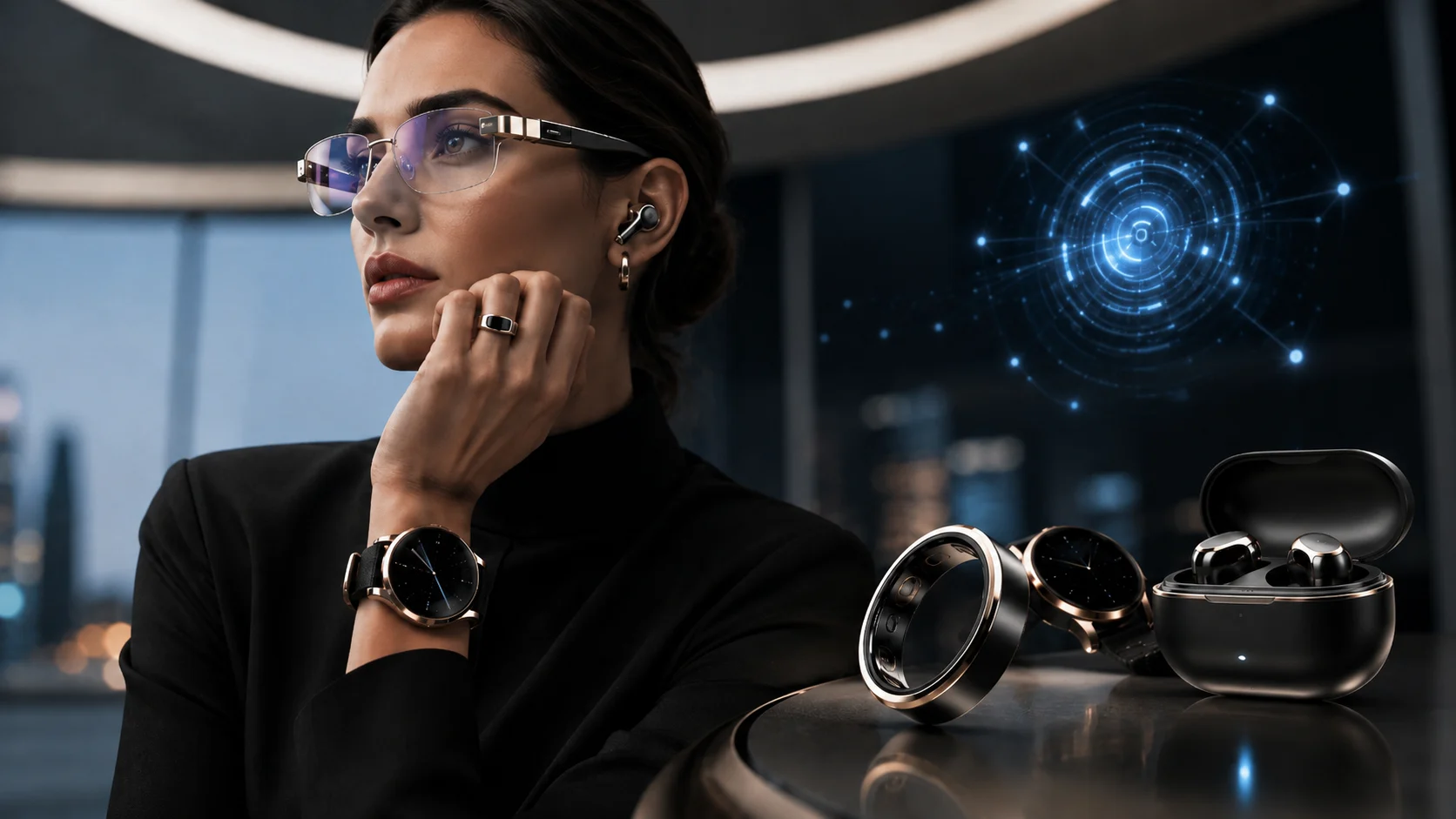
Luxury AI wearables are no longer just futuristic accessories sitting somewhere between fitness trackers and fashion experiments. In 2026, they are becoming one of the most visible signs that personal technology is moving closer to the body, the wardrobe, and the daily rhythm of modern life. The shift is not only about smarter sensors or prettier hardware, but about how devices begin to feel less like tools and more like silent companions. For years, smartphones carried the center of the digital lifestyle, but the newest generation of premium wearables is starting to challenge that position with devices that listen, learn, guide, and blend into personal style. This is why luxury AI wearables now sit at the intersection of design, wellness, productivity, and status in the global gadget conversation.
The rise of these devices feels different from the early smartwatch boom because the value proposition has changed. Back then, most people asked whether they really needed notifications on their wrists when their phones were already in their pockets. Today, the question is becoming more personal: can a wearable understand your health, schedule, environment, habits, and preferences before you even ask for help? That subtle shift is what makes the luxury side of the market especially interesting, because premium consumers are not only buying performance but also buying comfort, identity, and discretion. A ring, pair of glasses, pendant, watch, or ear-based device can now carry advanced computing without looking like a bulky science project. The best gadgets in this space are trying to disappear into everyday life while quietly making that life feel more responsive.
Why Luxury AI Wearables Are Becoming a 2026 Gadget Trend
The momentum behind luxury AI wearables comes from a rare mix of timing, technology, and consumer fatigue. People are surrounded by screens, alerts, apps, and endless digital friction, yet they still want smarter tools that help them move through the day with less effort. Wearables offer a more intimate answer because they can collect context without demanding constant attention. Artificial intelligence makes that context more useful by turning raw data into recommendations, reminders, summaries, and predictive insights. When those features are wrapped in premium materials, clean industrial design, and fashion-aware branding, the result feels less like another gadget and more like a lifestyle upgrade.
There is also a strong cultural reason this category is gaining attention. Modern consumers, especially younger professionals and design-conscious buyers, are more selective about the objects they carry. They want devices that look intentional, not random, and they expect technology to match their personal aesthetic. A plastic fitness band may still work perfectly well for step counting, but it does not always fit a dinner outfit, office look, travel wardrobe, or luxury fashion environment. Premium AI wearables solve that problem by treating design as part of the function, not as decoration added at the end. This matters because a wearable only becomes powerful when someone actually wants to wear it every day.
The 2026 wave also arrives at a moment when AI is becoming more ambient. Instead of sitting only inside chat windows or productivity apps, AI is moving into cameras, microphones, health sensors, earbuds, watches, smart glasses, and connected accessories. This creates a more natural interface for everyday assistance because the device already understands where it is placed and what role it plays. A smart ring can focus on sleep and recovery, glasses can support visual context and hands-free navigation, and earbuds can become personal assistants during calls, commutes, or workouts. The luxury layer pushes these functions into a premium experience where usability, privacy, comfort, and appearance all need to work together.
From Smartwatch Utility to AI Lifestyle Companion
The first big chapter of wearable technology was built around utility. Devices tracked steps, counted calories, showed phone notifications, measured heart rate, and pushed users to close activity rings. Those features still matter, but they no longer feel surprising on their own. The new chapter is about interpretation, personalization, and anticipation. A premium AI wearable does not simply tell you that you slept badly; it may explain how your routine, stress level, travel schedule, room temperature, and late-night screen time shaped that poor recovery. The point is not just data collection anymore, but decision support that feels specific enough to be worth wearing.
This is where AI-powered wearables begin to separate themselves from older connected devices. A traditional gadget waits for commands, but an AI-enhanced wearable can observe patterns and suggest small changes before they become obvious problems. It may notice that your heart rate variability drops after certain late meetings, or that your focus improves on mornings when you take a short walk before opening your laptop. It may help summarize voice notes, translate conversations, surface reminders, or quietly filter distractions. In the luxury category, the experience needs to feel calm rather than noisy, because premium users are not paying for more interruptions. They are paying for technology that understands restraint.
The most successful products in this space will likely be the ones that avoid trying to replace every other device at once. A wearable does not need to become a smaller smartphone to be useful. In fact, the magic often comes from doing fewer things better, faster, and more naturally. Smart glasses may win through visual assistance, smart rings through comfort and health tracking, earbuds through voice and audio intelligence, and watches through a balanced mix of apps, fitness, and communication. The luxury AI wearable trend is not a single product category but a broader design philosophy: make computing more personal, more elegant, and less demanding.
The Fashion Factor Behind Premium Wearable Tech
Fashion has always influenced technology, but wearables make that connection unavoidable. A phone can hide in a pocket, a laptop can sit in a bag, and a speaker can blend into a room, but a wearable lives directly on the body. That means shape, texture, color, size, weight, and social perception become part of the product experience. A device can have brilliant sensors and still fail if people feel awkward wearing it in public. This is why premium brands and tech companies are treating premium wearable tech as both a hardware challenge and a style challenge.
The luxury angle is especially powerful because wearable devices often become signals of taste. A refined smartwatch, minimalist ring, sleek pair of AI glasses, or beautifully engineered audio wearable can say something about how a person relates to technology. It can suggest that the user values innovation, but also cares about presentation and quality. Unlike older gadgets that celebrated visible techiness, today’s premium wearables often move toward subtlety. They are designed to look polished in a business meeting, casual brunch, gym session, or airport lounge without making the wearer feel like a walking prototype.
This does not mean every luxury AI wearable needs diamonds, gold finishes, or designer branding. True luxury in modern gadget culture is increasingly about material intelligence, seamless interaction, durability, comfort, and emotional fit. A lightweight frame that does not pressure the nose, a ring that feels natural during sleep, or earbuds that handle voice AI without awkward pauses can feel luxurious because they reduce friction. The category also benefits from the growing acceptance of wellness as a premium lifestyle marker. When a device promises better recovery, calmer productivity, smarter travel, or more graceful communication, it becomes more than a tech purchase. It becomes part of how people build a curated daily routine.
Health, Wellness, and the New Status Signal
One of the strongest engines behind luxury AI wearables is the wellness economy. Health data has become a daily language for many consumers, especially those who track sleep, readiness, stress, workouts, recovery, and energy levels. The appeal is not only about athletic performance, because many users are not trying to train like professional athletes. They are trying to understand why they feel drained, how to improve focus, when to rest, and how to make better lifestyle decisions. AI can make that information easier to digest by turning complex signals into clear guidance.
Luxury consumers often respond strongly to products that make self-optimization feel elegant rather than clinical. A premium ring or watch can transform biometric tracking into something subtle and socially acceptable. Instead of wearing a medical-looking device, users can wear something that feels like jewelry or a design object. That emotional difference matters because health tracking is deeply personal. The more intimate the data becomes, the more important trust, comfort, and design language become in shaping whether users keep the device on.
This also changes how status works in the gadget world. In the past, status often came from having the newest phone, the thinnest laptop, or the most recognizable logo. In 2026, status is starting to include how well someone manages time, wellness, attention, and personal energy. A luxury AI wearable fits that shift because it promises invisible advantage. It suggests that the wearer is not just connected, but aware of their body, their schedule, and their environment. That is a powerful message in a culture where burnout is common and attention feels increasingly expensive.
Smart Glasses, Rings, Earbuds, and the Next Form Factors
The wearable market is no longer defined by the smartwatch alone. Smart rings have gained attention because they are lightweight, screenless, and comfortable for sleep tracking. Smart glasses are becoming more interesting because they can bring cameras, audio, navigation, translation, and AI assistance into a hands-free format. Earbuds are evolving from audio accessories into intelligent companions for calls, language, contextual prompts, and real-time support. Each of these form factors points to the same future: technology that meets the user in the moment without demanding a full-screen interaction.
Smart rings may be the quietest example of this shift. They do not shout for attention, and that is exactly why they work for many users. A ring can collect sleep, temperature, heart rate, and recovery signals while staying almost invisible throughout the day. When AI is layered on top, the ring becomes less of a tracker and more of a wellness interpreter. For luxury buyers, the challenge is making the device feel like something worth wearing as an accessory, not merely tolerating as a sensor.
Smart glasses carry a different kind of promise because they sit close to how people naturally see and move through the world. The appeal is obvious: hands-free help, contextual awareness, real-time capture, and lightweight information without pulling out a phone. The challenge is also obvious because glasses are socially visible and deeply tied to identity. A premium pair must look good, feel balanced, protect privacy, and avoid making people around the wearer uncomfortable. This is why design restraint will be just as important as AI power in the next wave of wearable tech.
Earbuds may become one of the most practical entry points for AI wearables because people already accept them as everyday devices. They are useful during commuting, working, exercising, and social movement. With better voice models and contextual intelligence, earbuds can become tools for summarizing conversations, managing reminders, assisting with translation, and filtering noise in smarter ways. The luxury opportunity here is not only better sound quality but also smoother interaction and all-day comfort. A premium AI ear wearable needs to feel invisible until the exact moment it becomes helpful.
Privacy Will Decide Which Wearables People Trust
As AI wearables become more personal, privacy becomes one of the most important battlegrounds. These devices may process health metrics, location context, voice interactions, visual information, calendar patterns, and behavioral routines. That makes them powerful, but it also makes them sensitive. A premium product cannot rely only on beautiful hardware if users do not trust how their data is handled. In the luxury category, privacy is not a technical footnote; it is part of the product’s value.
The best devices will likely make privacy feel understandable and controllable. Users should know when cameras are active, when microphones are listening, what data is stored, what is processed on-device, and what is sent to the cloud. Clear controls matter because people do not want to read a long policy every time they wear something on their body. They want confidence built into the experience. For AI wearable devices, transparency may become as important as battery life, sensor quality, or design.
Social privacy is just as important as personal privacy. Smart glasses, audio wearables, and camera-enabled accessories can make people nearby feel recorded or analyzed, even when that is not happening. This creates a design challenge that goes beyond one user’s preference. Brands will need visible indicators, thoughtful defaults, and interaction patterns that respect public spaces. Luxury AI wearables must not only look elegant; they must behave elegantly in the real world.
What This Trend Means for the Gadget Industry
The growth of luxury AI wearables could reshape how gadget companies think about product ecosystems. Instead of pushing every function through a phone, brands may distribute intelligence across smaller devices that each understand a specific part of the user’s life. The phone remains important, but it becomes less like the only center and more like a hub. Wearables handle quick, contextual, body-based interactions, while larger screens support deeper work and entertainment. This creates a more layered gadget ecosystem where convenience comes from the right device handling the right moment.
For hardware makers, this means design and software can no longer be separated. A wearable with weak AI will feel expensive but shallow, while a powerful AI tool with poor comfort will sit unused in a drawer. Battery life, weight, charging habits, connectivity, app integration, data security, and fashion appeal all need to work together. The companies that succeed will be those that understand wearables as long-term relationships, not one-time novelty purchases. A device worn daily must earn trust every morning and justify its place every night.
The industry impact also extends to subscriptions and services. Many AI wearable experiences may depend on ongoing software intelligence, personalized coaching, cloud processing, or premium analytics. This can create recurring revenue for companies, but it also raises expectations for continuous improvement. Users paying luxury prices will not accept stagnant features or confusing paywalls forever. If a wearable promises intelligent assistance, that intelligence needs to feel alive, updated, and genuinely useful over time.
Practical Insights Before Buying a Premium AI Wearable
For consumers, the excitement around luxury AI wearables should come with a practical mindset. The first question is not which device looks the most futuristic, but which device fits your actual routine. Someone focused on sleep and recovery may get more value from a smart ring than from smart glasses. A frequent traveler may care more about earbuds with strong voice intelligence, translation features, and noise control. A productivity-focused user may prefer a smartwatch or AI assistant device that integrates cleanly with calendars, messages, and reminders.
- Comfort: A wearable only works if it feels good enough to wear daily.
- Battery life: Frequent charging can turn a premium device into a hassle.
- Privacy controls: Clear data settings matter more as AI becomes personal.
- App ecosystem: A wearable is stronger when it connects with tools you already use.
- Design longevity: Luxury tech should still feel wearable after the launch hype fades.
It is also worth thinking about whether the device improves your life without creating more noise. A good wearable should reduce friction, not add another stream of alerts. If the device constantly interrupts you, demands attention, or duplicates your phone without adding meaningful context, its luxury appeal will fade quickly. The smartest purchase is often the one that solves one or two real problems extremely well. In 2026, the best wearable may not be the loudest gadget in the room, but the one that quietly makes your day smoother.
The Bigger Cultural Shift Behind AI on the Body
The deeper story behind luxury AI wearables is about how people want technology to feel. For much of the digital era, innovation meant more screen time, more apps, more feeds, and more visible engagement. That model is starting to feel exhausting. Wearables suggest a different direction, where technology becomes more ambient, more selective, and more integrated into the body’s natural flow. This does not mean screens disappear, but it does mean users may expect everyday computing to become less disruptive.
There is something almost ironic about luxury tech becoming quieter at the same time AI becomes more powerful. The more capable the intelligence gets, the less users may want to see the machinery behind it. They do not want a wearable that constantly announces how advanced it is. They want a device that knows when to speak, when to stay silent, and when to simply collect enough context to be useful later. That kind of restraint is difficult to build, but it may define the next generation of premium gadget design.
This cultural shift also explains why storytelling matters in the wearable market. People are not just buying sensors; they are buying a narrative about who they are becoming. A wearable can represent a healthier routine, a sharper workday, a more stylish relationship with technology, or a more intentional way to manage attention. Luxury brands understand this emotional layer better than most traditional hardware companies. When that emotional intelligence meets strong AI engineering, the category becomes much more compelling.
Conclusion: Why Luxury AI Wearables Matter Now
Luxury AI wearables matter in 2026 because they show where personal technology is heading next. The future is not only about faster chips, sharper screens, or bigger apps, but about devices that understand context and fit naturally into everyday life. Premium wearables are turning AI into something people can wear, feel, trust, and style around. They are also forcing the gadget industry to think beyond raw specifications and toward comfort, privacy, design, wellness, and emotional value. That combination is why this trend feels less like a passing accessory wave and more like a new chapter in personal computing.
The most exciting part is that the category is still young enough to evolve quickly. Some products will overpromise, some will feel awkward, and some will disappear after the novelty fades. But the direction is clear: people want technology that helps without overwhelming them, and they want devices that look as thoughtful as they function. If brands can balance intelligence with restraint, and performance with elegance, luxury AI wearables could become one of the defining gadget stories of 2026. The next big device may not be held in the hand at all; it may already be on the wrist, finger, ear, or face, quietly learning how to make modern life feel a little more effortless.