iPhone Price Increase: Why Apple May Charge More
 Vortixel
13 minutes read
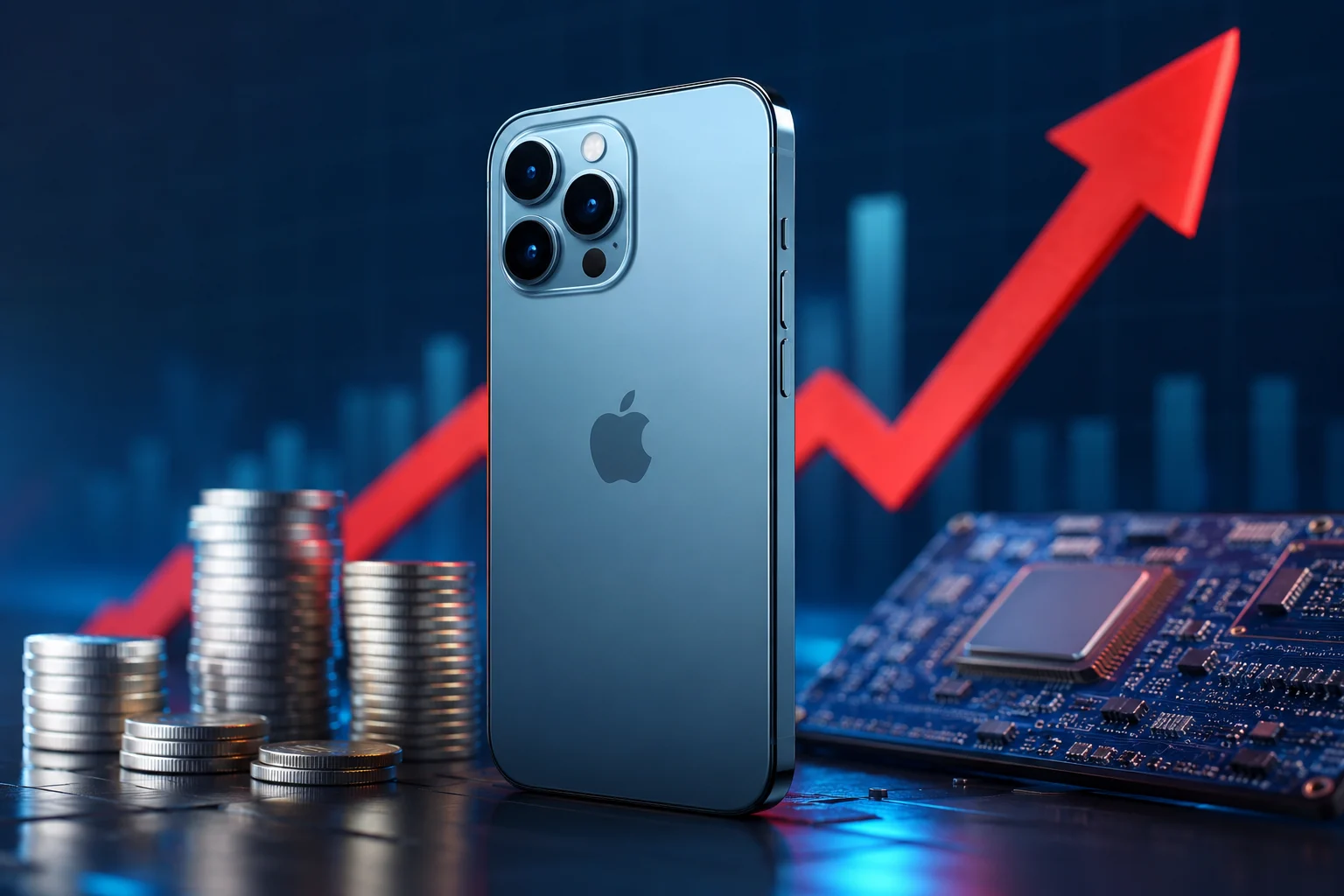
The next big iPhone price increase may not come from a flashy redesign, a titanium frame, or some futuristic camera trick. This time, the pressure is coming from something most buyers never see: the memory and storage chips buried inside the device. Apple has acknowledged that rising component costs are becoming harder to absorb, especially as the artificial intelligence boom keeps pulling critical hardware toward data centers and AI servers. For everyday users, that means the iPhone may soon feel even more premium at checkout, not just in the hand. The bigger story is not simply that Apple could charge more, but that the entire gadget market is entering a new era where AI demand can affect the price of the phone in your pocket.
For years, Apple has been able to make expensive devices feel almost normal. A Pro iPhone costing more than a laptop barely shocks people anymore, because the company has trained the market to see its phones as long-term tools, status symbols, cameras, gaming machines, and personal hubs all at once. But even Apple, with its massive supply chain power, cannot fully escape the cost of parts when the global chip market gets tight. Memory and storage are not bonus features that can be removed without consequence. They are the backbone of modern smartphones, and the demand for them is exploding far beyond the smartphone industry.
The Real Reason Behind the iPhone Price Increase
The main reason behind the possible iPhone price increase is the rising cost of memory and storage components. These are the parts that help your phone open apps quickly, save massive video files, run games smoothly, and keep AI features responsive. As companies build larger AI systems, they need huge amounts of advanced memory for servers, and that demand competes with consumer electronics. When AI data centers buy aggressively, suppliers have more leverage and less pressure to keep prices low for phone makers. That creates a chain reaction where Apple pays more, then eventually customers may pay more too.
This matters because Apple’s devices are no longer simple communication tools. A modern iPhone is expected to handle 4K video, console-style games, machine learning features, advanced photography, and years of software updates. All of that requires stronger internal hardware, and stronger hardware usually means more expensive components. Apple can optimize software better than almost anyone, but optimization cannot magically erase global supply pressure. If memory becomes more expensive at scale, the cost has to land somewhere, and Apple is signaling that the company may not keep absorbing it forever.
The timing also makes sense when you look at where smartphones are heading. Apple is pushing deeper into on-device intelligence, privacy-focused AI, smarter Siri experiences, and more personalized software features. These upgrades need more memory because AI tasks are heavier than basic app interactions. Even features that feel simple to users may require intense background processing, larger models, and faster data movement. In other words, the future iPhone is not just competing with Samsung, Google, or Xiaomi; it is competing with AI servers for the same supply chain resources.
Why AI Is Now Part of Your Phone Bill
The strange part of this story is that many consumers may pay more for AI even if they do not actively use AI features every day. The AI boom has pushed cloud companies, chipmakers, device brands, and investors into a race for computing power. That race depends on high-performance components, especially memory, storage, GPUs, and networking hardware. Even if a buyer only wants a reliable phone for photos, messaging, maps, and social media, the broader market can still influence the price. This is how AI quietly moves from a tech conference buzzword into a real cost on a receipt.
Smartphones have always been affected by supply chain cycles, but this one feels different because AI demand is massive and constant. During older chip shortages, the pressure often came from temporary disruptions, factory slowdowns, or sudden consumer demand. Now, the pressure is tied to a long-term buildout of AI infrastructure across the world. Tech giants are not buying chips for one holiday season; they are building data centers meant to power the next decade of software. That makes the cost environment more complicated for every company that still needs chips for consumer gadgets.
For Apple, this creates a tough balancing act. The company wants to market the iPhone as smarter, faster, more private, and more capable than ever. At the same time, it has to decide how much extra cost users will tolerate before an upgrade starts to feel unnecessary. Apple has one of the strongest brands in consumer tech, but even loyal users notice when prices climb. A small increase may pass quietly, while a larger jump could make people delay upgrades, choose older models, or look harder at trade-in deals.
Apple’s Pricing Power Is Strong, But Not Unlimited
Apple has something most phone makers can only dream of: pricing power. The iPhone is deeply tied to the Apple ecosystem, from iMessage and FaceTime to AirPods, Apple Watch, iCloud, and App Store purchases. Once someone is fully inside that ecosystem, switching is not just about buying another phone. It means changing habits, accessories, subscriptions, family sharing setups, and years of digital comfort. That loyalty gives Apple more room to raise prices than many competitors, especially in the premium smartphone segment.
Still, there is a limit to how far that power can stretch. A higher price may be easier to accept when the new device looks dramatically better or introduces a feature people instantly understand. It becomes harder when the reason is invisible component inflation. Consumers do not get excited about paying more because DRAM costs went up. That is why Apple will likely frame any future price change around experience, performance, AI capability, camera improvements, battery life, or design, rather than raw supply chain pressure.
This is where the marketing challenge begins. Apple rarely sells specs in a dry way, even when specs matter. The company sells moments, creativity, safety, privacy, and lifestyle upgrades. If prices rise, Apple will need to make the next iPhone feel meaningfully more valuable, not just technically more expensive to build. For buyers, that means paying attention to whether the upgrade truly changes daily use or simply arrives with a higher number on the price tag.
What This Means for iPhone Buyers
For anyone planning to upgrade soon, the possible iPhone price increase is a signal to think more strategically. Buying the newest model on launch day may still make sense for people who rely on the best camera, highest performance, and longest software support. But casual users may find better value in last year’s model, a refurbished iPhone, or a carrier promotion. The smartest move is not always buying the cheapest phone, but buying the device that gives the best value over the years you plan to keep it. If prices rise, that long-term value calculation becomes more important.
Storage choices will also matter more than before. Many buyers already struggle with whether to choose 128GB, 256GB, 512GB, or more. If storage components are part of the cost pressure, higher-capacity models could become even more expensive. That does not mean everyone should buy the smallest storage option and hope for the best. It means users should honestly review how they use photos, videos, games, cloud storage, and downloaded media before spending extra money.
Trade-in timing could become another practical factor. Apple and carriers often use trade-in offers to soften the emotional hit of high prices. When a new phone costs more, a strong trade-in value can make the upgrade feel manageable. However, older devices lose value over time, especially once several new generations arrive. Users who already planned to upgrade may want to compare trade-in offers early instead of waiting until their current phone feels too outdated.
The Smartphone Market Could Shift Around Apple
The possible price shift is not only an Apple story; it is a smartphone market story. If Apple raises prices because of memory and storage costs, other brands may face similar pressure. Android manufacturers also need advanced components, especially for AI-powered camera processing, gaming performance, foldables, and on-device assistant features. Some brands may absorb costs to compete, while others may raise prices quietly through higher storage tiers or reduced entry-level options. The end result could be a market where truly capable phones cost more across the board.
Premium phones may become even more separated from budget phones. High-end devices will likely keep pushing AI features, advanced displays, larger storage, better cameras, and custom silicon. Budget devices may focus more on battery life, acceptable performance, and basic reliability. That gap already exists, but higher component costs could make it more obvious. Users who want flagship-level AI and camera performance may need to accept flagship-level pricing as the new normal.
At the same time, competition could create new opportunities. If Apple’s prices rise too much, brands like Samsung, Google, OnePlus, and Xiaomi may try to position their devices as smarter value alternatives. Google could lean into AI software, Samsung could highlight hardware flexibility, and Chinese brands could push aggressive specs at lower prices in markets where they are strong. Apple will probably remain dominant in the premium space, but higher prices always invite comparison. Consumers who once upgraded automatically may start reading more reviews before making a decision.
Why the Pro Models May Feel the Biggest Impact
If Apple does raise prices, the Pro models may be the most likely place to see the impact first. Pro iPhones already target users who are willing to pay more for performance, cameras, displays, and storage. They also tend to include the most advanced chips and the highest memory demands. Apple can justify a price increase more easily on a Pro model because the audience already expects premium positioning. A base model increase would be more sensitive because it affects a wider group of mainstream buyers.
That does not mean the standard iPhone is safe from pricing pressure. Apple could adjust storage configurations, remove certain lower-capacity options, or shift features in a way that raises the practical entry price without making the headline price look dramatic. This kind of pricing strategy is common in tech because consumers often focus on the starting price. If the starting model feels too limited, many people end up paying more anyway. That is why buyers should look beyond the base price and study the model that actually fits their needs.
Pro users may also be more likely to need larger storage. People who shoot ProRes video, play large games, record travel content, or use the phone for work can fill storage quickly. If memory and storage costs keep climbing, those higher tiers could become the painful part of the purchase. The phone may start at one price, but the version people really want could sit much higher. That is where the iPhone price increase may feel less like a small bump and more like a lifestyle tax on modern digital habits.
AI Features Make the Price Debate More Complicated
The AI angle makes this price debate more complicated because Apple has been slower and more careful than some rivals in rolling out consumer-facing AI features. Many users still want to see whether Apple’s AI push will feel essential or just nice to have. If prices rise before AI features feel transformative, some customers may question the value. Apple needs to prove that smarter software can save time, improve creativity, protect privacy, and make the device feel more personal. Without that emotional payoff, AI-driven costs may feel disconnected from the user experience.
On-device AI is especially important to Apple’s identity because the company often emphasizes privacy. Running more intelligence directly on the phone can reduce dependence on cloud processing and keep more personal data on the device. But local AI needs capable hardware, and capable hardware needs memory. This creates a direct link between Apple’s privacy-first AI vision and the cost of future iPhones. In simple terms, a smarter and more private iPhone may also be a more expensive iPhone.
There is also a generational divide in how users may react. Younger buyers may care deeply about camera tools, AI editing, social content creation, gaming, and battery life. Older or more practical users may care more about reliability, security, and keeping a phone for several years. Apple has to speak to both groups while explaining value without sounding defensive. The company’s challenge is to make the next upgrade feel like progress, not just a price correction caused by the AI gold rush.
How Buyers Can Stay Smart Before Upgrading
The best move for buyers is to stop treating every iPhone launch as an automatic upgrade moment. Before buying, users should compare battery health, camera needs, storage pressure, software support, and daily performance on their current device. If the phone still runs well and receives updates, waiting another year may be financially smart. If the battery is weak but everything else works, a battery replacement could be cheaper than a full upgrade. The more expensive iPhones become, the more valuable this kind of practical thinking gets.
Buyers should also watch how Apple structures its lineup. Sometimes the best deal is not the newest base model, but last year’s Pro model after a price drop. Refurbished devices from trusted sellers can also offer strong value, especially when they include warranties and fresh batteries. Carrier deals can help, but users should read the fine print because discounts may require long contracts or specific unlimited plans. A lower monthly payment is not always a lower total cost.
Another smart habit is to avoid overbuying features that will not matter. Not everyone needs the highest storage tier, the most advanced camera system, or the biggest display. Some people genuinely benefit from Pro hardware, especially creators, mobile gamers, and users who keep their devices for many years. Others may be happier with a standard model and extra money left for accessories, cloud storage, or AppleCare. The key is to buy based on real usage, not launch-day hype.
The Bigger Trend: Gadgets Are Getting More Expensive
The possible iPhone price increase fits a larger trend across consumer technology. Laptops, consoles, tablets, smart home devices, and wearables are all becoming more dependent on advanced chips and software-driven features. AI has added a new layer of demand on top of an already complex supply chain. At the same time, consumers expect thinner designs, better battery life, brighter screens, faster storage, and longer support. Those expectations are expensive to meet, especially when component markets are tight.
This does not mean every gadget will suddenly become unaffordable. It means the gap between basic devices and premium devices may keep widening. Entry-level products may stay available, but companies may reserve the most exciting features for higher tiers. Subscription services, cloud storage, AI tools, and accessory ecosystems may also add to the real cost of ownership. The sticker price is only one part of what people now pay to stay connected and productive.
For tech fans, this moment is both exciting and frustrating. Devices are becoming smarter, faster, and more capable, but the economics behind them are getting harder to ignore. The AI revolution is not free, and someone has to pay for the infrastructure powering it. Sometimes that cost appears in enterprise cloud bills, and sometimes it appears in the price of consumer hardware. The iPhone is simply one of the most visible places where this shift may show up.
Conclusion: The iPhone Price Increase Is a Warning
The possible iPhone price increase is more than a simple Apple pricing story. It is a warning that the AI boom is starting to reshape the cost of everyday technology in ways regular buyers can feel. Apple can still soften the impact through trade-ins, careful lineup planning, and strong feature upgrades, but it cannot fully ignore rising memory and storage costs forever. For consumers, the smartest response is to upgrade with intention, compare real value, and avoid paying for features that do not improve daily life. The next iPhone may still be one of the best smartphones in the world, but the decision to buy it should be more thoughtful than ever.