
OpenAI AI Device Takes Aim at the iPhone Era
 Vortixel
16 minutes read
Vortixel
16 minutes read
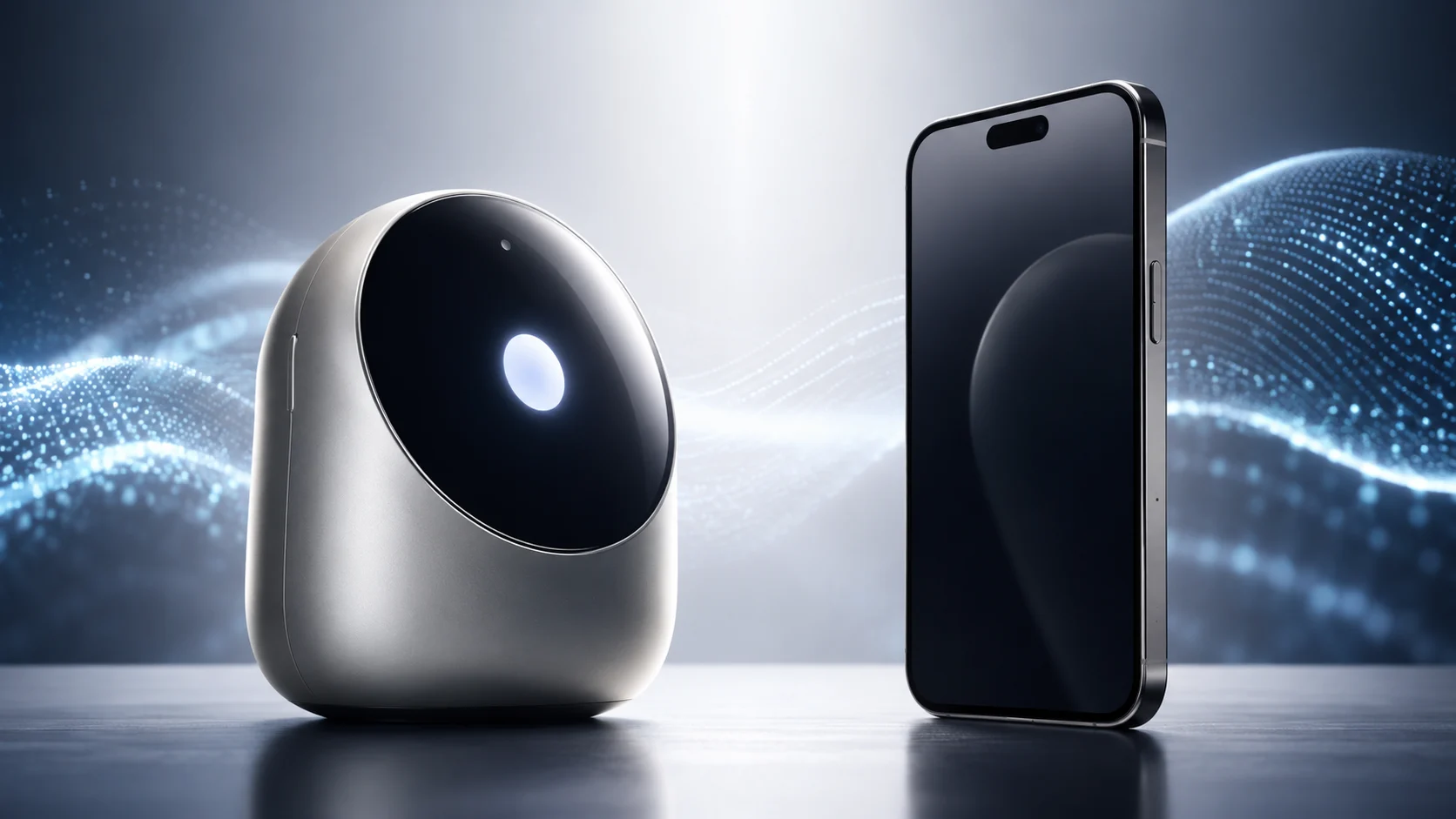
The OpenAI AI device being shaped with Jony Ive is not just another shiny gadget rumor passing through the tech cycle. It feels bigger because it lands at a weird moment when everyone loves their smartphone but also feels quietly exhausted by it. The iPhone trained the world to tap, scroll, swipe, unlock, and live through a glowing rectangle, but AI is starting to ask a different question: what happens when the computer does not need to wait for you to open an app? That is why the idea of an OpenAI AI device has become one of the most interesting stories in consumer tech right now. It is not simply about whether OpenAI can build a better phone, but whether it can imagine a more natural way for people to interact with technology every day.
Jony Ive’s name instantly changes the energy around this project because his career is tied to devices that made advanced technology feel simple, emotional, and obvious. The iMac made personal computers less intimidating, the iPod made digital music feel human, and the iPhone turned mobile computing into a daily habit for billions of people. Now, with OpenAI, Ive is stepping into a different kind of design challenge, one where the main interface may not be a screen at all. The real product could be less about hardware specs and more about removing friction between intention and action. In a world overloaded with notifications, tabs, feeds, and app grids, that kind of design reset could be exactly what consumer technology needs.
Why the OpenAI AI Device Matters Now
The timing matters because the smartphone market is mature, polished, and honestly a little predictable. Every year brings brighter displays, better cameras, faster chips, and more refined software, but the basic experience has not changed much in over a decade. You still hold a slab of glass, hunt for apps, manage settings, and give your attention to whatever wins the notification war. The OpenAI AI device enters the conversation as a possible break from that loop, not necessarily by killing the phone overnight, but by challenging the idea that the phone should always be the center of personal computing. If AI becomes capable enough to understand context, voice, environment, and intent, the next major gadget may not need to look like the gadgets we already know.
This is why the comparison with the iPhone is both useful and slightly dangerous. Useful, because the iPhone remains the benchmark for consumer tech ambition, mainstream adoption, and ecosystem power. Dangerous, because calling anything an “iPhone killer” usually sets unrealistic expectations before the product even exists. The more realistic story is that OpenAI and Jony Ive may be building something that competes with the iPhone’s role, not necessarily its shape. The goal may be to create a companion device that handles moments where pulling out a phone feels clunky, distracting, or too slow for what AI can now do.
From App-Centered Phones to AI-Centered Gadgets
For years, the phone has been organized around apps, and apps have been organized around human effort. You want a ride, you open a ride-hailing app, type a location, check the price, confirm the trip, and watch the driver move on a map. You want to book dinner, you search, compare, read reviews, open another app, and maybe send a message to a friend. AI changes that structure by promising a device that can understand the task instead of forcing users to manage every step manually. That shift is the core reason the OpenAI AI device could become more than just another premium gadget.
An AI-first device would not need to start with an app icon. It could start with a request, a habit, a location, a schedule, a conversation, or even a pattern it has learned over time. Instead of asking users to jump between tools, the system could become the layer that coordinates everything in the background. This is the kind of experience that makes the project feel like a genuine AI Innovation story, not just a hardware launch. It also explains why the device conversation connects naturally with AI Innovation, wearable design, smart assistants, privacy, and the future of mobile computing all at once.
Jony Ive’s Design Challenge Is Bigger Than Hardware
The hardest part of building an AI gadget is not making it look beautiful, although that will obviously matter. The harder part is making it useful enough that people actually change their behavior. Many tech products fail because they solve a problem in a way that feels impressive during a demo but awkward in daily life. Jony Ive’s best-known work succeeded because it made technology feel inevitable, as if the object had always been waiting for the world to catch up. With the OpenAI AI device, that same standard will be difficult because the product has to make AI feel natural, trustworthy, and worth carrying.
Designing for AI is different from designing for a touchscreen because the interface is less visible. A button can be labeled, a screen can show feedback, and an app can display options, but an AI assistant often works through conversation, prediction, and context. That means the device must communicate clearly without overwhelming the user. It needs to show when it is listening, when it is processing, when it is acting, and when it needs permission. If OpenAI and Ive get that wrong, the product could feel mysterious in a bad way, like a black box that wants too much access to your life.
Screenless Does Not Mean Simple
One of the most fascinating ideas around this project is the possibility of a screenless or low-screen experience. That sounds minimal, clean, and futuristic, but it also creates serious usability questions. Screens exist because they are good at showing choices, confirming details, displaying errors, and letting people control complex actions quickly. Removing the screen means the device must find another way to build confidence. For the OpenAI AI device, the real challenge is not avoiding a display, but replacing the comfort and clarity that a display gives users.
Voice may become a major part of the interaction, but voice alone is not perfect. People do not always want to speak in public, and many tasks are easier to scan visually than to hear out loud. A truly smart gadget may need a mix of voice, audio cues, gestures, sensors, connected devices, and phone pairing to feel complete. It may also depend on a strong companion app during setup, personalization, and deeper controls. The best version of this concept would not reject screens entirely, but would stop making the screen the starting point for every digital action.
Why Apple Should Take This Seriously
Apple does not need to panic, but it definitely has a reason to pay attention. The iPhone remains one of the strongest products in tech history because it combines hardware, software, services, accessories, retail, privacy branding, and developer support into one massive ecosystem. That kind of moat does not disappear because a new AI gadget appears on the horizon. Still, platform shifts often start quietly before they become obvious. If users begin trusting AI agents to complete tasks across apps, the company that controls the agent could become more important than the company that controls the home screen.
This is where OpenAI’s advantage becomes interesting. The company does not own the smartphone platform, but it does own one of the most recognizable AI experiences in the world. Millions of users already understand the idea of asking ChatGPT to write, summarize, brainstorm, code, translate, analyze, and explain. Turning that behavior into a physical gadget could give OpenAI a direct relationship with consumers outside the browser and outside other companies’ app stores. For Apple, the threat is not just a device, but a new habit that makes traditional app navigation feel old.
The Hardware Race Around AI Companions
OpenAI is not the only company trying to figure out what comes after the smartphone. Meta has been pushing smart glasses into the mainstream conversation, Google is connecting AI more deeply with eyewear and Android, and other startups keep experimenting with pins, pendants, earbuds, and pocketable assistants. Some of those products have struggled because the promise was louder than the usefulness. Others are improving because cameras, microphones, batteries, chips, and AI models are all getting better at the same time. The OpenAI AI device enters this race with unusually high expectations because it combines a famous AI brand with one of the most influential product designers alive.
The first wave of AI gadgets taught the industry an important lesson: people do not want novelty for novelty’s sake. They want convenience, speed, accuracy, privacy, and a reason to use the device more than once after the unboxing moment. If a gadget needs constant correction, overheats, misunderstands basic requests, or depends too heavily on cloud processing, users will lose patience fast. That is especially true when smartphones already do so much and are already in everyone’s pocket. To win, OpenAI’s device needs to feel less like a science project and more like a daily shortcut people did not know they were missing.
What an OpenAI iPhone Rival Could Actually Do
The most practical way to imagine this device is not as a full phone replacement on day one. It could begin as a personal AI companion that handles communication, reminders, quick searches, scheduling, translation, navigation support, and real-time answers without forcing users into a screen session. It could summarize messages while you walk, help draft replies, remember context from a meeting, or turn spoken thoughts into organized notes. It could also connect with a smartphone, laptop, earbuds, smart glasses, or home devices to become a flexible AI layer across your day. That kind of product would not need to destroy the iPhone to become important.
There is also a chance the device becomes more ambitious over time. If OpenAI can combine local processing with cloud intelligence, the gadget could become faster, more private, and more capable in real-world situations. It might understand location, calendar context, preferences, recent conversations, and active tasks in a way that feels proactive instead of reactive. For example, it could remind you to leave early because traffic changed, summarize a long thread before a meeting, or help compare products while you are standing in a store. These are small moments, but small moments are exactly how new computing habits become normal.
Privacy Will Decide the Trust Factor
The biggest obstacle for any context-aware AI gadget is trust. A device that understands your surroundings may need microphones, sensors, location data, camera input, personal history, and access to private accounts. That can create powerful convenience, but it also raises the kind of privacy questions that cannot be solved with glossy marketing. Users will want to know what the device records, what stays on the device, what goes to the cloud, how long data is stored, and how easily they can delete it. If the OpenAI AI device is positioned as a constant companion, transparency will not be optional.
This is especially important because AI devices can feel more intimate than phones. A phone is personal, but it is still something you pick up, unlock, and control through visible actions. A voice-first or ambient AI gadget could feel more like it is always nearby, always ready, and possibly always aware. That creates a different emotional relationship between user and machine. OpenAI and Jony Ive will need to make privacy controls feel simple, physical, and understandable, because a hidden settings menu will not be enough for a device that asks for that level of trust.
The Gen Z Angle: Less Screen, More Flow
For Gen Z users, the appeal of a new AI device may not be about owning another luxury gadget. It may be about escaping the chaos of apps while still staying connected, creative, and productive. This generation grew up online, but it also understands digital fatigue better than almost anyone. They know the feeling of opening a phone for one useful task and losing twenty minutes to feeds, messages, and random tabs. A well-designed OpenAI AI device could speak to that tension by offering help without automatically pulling users into a screen spiral.
That does not mean young users will accept a boring product just because it is healthier. The device still needs personality, speed, style, and a sense of cultural relevance. It has to feel cool without trying too hard, useful without being creepy, and premium without being unreachable. Jony Ive’s design language could help here if the product feels quiet, intentional, and different from the loud gadget aesthetic that often dominates tech launches. The opportunity is to create something that feels less like a status symbol and more like a smarter rhythm for daily life.
Why This Could Change Gadget Reviews
If this device launches, it will also change how reviewers judge consumer tech. Traditional Gadget Reviews often focus on display quality, camera performance, battery life, design, benchmark scores, and value for money. Those details will still matter, but an AI-first product needs a different testing framework. Reviewers will need to ask how often the device is genuinely useful, how accurately it understands context, how gracefully it fails, and whether it improves daily habits over time. A product like this cannot be reviewed properly after only a few hours because its real value may appear through repeated use.
The review process will also need to evaluate boundaries. Does the device interrupt too much, or does it know when to stay quiet? Does it make decisions too aggressively, or does it ask for confirmation at the right moments? Does it work for different accents, routines, environments, and accessibility needs? The OpenAI AI device will not succeed only by being smart in a controlled demo; it must be reliable in messy everyday life, where people mumble, change their minds, lose signal, rush between tasks, and expect technology to keep up.
The Smartphone Is Not Dead Yet
Even if OpenAI and Jony Ive build something impressive, the smartphone will not disappear quickly. Phones are too useful, too established, and too deeply connected to payments, identity, photography, work, entertainment, maps, social life, and emergency communication. Most people will not replace all of that with a brand-new category immediately. The more likely future is a transition period where AI devices act as companions, shortcuts, or extensions of the phone. Over time, if those companions become more capable, the phone may shift from the main interface to the backup screen for moments that still need visual depth.
This is how platform change often works. The first version of a new category rarely replaces the old category completely, but it reveals a different direction. Smartwatches did not replace phones, yet they changed fitness tracking, notifications, payments, and quick interactions. Wireless earbuds did not replace speakers, but they changed how people listen, call, and move through public space. The OpenAI AI device could follow a similar path by owning certain moments so well that people gradually stop reaching for their phones every time they need digital help.
Practical Insight: What Users Should Watch For
For everyday buyers, the smartest move is to watch the product category with curiosity, not hype blindness. The first thing to look for is whether the device solves real problems faster than a phone. If it only answers basic questions that a smartphone app already handles well, the excitement will fade quickly. The second thing to watch is privacy design, because a personal AI companion needs stronger controls than a normal accessory. The third thing is ecosystem support, since the device will be much more useful if it connects cleanly with calendars, messages, productivity tools, smart home platforms, and the services people already use.
Battery life will also be a major practical factor. AI processing, always-ready listening, sensors, wireless connectivity, and compact design can all fight against long battery performance. If the device needs constant charging, users may treat it like a novelty instead of a habit. Price will matter too, because a product that wants to become a mainstream companion cannot stay locked inside ultra-premium territory forever. The most successful version of the OpenAI AI device will need to feel magical, but it also has to survive normal consumer questions about cost, durability, repairability, and daily convenience.
What It Means for Developers and Creators
Developers should pay attention because an AI-first gadget could change how software is discovered and used. If users stop opening apps for every task, developers may need to design services that AI agents can access, understand, and operate through secure permissions. The future interface may look less like a home screen full of icons and more like a set of capabilities exposed to a personal assistant. That would change search, app marketing, subscriptions, onboarding, and even customer support. For creators, the shift could open new formats for audio-first workflows, real-time content assistance, and hands-free production.
Businesses should also think carefully about how their services appear inside AI-driven interactions. If a user asks an assistant to book travel, compare devices, order food, or summarize options, the assistant may become the gatekeeper. That means brands will need clean data, strong trust signals, and useful integrations that AI systems can interpret accurately. The OpenAI AI device could push companies to optimize not only for search engines and app stores, but also for AI agents that make recommendations in real time. This is where the story moves beyond hardware and becomes a broader shift in digital behavior.
The Risk of Overpromising the Future
The hype around AI hardware is intense, but the category has already shown how easily big promises can crash into real-world limits. A device can sound revolutionary in a presentation and still feel awkward when users try to fit it into their routines. AI can also make confident mistakes, misunderstand context, or fail when connectivity is weak. Those problems become more serious when the product is supposed to act on your behalf. OpenAI and Jony Ive will need to avoid the trap of selling a future that the first-generation hardware cannot fully deliver.
The smarter approach would be to launch with a focused set of features that work extremely well. Instead of claiming to replace every app, every phone, and every workflow, the device could win trust through a few daily tasks that feel instantly better. That might include voice notes, contextual reminders, message summaries, live translation, personal search, quick planning, and hands-free assistance. Once people trust the core experience, OpenAI can expand the device’s role through updates and developer support. The iPhone did not become the center of mobile life in one day, and an AI companion will not either.
Conclusion: The iPhone Era Finally Has a Real Question
The OpenAI AI device matters because it asks one of the biggest questions in modern technology: is the smartphone the final form of personal computing, or just the most successful version so far? With Jony Ive involved, the project carries the weight of design history, but it also faces the pressure of living up to a nearly impossible standard. To become meaningful, it must be more than beautiful hardware and more than ChatGPT in a new shell. It needs to create a daily experience that feels faster, calmer, more private, and more human than constantly reaching for a phone. If OpenAI and Ive can deliver that, the device may not kill the iPhone immediately, but it could mark the first serious crack in the phone-first era.
For now, the smartest way to understand this story is not as a guaranteed revolution, but as a serious signal. The biggest companies in tech are no longer only improving screens; they are searching for the next interface after screens. AI is becoming the layer that could connect devices, services, memory, voice, vision, and personal context into something more fluid. The OpenAI AI device sits right at the center of that shift, which makes it one of the most important gadget stories to watch. Whether it becomes a mainstream hit or a bold first attempt, it is already forcing the industry to imagine what life after the app grid could look like.