
Android Auto Wireless Adapter Upgrade Is Now Essential
 Vortixel
18 minutes read
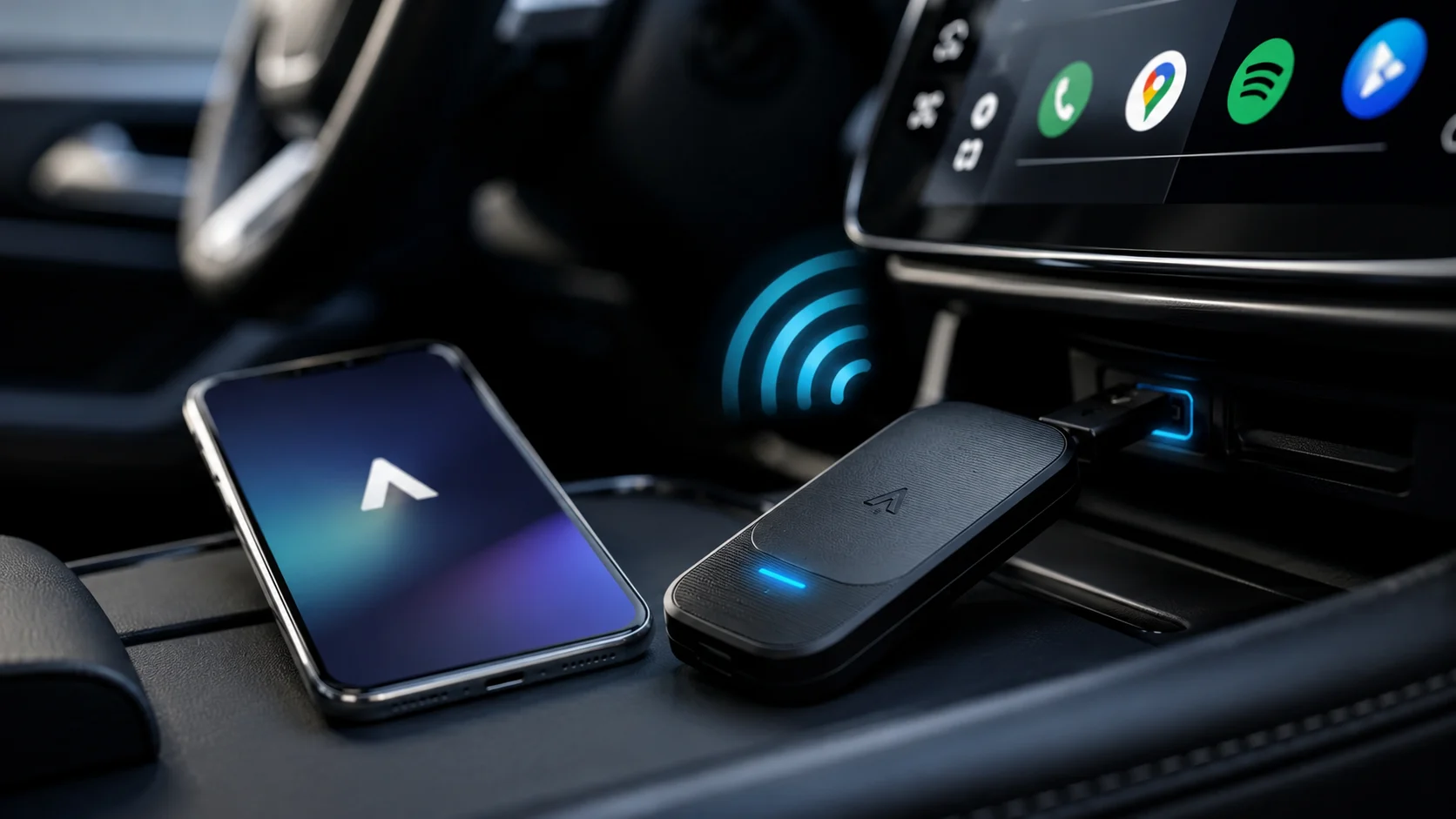
The Android Auto wireless adapter used to feel like a niche gadget for drivers who loved tinkering with car tech, but that era is pretty much over. In 2026, it has become one of the most practical upgrades for anyone still stuck plugging a phone into the dashboard every time they start the engine. The idea is simple: a tiny adapter connects to the car’s USB port, pairs with your phone, and lets Android Auto launch wirelessly without replacing the head unit. That small shift changes the whole rhythm of driving, especially for people who jump in and out of the car multiple times a day. It is not flashy in the way a new phone or smartwatch is flashy, but it solves a daily annoyance so quietly that once you get used to it, going back to cables feels outdated.
There is something very modern about a gadget that does not try to steal attention. The best car tech today is not always about bigger screens, louder speakers, or futuristic dashboards that look like concept art. Sometimes the smartest upgrade is the one that removes friction from a routine you already have. Plugging in a cable might sound harmless, but it becomes irritating when the cable is missing, the connector is loose, the phone keeps disconnecting, or the passenger accidentally knocks it out. A wireless adapter turns Android Auto into what it should have felt like from the start: step in, start the car, and let navigation, music, calls, and messages appear without a tiny ritual at the center console.
Why the Android Auto Wireless Adapter Matters Now
The timing matters because cars age much slower than phones. A smartphone can feel outdated after three years, but many people keep a car for seven, ten, or even fifteen years. That creates a weird gap where the phone in your pocket is modern, powerful, and wireless-first, while the car still expects a cable just to mirror basic apps. An Android Auto wireless adapter fills that gap without forcing drivers to install a new infotainment system or buy a newer vehicle. For a lot of people, that makes it one of the most sensible gadget upgrades in the car tech space right now.
What makes the adapter especially interesting is how it upgrades the experience without changing the identity of the car. You are not replacing the dashboard, cutting wires, or gambling on a complicated aftermarket installation. The adapter simply uses the wired Android Auto connection that already exists and turns it into a wireless bridge. That means older vehicles with reliable wired Android Auto can suddenly feel closer to newer models that ship with wireless support built in. It is the kind of upgrade that does not look dramatic on paper, but in real life it makes every commute, errand, and road trip feel smoother.
There is also a larger trend underneath this small device. Drivers are becoming less impressed by isolated features and more interested in convenience that fits into real routines. Wireless charging, keyless entry, connected navigation, and voice assistants have trained people to expect fewer steps. When everything else is becoming more seamless, plugging in a phone every time can feel oddly old-school. The adapter does not reinvent Android Auto, but it brings the experience closer to the wireless habits people already have outside the car.
The Daily Problem Nobody Talks About
The cable problem is not just about cable clutter. It is about how many tiny moments of inconvenience build up across a week. You get into the car with coffee in one hand, keys in the other, and your phone still in your pocket. You sit down, start the engine, remember the cable, reach for it, unlock the phone, plug it in, and hope Android Auto wakes up without drama. If the cable is damaged or cheap, you may get random disconnects that cut off music or freeze navigation right when you need directions most.
Then there is the shared-car problem. In a family car, one person may use USB-C, another may have a different cable preference, and someone will eventually take the good cable inside the house. Rideshare drivers, delivery workers, and commuters who make frequent stops feel this pain even more. Every plug-in becomes another small action that wastes attention, and attention is already expensive behind the wheel. A wireless adapter removes that repeated task, which is why the upgrade feels bigger than the physical size of the device.
It also helps with phone placement. With a cable, your phone often ends up wherever the wire allows it to sit, which can mean a crowded cup holder, a sliding tray, or a center console that was never designed for modern phones. Going wireless means the phone can stay in a pocket, bag, mount, or wireless charging pad. That flexibility makes the cabin feel cleaner and less chaotic. It is a small quality-of-life improvement, but car interiors are full of small details that shape how comfortable driving feels.
How These Adapters Actually Work
An Android Auto wireless adapter is usually a compact dongle that plugs into the car’s USB port, the same port you would normally use for wired Android Auto. After the first setup, the adapter connects to your phone through Bluetooth to begin the pairing process, then uses Wi-Fi for the heavier data connection. That Wi-Fi link is important because Android Auto needs more bandwidth than Bluetooth alone can comfortably provide. Once everything is configured, the adapter acts like a middle layer between your phone and your car’s infotainment system.
The car still thinks it is receiving an Android Auto session through the USB port. The phone thinks it is connecting wirelessly to a compatible display. The adapter handles the translation in the middle, which is why compatibility depends on both the car and the phone. In most cases, if a vehicle already supports wired Android Auto properly, a good adapter has a strong chance of working. Still, this is one gadget category where checking compatibility before buying is not optional.
The setup process is usually not difficult, but expectations matter. Most adapters require a first-time pairing sequence, and some may need a firmware update for better stability. After that, the experience should become automatic when the car starts. The best models reconnect quickly, remember the phone reliably, and avoid forcing the user into settings menus every few days. A weak adapter, on the other hand, can turn a convenience upgrade into a new source of frustration.
The Biggest Benefits for Real Drivers
The first benefit is convenience, but that word can sound too soft for what is really happening. The adapter reduces the number of steps between starting the car and getting useful information on the screen. Navigation appears faster, music resumes with less effort, and hands-free calls become available without fishing for a cable. For commuters, that consistency matters because the same routine happens every morning and every evening. A smoother start to the drive can make the whole cabin feel less stressful.
The second benefit is less wear on the phone and cable. Constant plugging and unplugging is not the end of the world, but over time it can loosen cables, collect dust in ports, and create connection issues. Phones are increasingly expensive, and many people keep them longer than they used to. Reducing daily port use is not a bad idea, especially if the phone also charges wirelessly. The adapter does not eliminate charging needs, but it separates Android Auto access from physical cable dependency.
The third benefit is a cleaner interior. Modern cars already have enough visual noise, from climate controls and screens to charging bricks and cup holder accessories. Removing one cable makes the dashboard area feel more intentional. That may sound cosmetic, but it affects the user experience because less clutter means fewer distractions. A neat cabin makes tech feel integrated rather than improvised.
The fourth benefit is flexibility for short trips. Wired Android Auto can feel like overkill when you are only driving five minutes to pick up food or run a quick errand. But wireless Android Auto makes even short trips feel connected without effort. You do not have to decide whether it is worth plugging in. The system simply launches, and you can use maps, music, or voice commands if you need them.
Where the Experience Can Still Fall Short
No gadget is magic, and wireless adapters are not perfect. The most common complaint is connection delay, especially when starting the car. Some adapters connect in a few seconds, while others take longer depending on the car, phone, and firmware. A short delay is usually acceptable, but a long or unpredictable delay can make drivers question the upgrade. The best experience is not just wireless; it is wireless and dependable.
Another issue is occasional disconnection. Wireless Android Auto depends on a stable connection, and the adapter has to manage that connection inside an environment full of interference, temperature changes, and vehicle power cycles. If the adapter loses connection during navigation, the convenience advantage disappears quickly. This is why build quality and software support matter more than the lowest possible price. A cheap adapter that disconnects often is not a bargain; it is just a tiny box that creates new problems.
Battery drain is another factor to consider. Wireless Android Auto uses the phone’s battery because the phone is no longer physically charging through the USB cable. For short drives, that is usually not a big deal. For longer trips, drivers may still want a charging cable or a wireless charging pad. The adapter makes Android Auto wireless, but it does not make power management disappear.
Heat can also become part of the story. Phones running navigation, streaming audio, mobile data, and a wireless display connection can warm up, especially in sunny cabins. Add wireless charging, and heat can rise further. Most users will be fine, but heavy drivers should pay attention to phone placement. A phone sitting directly in sunlight while running wireless Android Auto and charging wirelessly is not the ideal setup.
Why This Upgrade Fits the 2026 Gadget Mood
The gadget market has been moving away from novelty for novelty’s sake. People still love powerful devices, but there is growing demand for tech that quietly improves everyday life. That is why smart rings, compact chargers, portable projectors, and car accessories have become more interesting to mainstream buyers. The Android Auto wireless adapter fits this mood because it is not trying to be a status symbol. It is trying to make an existing setup feel modern without asking for a huge lifestyle change.
This matters for the automotive world because infotainment systems have not always kept pace with consumer tech. Many drivers would rather use Google Maps, Spotify, messaging apps, and voice commands from their phone ecosystem than rely on built-in car software. Android Auto became popular because it gave drivers a familiar interface inside the car. The wireless adapter simply removes the last awkward piece of that experience for vehicles that did not get wireless support from the factory.
There is also a sustainability angle, even if it is not the main selling point. A practical accessory that extends the usefulness of an older car’s infotainment system can delay unnecessary upgrades. Not everyone can or should buy a newer vehicle just to get wireless phone projection. When a small adapter can refresh the daily tech experience, it makes older hardware feel less abandoned. That kind of upgrade is good for wallets and potentially better for reducing electronic waste.
What to Check Before Buying One
The first thing to check is whether your car already supports wired Android Auto. This sounds obvious, but it is the foundation of the whole setup. Most wireless adapters are not designed to add Android Auto to a car that never supported it in the first place. They are designed to convert an existing wired Android Auto connection into a wireless one. If your car only has basic Bluetooth audio or a non-Android Auto USB port, you may need a different solution.
The second thing to check is phone compatibility. Most modern Android phones can handle wireless Android Auto, but older devices may struggle or lack full support. Software version also matters because Android Auto depends on phone-side updates as well as Google services. Before buying, users should make sure their phone runs a recent version of Android and that Android Auto works reliably through a cable. If wired Android Auto is already unstable, a wireless adapter may not fix the root problem.
The third thing is adapter update support. This category relies heavily on firmware because car infotainment systems vary widely. A good adapter brand usually provides updates to improve compatibility, connection speed, and reliability. Without updates, a device can become frustrating when phones or Android Auto software change. In a gadget category built around compatibility, long-term support is not a bonus; it is part of the product.
The fourth thing is boot time. Some adapters connect almost instantly, while others take a noticeable amount of time after the car starts. A few seconds is not a deal breaker, but slow startup can become annoying if you drive often. Drivers who rely heavily on navigation may care about this more than casual users. The smoother the connection, the more invisible the adapter becomes, and invisibility is basically the goal.
Features That Actually Matter
Not every advertised feature deserves equal attention. The most important feature is stable auto-reconnect because the whole point is to avoid manual steps. If the adapter needs constant resets, it fails at its main job. The second important feature is low latency, especially for touch response and audio control. Nobody wants to tap a song, wait awkwardly, and wonder whether the command registered.
Another useful feature is support for multiple phones. This matters for households where two or more people drive the same car. A good adapter should make it reasonably easy to switch between paired devices without turning the dashboard into a settings puzzle. Some adapters handle the last connected phone automatically, while others offer companion apps for switching. The right choice depends on how the car is used.
Compact design also matters more than people expect. A bulky adapter can block nearby ports, get bumped by passengers, or look awkward in a clean interior. The best designs are small enough to disappear once plugged in. Some include short cables, which can help with awkward USB placement. A clean installation makes the upgrade feel like part of the car rather than an afterthought.
Good thermal behavior is another underrated feature. Cars get hot, especially when parked under direct sunlight. An adapter that overheats or throttles can become unreliable at exactly the wrong moment. Solid construction and efficient operation help the device survive real cabin conditions. Car gadgets do not live on a desk, so durability matters.
Who Should Buy an Android Auto Wireless Adapter?
This upgrade makes the most sense for drivers who already use Android Auto frequently. If you plug in your phone almost every time you drive, the adapter will probably feel useful from day one. Commuters, road trippers, delivery drivers, rideshare drivers, and anyone who depends on Google Maps will get the biggest benefit. The more often you drive, the more the convenience adds up. A gadget that saves a few seconds once may not matter, but a gadget that saves hassle hundreds of times a year starts to feel essential.
It is also a strong fit for people who like keeping their car interior clean. If cable clutter annoys you, wireless Android Auto is a noticeable improvement. Pairing the adapter with a wireless charging pad can create a setup that feels much closer to a newer vehicle. Your phone can sit in one spot, charge when needed, and still run the dashboard interface. That is the kind of simple system that makes car tech feel less messy.
However, it may not be necessary for everyone. If you rarely use Android Auto, mostly drive short distances, or prefer your car’s built-in navigation, the value drops. If your phone battery is usually low, you may still end up plugging in anyway. And if your car’s wired Android Auto connection is already unstable, it is better to troubleshoot that first. The adapter is a convenience upgrade, not a cure-all for every infotainment issue.
How It Changes Road Trips and Long Drives
On long drives, wireless Android Auto changes the experience in a different way. The convenience is still there, but the bigger value is flexibility. Passengers can handle the phone without disconnecting navigation from the screen. The driver can keep the dashboard running while the phone moves between a charger, a bag, or a mount. That freedom makes the cabin feel less locked to one cable position.
For road trips, music and maps are the emotional center of the drive. People build playlists, search for food stops, check traffic, and reroute around delays. A stable wireless connection makes those actions feel more natural because the phone is not physically tied to the dashboard. The experience starts to feel less like using a car accessory and more like extending the phone environment into the vehicle. That is exactly what modern infotainment should do.
There is still a practical charging question on longer trips. Many drivers will keep a charger nearby, especially if navigation runs for hours. But even then, the adapter gives you choice. You can charge only when needed instead of plugging in every time for Android Auto access. That difference sounds small, but choice is what makes tech feel personal rather than forced.
The Safety Angle: Less Touching, Less Fumbling
Car tech should always be judged by how it affects attention. A wireless adapter can support safer habits by reducing the amount of physical fumbling before and during a drive. When Android Auto launches automatically, drivers are less likely to wrestle with cables while backing out or sitting at a light. Navigation and music become available through the car screen and voice controls with fewer distractions. That does not make the adapter a safety device by itself, but it can support a cleaner driving routine.
The key is using it properly. Wireless Android Auto should make the phone less tempting, not more tempting. The best setup keeps the phone out of hand and lets the dashboard handle essential tasks. Voice commands, steering wheel controls, and simplified notifications are still the smarter way to interact while driving. The adapter simply makes that system easier to access every time.
There is also a mental safety benefit in reducing frustration. Tech glitches in the car can make drivers impatient, and impatience is not helpful on the road. A reliable adapter can reduce the little annoyances that make people look down, unplug, replug, or restart apps. The fewer interruptions the system creates, the more drivers can focus on driving. In that sense, reliability is not just a convenience feature; it is part of the driving experience.
Why Automakers Should Pay Attention
The popularity of wireless adapters says something about what drivers actually want from car technology. Many automakers spend years developing custom infotainment platforms, but users often prefer the phone-based ecosystems they already understand. Android Auto succeeds because it brings familiar apps into the car without forcing people to learn a new software world. When drivers buy adapters to make that system wireless, they are sending a clear signal. They want the car to cooperate with their digital life, not compete with it.
This does not mean built-in car software is irrelevant. Automakers still need strong systems for vehicle settings, cameras, climate control, and deeper integration. But for navigation, audio, calls, and messaging, phone projection remains powerful because it is updated constantly and follows the user from car to car. Wireless support should no longer feel premium or optional. It is becoming a baseline expectation, especially as more affordable gadgets prove how much better the experience can be.
The adapter market also highlights how long vehicle tech cycles can feel. A car that launched only a few years ago may still lack wireless Android Auto, even though the driver’s phone supports it easily. Accessories step into that gap because consumers move faster than automakers. This is why compact car gadgets keep finding an audience. They let people modernize one part of the experience without waiting for the next vehicle purchase.
Is It Worth the Money?
For the right driver, yes, an Android Auto wireless adapter is absolutely worth considering. It is not the kind of gadget that wins attention with dramatic specs, but it earns its place through repetition. Every time the system connects automatically, the value becomes a little clearer. Every time you avoid searching for a cable, the upgrade feels smarter. And every time the dashboard launches without effort, the car feels slightly more modern than it did before.
The best way to think about the price is not as a luxury purchase but as a daily-use convenience upgrade. People spend money on phone cases, chargers, mounts, and earbuds because those items improve small parts of everyday life. A wireless adapter belongs in that same category for anyone who uses Android Auto often. It does not need to transform the entire vehicle to justify itself. It only needs to remove one annoying step that happens constantly.
That said, buyers should avoid impulse purchasing the cheapest option with the loudest promises. Stability, update support, and compatibility matter more than a few saved dollars. A good adapter should disappear into the routine, while a bad one will keep reminding you it exists. Reading compatibility notes and choosing a proven model is worth the extra effort. The whole point is to make driving simpler, not to add another troubleshooting hobby.
Conclusion: A Small Gadget With Big Daily Value
The Android Auto wireless adapter is the kind of upgrade that proves practical tech does not have to be dramatic to matter. It takes a feature many drivers already use and removes the cable dependency that makes it feel dated. For cars with wired Android Auto, that tiny adapter can make the dashboard feel cleaner, faster, and more aligned with the way people use phones today. It is not perfect, and buyers still need to think about compatibility, connection speed, battery drain, and reliability. But for everyday drivers who want less clutter and fewer steps, this is one of the most sensible car gadget upgrades right now.
What makes the upgrade stand out is its honesty. It does not pretend to replace your car, reinvent your phone, or turn the dashboard into a spaceship. It simply fixes a real inconvenience in a way that feels natural after a few drives. That is why the adapter trend has legs beyond early adopters and tech enthusiasts. In a world full of overhyped gadgets, the most useful one might be the small device you plug in once and barely think about again.