Galaxy Glasses Could Redefine Smart Eyewear
 Vortixel
18 minutes read
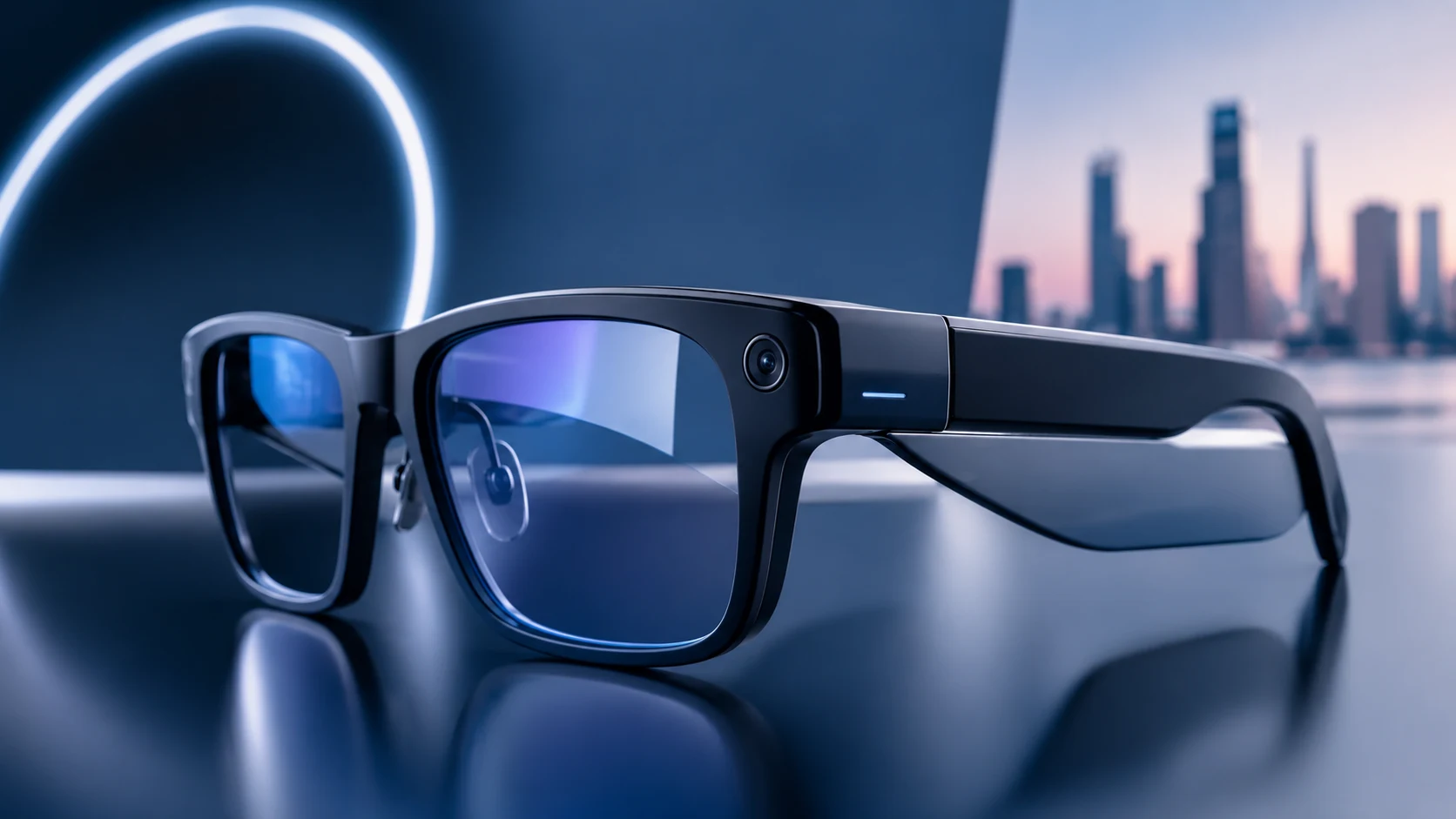
The smart glasses race is no longer just a futuristic side quest for tech companies with too much confidence and not enough battery life. With Galaxy Glasses starting to take shape in the wider Android XR conversation, Samsung is stepping into a category that Meta has been quietly shaping through Ray-Ban smart glasses. The timing feels important because consumers are finally beginning to understand what wearable AI can do beyond recording short clips and playing music near your ears. Meta made smart glasses feel socially acceptable again, but Samsung may be preparing to make them feel deeply connected to the phone, home, and AI ecosystem people already use every day. That shift could turn Galaxy Glasses from a simple gadget rumor into one of the most interesting wearable stories of the year.
For years, smart glasses have carried the baggage of failed hype cycles, awkward prototypes, and privacy concerns that never fully went away. Early attempts often looked like engineering demos instead of products people would actually wear outside without feeling like they were announcing a tech conference keynote on their face. Meta changed the mood by teaming with Ray-Ban and making the hardware look familiar before asking users to accept cameras, speakers, microphones, and AI in everyday eyewear. Now Samsung appears ready to challenge that formula with its own design language, Google-backed software, and the broader Galaxy ecosystem behind it. The result is not just another pair of connected glasses, but a possible turning point for how mainstream users think about wearable devices.
Why Galaxy Glasses Are Entering at the Right Time
The strongest reason Galaxy Glasses matter right now is timing. Smart glasses are arriving at the same moment AI assistants are moving from chat boxes into cameras, voice interfaces, and real-world context. People no longer want AI that only answers questions after they type a prompt into a phone app. They want AI that can see what they see, understand where they are, translate a sign, summarize a moment, guide a route, or remind them what they were looking for in the first place. That makes smart glasses one of the most natural homes for the next stage of consumer AI, because the device sits right where attention already happens.
Meta proved there is demand for smart eyewear when the design does not scream “prototype.” Ray-Ban Meta glasses made the concept easier to understand because they looked like normal sunglasses and optical frames first, then revealed their smart features later. Samsung can learn from that playbook while bringing a different advantage: the Galaxy brand already stretches across phones, tablets, earbuds, watches, TVs, and smart home appliances. If the glasses connect smoothly with a Galaxy phone, Galaxy Watch, Buds, and SmartThings devices, they could feel less like a standalone experiment and more like a missing piece of an ecosystem. That ecosystem angle is where Samsung has a real chance to make the category feel useful instead of merely cool.
The rise of Android XR also gives Samsung a software lane that did not exist in the same way during earlier smart glasses waves. A shared platform matters because wearable hardware needs developers, privacy rules, app behavior, pairing systems, voice controls, and consistent user expectations. Without that foundation, every smart glasses product becomes its own island, and users are forced to learn different rules each time. With Android XR and Gemini positioned as core pieces of the experience, Galaxy Glasses could arrive with stronger software gravity than most first-generation wearables. That does not guarantee success, but it gives Samsung a better starting point than many companies had before.
The Meta Ray-Ban Shadow Is Real
Any conversation about Galaxy Glasses has to begin with Meta Ray-Ban because Meta is the company that made smart glasses feel culturally visible again. The product is not perfect, but it has already established the basic consumer language of the category: take a photo hands-free, capture video from your point of view, listen to audio privately, make calls, and talk to an AI assistant. More importantly, Meta and Ray-Ban showed that the frame design matters as much as the chip inside. People will tolerate tech on their face only if it does not make them look like they are beta testing tomorrow in public. That lesson is likely sitting at the center of Samsung’s product strategy.
Still, Meta’s lead comes with weaknesses Samsung can target. The biggest one is ecosystem friction for Android users who may not want their wearable experience centered around Meta’s apps and AI layer. A Galaxy user might prefer glasses that understand Samsung Health, SmartThings, Google Maps, Gemini, Android notifications, and phone-level controls in a more native way. This is where Samsung can position itself as the Android answer to Meta Ray-Ban rather than a copycat. If the execution is clean, Galaxy Glasses could become the pair that Android users were waiting for without realizing it.
Meta also faces a privacy trust problem that grows larger as its glasses become more capable. Cameras on the face create tension because they do not just collect information about the wearer; they also affect everyone nearby. A phone camera is obvious when someone raises it, but glasses can record from a more casual posture, which makes bystanders feel less certain about what is happening. Samsung and Google know this issue can define the entire category, not just one product. If Galaxy Glasses include visible recording indicators, strong anti-tampering protections, and clear privacy controls, that could become a selling point instead of a boring compliance detail.
Design Will Decide the First Impression
Specs matter, but smart glasses live or die by design. A phone can be bulky and still survive if the camera is great, but glasses have to sit on the face all day without becoming a social penalty. Samsung needs frames that look intentional, lightweight, and wearable across different styles, not just a single tech-bro silhouette. This is why fashion partnerships and eyewear credibility are more important here than they are for almost any other gadget category. Users may buy a phone for performance, but they buy glasses only if they can imagine wearing them in a coffee shop, on a commute, in a meeting, or during a weekend walk.
The leaked and rumored direction around Samsung’s eyewear suggests a display-less or lightly assisted first step rather than a full augmented reality headset squeezed into glasses. That approach makes sense because true AR glasses with bright displays, all-day battery life, spatial tracking, lightweight frames, and normal pricing are still brutally difficult to deliver. A simpler pair can focus on AI audio, camera capture, translation, notifications, navigation cues, and quick contextual help. That may sound less flashy than holograms floating over the sidewalk, but it is more realistic for a product people might actually buy soon. In wearable tech, the boring version that works often beats the magical version that lasts one hour.
Comfort will be just as important as looks. Smart glasses need battery, microphones, speakers, cameras, wireless chips, touch controls, and sensors, all without feeling like a fitness tracker strapped to the bridge of your nose. Even a few extra grams can matter when a device sits on the face for hours. Samsung has experience making thin phones, small earbuds, and compact watches, but glasses are a different ergonomic challenge. If Galaxy Glasses feel heavy, hot, or unbalanced, the best AI features in the world will not save them from ending up in drawers.
Gemini Could Be Samsung’s Quiet Advantage
The real battle may not be camera quality or speaker loudness, but the AI assistant behind the lenses. Meta has its own AI experience, but Samsung’s likely connection to Android XR and Gemini could give Galaxy Glasses a wider software personality. Gemini already lives across Android, Google services, and productivity workflows, which means the glasses could connect to search, maps, translation, messages, calendar context, and visual understanding in a familiar way. That matters because smart glasses are not great for typing, tapping, and browsing through menus. They need an assistant that can understand messy voice commands and deliver useful answers quickly.
Imagine walking through a new city and asking the glasses what building you are looking at, where the nearest train entrance is, or whether the restaurant across the street fits your budget. Imagine glancing at a printed menu and getting a quick translation without pulling out your phone. Imagine fixing a router, assembling furniture, or cooking from a recipe while the assistant keeps your hands free. These examples sound simple, but they are exactly the kind of daily friction that wearable AI can remove. The question is whether Samsung can make those interactions fast enough to feel natural and private enough to feel acceptable.
Voice-first AI also changes the emotional feel of a gadget. A smartphone is something users operate, but smart glasses can feel more like a companion that is present while life is happening. That intimacy is powerful, but it also raises the stakes for mistakes, awkward replies, false assumptions, and accidental activations. Samsung needs the assistant to be helpful without being needy, visible without being intrusive, and smart without acting like it owns the room. If Gemini integration is done with restraint, Galaxy Glasses could feel less like a surveillance gadget and more like a practical layer over everyday life.
Privacy Is the Feature Nobody Can Ignore
Every smart glasses launch now comes with the same uncomfortable question: how do people nearby know they are not being recorded? That question is not a small footnote because it affects whether the device can be worn in offices, schools, gyms, restaurants, events, and public spaces without social friction. Meta has already faced criticism around camera visibility and recording awareness, and that scrutiny will follow Samsung immediately. The more AI glasses become capable of recognizing objects, reading text, and interpreting scenes, the more people will worry about what is being captured. A successful product needs trust built into the hardware, not just buried inside a settings menu.
Samsung has a chance to make privacy part of the product identity from day one. Clear recording lights, tamper-resistant indicators, physical camera controls, on-device processing where possible, and transparent data settings could help users and bystanders feel less uneasy. The company should also avoid making the glasses feel like an always-recording lifestyle camera because that framing can backfire quickly. People may accept smart eyewear when it is used for quick moments, navigation, translation, calls, and accessibility help. They are much less likely to accept glasses that make every room feel like content waiting to be captured.
This is where the broader wearable devices market is entering a more mature phase. The old pitch was convenience, but the new pitch has to include consent, security, and control. Watches collect health data, earbuds listen for commands, rings monitor sleep, and glasses can see the world from the user’s point of view. That means every wearable company is becoming a trust company, whether it wants that responsibility or not. For Samsung, privacy will not be an optional layer around Galaxy Glasses; it will be one of the main reasons people decide whether to wear them.
How Galaxy Glasses Could Fit Into Daily Life
The most successful version of Galaxy Glasses will not try to replace the smartphone overnight. Instead, it will handle small moments where pulling out a phone feels annoying, rude, unsafe, or slow. Checking a message while carrying groceries, getting walking directions without staring down at a screen, taking a quick photo when your hands are busy, or asking for a translation in the middle of a conversation are all realistic use cases. These are not sci-fi moments, but they are sticky because they happen constantly. Smart glasses win when they reduce tiny interruptions without creating bigger ones.
For commuters, the glasses could make navigation and calls more natural. For travelers, live translation and hands-free capture could feel genuinely useful. For creators, first-person video remains attractive, especially for tutorials, food content, cycling, travel, and behind-the-scenes clips. For people already living inside Samsung’s ecosystem, the glasses could also become a remote layer for SmartThings, allowing them to control lights, appliances, TVs, or routines through voice and glance-based context. The best scenario is not that the glasses do everything, but that they do a few daily things so well that users stop thinking about them as tech.
There is also an accessibility angle that deserves more attention. Smart glasses can help users read text aloud, identify objects, translate signs, capture notes, remember visual details, and receive context while keeping both hands free. These use cases can be life-changing when designed carefully, especially for users with low vision, mobility challenges, or language barriers. Samsung has the scale to bring these tools to a wider audience if it treats accessibility as a core feature rather than a marketing slide. In that sense, Galaxy Glasses could be more meaningful than another premium phone refresh if the product gets the fundamentals right.
The Smartphone Connection Still Matters
One of Samsung’s biggest advantages is the Galaxy phone sitting in millions of pockets. Smart glasses are constrained by size, heat, and battery, so the phone can quietly do a lot of heavy lifting. It can handle connectivity, app management, AI handoffs, display previews, media controls, settings, and deeper interactions that are too complex for glasses alone. This kind of phone-assisted design may sound less futuristic than standalone computing, but it is probably the most practical path for the category right now. A strong phone connection could make Galaxy Glasses feel powerful without making the frames bulky.
The challenge is avoiding ecosystem lock-in that feels frustrating. If the glasses work only at their best with the newest Galaxy flagships, Samsung may limit the audience before the product has a chance to grow. On the other hand, deeper Galaxy integration could be the exact reason loyal Samsung users choose them over Meta Ray-Ban. The balance will be delicate because consumers like ecosystems when they feel helpful, but they resent them when they feel like forced upgrades. Samsung’s smartest move would be broad Android compatibility with extra Galaxy perks that feel meaningful, not mandatory.
Phone integration also opens the door for better content handling. A quick photo or short video captured through glasses should land cleanly in the gallery, sync properly, and be easy to edit or share from the phone. Voice notes should become reminders, calendar items, or messages without forcing the user through awkward steps. Navigation should move between phone, watch, earbuds, and glasses without losing context. These small software details sound boring, but they are what separate a daily product from a novelty device.
What Samsung Must Get Right
Samsung does not need Galaxy Glasses to be perfect on day one, but it does need them to feel finished. The company has to avoid the classic first-generation trap where the product is exciting in a demo but confusing in normal life. Smart glasses require a rare combination of fashion sense, battery discipline, camera quality, audio clarity, voice intelligence, privacy design, and app restraint. If any one of those pieces fails too loudly, the whole experience can feel awkward. That is why Samsung’s challenge is not just launching glasses, but launching confidence.
- Comfort: The frames must be light enough for long sessions and balanced enough for daily use.
- Battery life: Users need realistic endurance for calls, audio, AI queries, and casual capture.
- Privacy signals: Recording indicators and controls must be obvious, reliable, and hard to bypass.
- AI speed: Gemini-powered responses need to feel immediate, not like a phone app trapped in glasses.
- Style options: Samsung needs frames that work for different faces, outfits, and social settings.
The list may look simple, but each point hides a major engineering and product design challenge. Battery life fights against weight, privacy lights fight against sleek design, and AI performance fights against heat and connectivity limits. Style options require manufacturing complexity, while strong audio requires speakers that do not leak too much sound into the environment. Samsung has solved difficult hardware problems before, but glasses are more personal than phones or watches. A user can forgive a thick laptop, but they will not forgive uncomfortable eyewear that sits in the middle of their face.
The Bigger Trend: AI Is Moving Onto the Body
The rise of Galaxy Glasses fits into a larger shift across consumer technology. AI is moving away from being only a cloud service or phone feature and becoming something embedded into wearables. Watches already interpret health signals, earbuds are becoming translation tools, and smart rings are turning sleep into a data dashboard. Glasses are the next logical step because they can combine voice, vision, location, and context in one device. That makes them one of the most important test cases for whether people actually want ambient AI in their lives.
This trend is not only about convenience. It is also about changing the relationship between people and screens. For the past decade, the smartphone has absorbed more attention, more habits, and more daily decisions into a rectangular display. Smart glasses promise a different model where some interactions happen without looking down. If executed well, they could reduce screen dependence for quick tasks and let users stay more present in the physical world. If executed poorly, they could simply turn the world itself into another interface demanding attention.
That tension is why the category feels so important. The best version of AI eyewear makes life smoother without making people feel watched, distracted, or dependent. The worst version turns every conversation into a possible data point and every walk into a content stream. Samsung’s role in this moment is interesting because the company is not entering as a small startup trying to prove a concept. It is entering as a global hardware giant with enough reach to push smart glasses into the mainstream conversation almost immediately.
Could Galaxy Glasses Beat Meta Ray-Ban?
Beating Meta Ray-Ban will not be easy because Meta has momentum, brand recognition, and a real-world product already shaping user behavior. Ray-Ban also gives Meta instant fashion legitimacy, which is something most tech companies struggle to build on their own. Samsung cannot simply copy the formula and expect Android users to switch automatically. It needs a clearer reason to exist, whether that reason is better AI, better Android integration, stronger privacy, better battery life, or deeper smart home control. Ideally, Galaxy Glasses should offer more than one of those advantages at the same time.
Samsung’s best chance is to position the glasses as the natural smart eyewear for the Android world. That means seamless pairing, useful Gemini features, excellent Google Maps behavior, smart notification handling, and integration with Galaxy devices that feels polished from day one. Meta has the cultural advantage, but Samsung may have the platform advantage if Android XR becomes a serious foundation for multiple devices. The company also has retail reach, carrier relationships, and existing trust with smartphone buyers. Those strengths could matter a lot if smart glasses move from niche accessory to everyday upgrade.
However, Samsung also needs to be careful with pricing. If the glasses cost too much, they become a luxury experiment for early adopters. If they are priced close to existing premium smart glasses, they have a better chance of becoming an impulse upgrade for Galaxy loyalists. The product should feel premium, but not so precious that users are afraid to wear it casually. Smart glasses are only useful when they leave the house, and price plays a real role in whether people treat them as daily gear or fragile tech jewelry.
Practical Buying Insight for Early Users
For readers already curious about Galaxy Glasses, the smartest approach is to focus less on hype and more on use cases. Ask whether you actually want hands-free photos, voice AI, calls, audio, translation, and navigation in a face-worn device. If those features sound useful several times a week, smart glasses may be worth watching closely. If you only want a better camera or bigger screen, a phone upgrade will probably still make more sense. The glasses category is exciting, but it is not automatically useful for everyone.
It is also worth waiting to see how Samsung handles prescription lenses, frame sizes, regional availability, battery claims, and app support. Smart glasses are more complicated to buy than earbuds because fit, comfort, and personal style matter so much. A spec sheet cannot tell you whether frames sit well on your face or whether the speakers are comfortable in a noisy street. Reviews will need to test the product in real public situations, not only controlled demo rooms. For a first-generation wearable, patience is often the difference between buying a future classic and buying a very expensive lesson.
Privacy should also be part of the buying decision, not an afterthought. Users should understand what the glasses capture, where data goes, how AI processing works, and how recording indicators behave. They should also think about where they plan to wear the device because social rules around smart glasses are still forming. Wearing them at a tech event may feel normal, but wearing them in a private meeting, classroom, or gym could feel very different. The best early adopters will be the ones who understand not only what the glasses can do, but when not to use them.
Conclusion: Galaxy Glasses Could Change the Race
Galaxy Glasses are not just interesting because they may challenge Meta Ray-Ban. They are interesting because they represent a bigger question about where personal technology goes after the smartphone. If Samsung can combine normal-looking eyewear, fast AI, strong Android XR integration, useful Galaxy ecosystem features, and serious privacy design, it could give smart glasses a new mainstream lane. Meta has made the category visible, but Samsung has a chance to make it feel native for Android users. That is the kind of shift that can turn a product from a headline into a habit.
The next phase of smart eyewear will not be won by the company with the loudest demo or the most futuristic promise. It will be won by the company that makes the device feel comfortable, trustworthy, stylish, and genuinely helpful in ordinary life. Samsung has the hardware experience, Google has the AI and platform layer, and consumers are finally curious enough to give smart glasses another look. The risk is still high because face-worn technology leaves very little room for awkwardness. But if Galaxy Glasses deliver on the right details, they could become the first real Android rival that makes Meta Ray-Ban look over its shoulder.