
Pixel 11 Price Hike Tests the AI Phone Era
 Vortixel
13 minutes read
Vortixel
13 minutes read
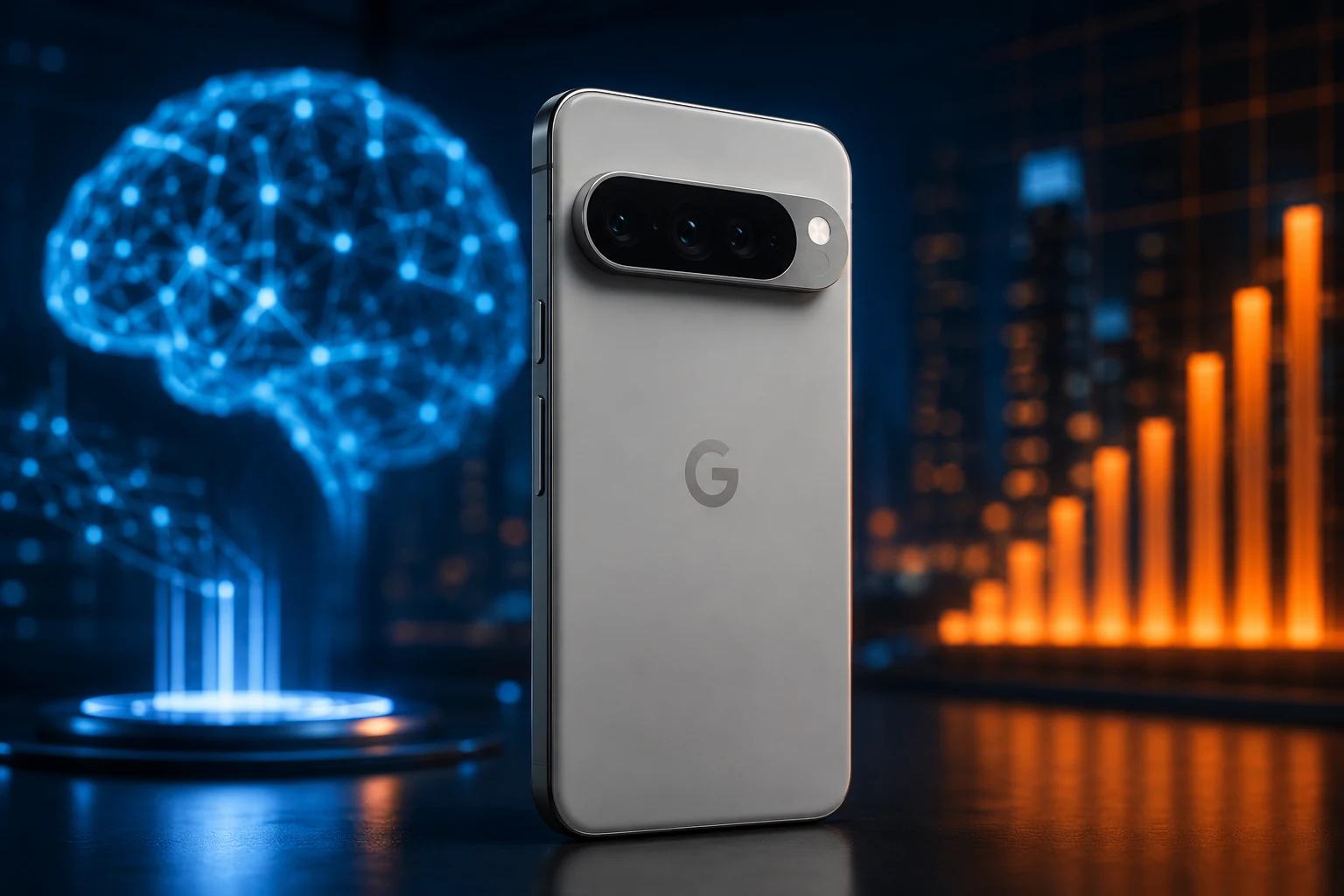
The Pixel 11 price hike is not just another phone rumor floating through the tech timeline before launch season. It feels more like a stress test for the entire AI phone era, because Google has spent the last few years teaching buyers to see Pixel as the smartest Android in the room. Now the question is whether that smarter phone can also ask for more money without making people flinch. In a market where every flagship already feels expensive, even a modest increase can change the mood fast. The Pixel 11 is walking into that tension with AI features, hardware costs, storage expectations, and buyer fatigue all colliding at once.
For years, Pixel phones had a specific kind of appeal that made them different from the glossy flagship race. They were not always the loudest phones, the flashiest phones, or the most spec-heavy phones, but they had character. They leaned on clean software, strong cameras, useful smart features, and a feeling that Google could make Android feel more personal than any other brand. That identity helped Pixel grow from a niche favorite into a serious player in the premium smartphone conversation. With Pixel 11, that same identity is being tested by a simple but uncomfortable question: how much is AI convenience really worth?
Pixel 11 Price Hike Changes the Upgrade Story
The most important thing about the Pixel 11 price hike is not only the higher number on the checkout page. It is the way that number changes the story buyers tell themselves before upgrading. A phone purchase is rarely just math, especially when people are already carrying devices that still take great photos, run fast enough, and receive regular software updates. A price increase forces buyers to slow down and ask whether the new model solves a real problem or simply offers a smoother version of last year’s promise. That is a much harder sell than a brighter screen, a better camera, or a cleaner design.
Google appears to be heading into this cycle with the idea that AI is now central to the Pixel experience, not a bonus feature sitting in the corner. That makes sense from a product strategy angle, because Pixel has become one of the clearest showcases for on-device intelligence, cloud-backed assistants, photo editing, call tools, and contextual software tricks. But when AI becomes part of the price argument, the expectations become heavier. Buyers will not just ask whether the phone is smarter. They will ask whether it is smarter in ways that save time, reduce friction, and feel useful after the first week of ownership.
This is where Pixel 11 enters a more complicated market than the one Pixel 10 faced. AI is no longer a fresh buzzword that automatically makes every feature sound futuristic. People have watched AI arrive in search, email, photos, chatbots, laptops, wearables, and even appliances, so the novelty is fading. The next wave has to prove itself through reliability and everyday usefulness. If the Pixel 11 costs more, Google needs the AI experience to feel less like a demo and more like a daily habit that quietly earns its space in the phone.
Why AI Phones Are Getting More Expensive
The price pressure around AI phones is not happening in a vacuum. Modern smartphones are now competing for some of the same high-performance components and memory resources that power the broader AI boom. Data centers, advanced chips, memory demand, and supply chain pressure have all made the cost environment more intense for device makers. A phone designed to run smarter models, support heavier multitasking, and keep AI features responsive cannot be treated like a simple yearly refresh. That does not automatically make higher prices popular, but it does explain why brands are trying to reset expectations.
For Google, the challenge is even more interesting because Pixel is both a consumer device and a showcase for the company’s larger AI ambitions. The phone is not just hardware sitting on a shelf. It is a pocket-sized stage for Android, Gemini-powered experiences, camera intelligence, voice features, search behavior, and personal computing habits. That gives Google a reason to invest deeply in the Pixel stack, from silicon to software to services. It also means the price of the phone now reflects more than metal, glass, and a camera bar.
Still, consumers do not usually care about the supply chain when they are deciding whether to spend more. They care about value, timing, and whether the upgrade feels emotionally satisfying. A buyer looking at the Pixel 11 may understand that memory costs are higher and AI development is expensive, but understanding is not the same as excitement. The phone still has to feel worth it in the hand, in the camera app, on the lock screen, during calls, and during a long day away from a charger. That is where Google has to turn the business explanation into a product experience people actually love.
The Storage Shift Could Soften the Blow
One way a higher price can feel less harsh is when the base model also becomes meaningfully better. If Pixel 11 moves buyers toward more storage at the entry level, the conversation changes from a pure price hike to a value reshuffle. Many users are already filling phones faster because photos, videos, offline media, apps, AI tools, and message backups keep getting heavier. A phone with more storage from the start can feel more future-proof, especially for people who keep devices for three, four, or even five years. That does not erase the higher cost, but it gives buyers something concrete to hold onto.
This matters because phone shoppers are becoming more practical. The old upgrade cycle, where people swapped phones every year or two, has slowed down for many users. A buyer who plans to keep a phone longer is more likely to care about storage, battery health, software updates, repair options, and long-term performance. A higher starting price becomes easier to accept if the phone feels built for a longer ownership window. Pixel 11 needs to make that argument clearly, because “more AI” alone may not be enough.
The storage angle also connects directly to the way AI phones are used. AI photo editing can create multiple versions of the same image. Video tools can encourage more recording and experimentation. Voice notes, summaries, downloaded models, and smarter apps can quietly increase the amount of local data users carry. If Google wants Pixel 11 to be an AI-first device, a stronger storage floor makes sense. The real question is whether buyers will see that as a thoughtful upgrade or as a forced move that makes the phone harder to buy.
Google Must Prove AI Is More Than Branding
The hardest part of selling an AI phone in 2026 is that everyone is now using the same language. Every major brand wants to talk about smarter cameras, better assistants, generative editing, real-time help, productivity, and personalized experiences. The danger is that AI starts to feel like a sticker on the box instead of a reason to choose one phone over another. Pixel has an advantage because Google controls so much of the software experience and can connect AI deeply into Android. But that advantage only matters if the features feel fast, trustworthy, and available when users actually need them.
Pixel’s best AI features have usually worked because they felt invisible in a good way. Call screening helped people avoid annoying interruptions. Photo tools made messy shots easier to fix. Recorder features turned audio into searchable notes. Smart replies, summaries, and contextual suggestions saved tiny bits of time that added up across the day. If Pixel 11 can expand that kind of usefulness without making the phone feel cluttered, the price conversation becomes easier for Google.
The problem is that users are also becoming more skeptical of features that look impressive in ads but fade into the background after launch. A flashy AI demo can win attention for a day, but a phone has to survive months of real life. People will test whether the assistant understands messy speech, whether photo tools preserve natural detail, whether battery life holds up, and whether privacy controls feel clear. They will also notice if features depend too heavily on cloud processing, subscriptions, or limited regional availability. A higher-priced Pixel 11 has less room for half-finished magic.
The Camera Still Has to Carry the Pixel Brand
No matter how much Google talks about AI, the Pixel brand still lives and dies through the camera for many buyers. The camera is the emotional feature, the one people use at concerts, family dinners, vacations, late-night walks, and random moments that do not repeat. Pixel earned loyalty because it made ordinary photos look surprisingly good without asking users to become photographers. That reputation gives Google room to experiment, but it also raises expectations. If the Pixel 11 costs more, the camera has to feel like one of the clearest reasons why.
AI can help here, but only when it protects the feeling of the moment instead of over-processing it. Buyers want cleaner night shots, better motion handling, sharper portraits, smarter zoom, and video that does not collapse in difficult light. They do not want every image to look like a synthetic postcard. The best version of Pixel 11 would use AI to remove friction while keeping photos believable. That balance could become one of the biggest differences between a phone that feels genuinely smart and one that feels like it is trying too hard.
There is also a cultural shift happening around phone cameras. People are more aware of editing, filters, generative tools, and the blurry line between captured reality and created output. That makes transparency and control more important than ever. Pixel 11 needs to give users powerful tools without making them feel like the phone is hijacking their memories. A premium AI phone should make creativity easier, but it should also respect the original moment.
Android Competition Is Not Standing Still
The smartphone market around Pixel 11 is crowded, aggressive, and full of brands trying to own the AI conversation. Samsung has pushed premium foldables, Galaxy AI features, and a broader ecosystem that stretches from phones to watches, tablets, earbuds, and smart rings. Apple continues to control the high-end loyalty game with iPhone, services, chips, and long software support. Chinese phone makers are pushing fast charging, camera hardware, slim designs, and bold pricing in many global markets. Pixel cannot simply show up with a higher price and assume software charm will do all the work.
This competition is important because buyers compare phones emotionally as much as technically. A Samsung buyer might see foldables as the more exciting premium leap. An iPhone user might stay locked into iMessage, FaceTime, Apple Watch, and years of familiar habits. A budget-conscious Android user might look at last year’s flagship on sale and wonder why they should pay full price for Pixel 11. Google needs to make the Pixel feel distinct enough that it does not get trapped between cheaper Android deals and more established premium ecosystems.
That distinct identity has to be sharper than a spec sheet. Pixel can win when the phone feels calmer, cleaner, and more helpful than rivals. It can win when the camera produces reliable results without drama. It can win when Android updates arrive quickly and AI features feel thoughtfully placed instead of dumped into every menu. But if the price rises and the experience feels only slightly improved, the upgrade story becomes vulnerable. In this market, “pretty good” is not enough when the receipt gets heavier.
What Buyers Should Watch Before Upgrading
For anyone thinking about buying Pixel 11, the smartest move is to look beyond the launch hype and focus on practical details. Start with storage, because that determines how comfortable the phone will feel after years of photos, videos, apps, and offline files. Then look at battery life, because AI features are only fun when the phone can make it through a full day without anxiety. Camera improvements matter, but they should be judged through real-world samples, not polished stage images. Finally, pay attention to trade-in values, launch deals, and carrier bundles, because those can completely change the value equation.
It is also worth asking whether the AI features match your actual routine. If you take lots of photos, record meetings, screen calls, translate conversations, write on the go, or rely heavily on voice tools, Pixel 11 could feel like a meaningful upgrade. If you mostly text, browse, stream, and take casual photos, a discounted Pixel 10 or another Android flagship might make more sense. The best phone is not always the newest one. It is the one that makes your daily life smoother without making your budget feel reckless.
Buyers should also watch how Google handles regional availability for AI features. A phone can sound incredible on a U.S. launch stage, but the experience may vary across markets depending on language support, regulations, network partnerships, and software rollout schedules. That matters for international readers who want the full Pixel experience instead of a partial version. Before spending premium money, users should check whether the headline features work where they live. The higher the price goes, the less patience people will have for features that arrive late or stay locked to certain regions.
The Bigger Trend: Premium Phones Need New Logic
The Pixel 11 price story is really part of a bigger trend across premium tech. Phones are lasting longer, upgrades are becoming less obvious, and brands are searching for new reasons to keep people excited. AI is the most powerful answer the industry has right now, but it is also risky because it can feel abstract. A faster chip is easy to benchmark, and a better camera is easy to compare. A smarter phone is harder to prove unless the intelligence shows up in moments that feel personal and repeatable.
This is why the next phase of flagship phones may be less about raw specs and more about trust. Users need to trust that AI suggestions are useful. They need to trust that private data is handled carefully. They need to trust that features will not disappear behind subscriptions after the launch glow fades. They also need to trust that the phone will stay fast, supported, and relevant for years. Pixel 11 has a chance to define that trust if Google treats AI as a long-term experience rather than a launch-season headline.
There is a real opportunity here for Google because Android still needs a clear AI flagship that feels polished, accessible, and human. Pixel can be that phone if it avoids the trap of becoming too expensive for its own fan base. The brand has always been strongest when it makes advanced technology feel simple. A higher price does not destroy that identity, but it does put pressure on every decision. The design, battery, camera, software, storage, and AI features all have to work together with fewer excuses.
Conclusion: Pixel 11 Has to Earn the Hike
The Pixel 11 price hike could become a turning point for Google’s phone strategy. If the device delivers better storage, stronger AI, improved efficiency, dependable cameras, and a smoother long-term experience, buyers may accept the increase as part of a bigger shift toward smarter phones. If the upgrades feel thin, the higher price will make every weakness louder. That is the reality of premium tech in 2026, where excitement is no longer enough by itself. Pixel 11 has to earn the hike not through buzzwords, but through everyday moments that make users feel like the phone is genuinely working for them.
The AI phone era is still young, and Pixel 11 may become one of its first serious value tests. Google has the software, the data, the ecosystem, and the brand personality to make an AI-first Android phone feel different from everything else on the shelf. But consumers are sharper now, and they know when a feature is useful versus when it is just marketing dressed in futuristic language. A higher price means Google must show discipline, not just ambition. If Pixel 11 can make AI feel practical, personal, and worth paying for, the price hike may become less of a warning sign and more of a preview of where smartphones are heading next.