Google TPU Gen 8 Powers Faster AI Gadgets
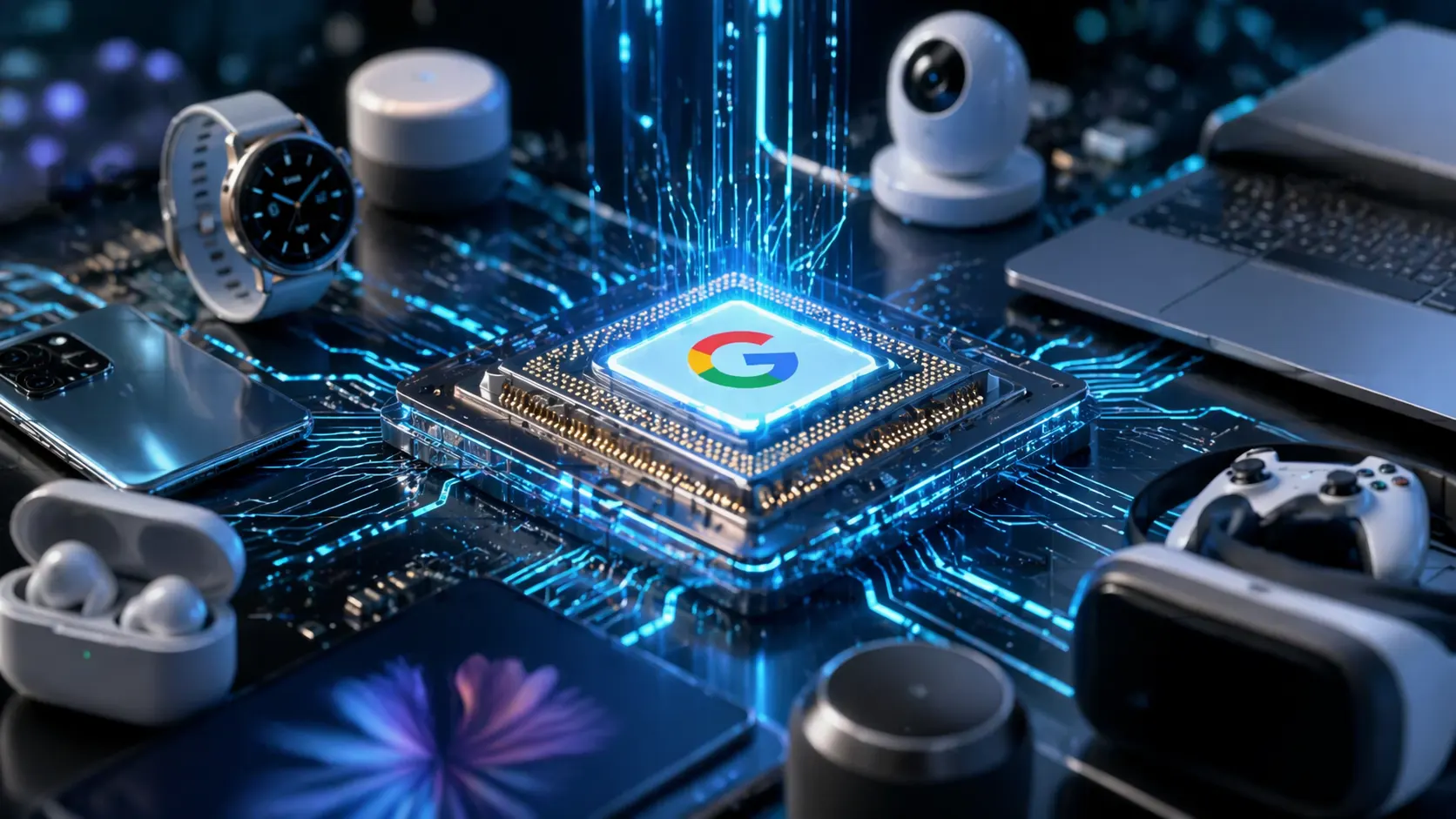
The race to dominate the future of artificial intelligence just entered a new phase. Google has officially introduced TPU Gen 8, the newest generation of its Tensor Processing Unit platform, and the impact could stretch far beyond cloud servers. While TPU chips are traditionally linked with data centers and large-scale AI workloads, this latest leap signals something much bigger: faster, smarter, and more efficient AI gadgets for consumers around the world.
For years, people have watched smartphones, laptops, earbuds, cameras, and smart home devices become increasingly intelligent. Voice assistants became more natural. Cameras learned to optimize scenes instantly. Wearables started tracking health in real time. But even with those upgrades, many gadgets still depended on remote servers for advanced AI features. That often meant delays, battery drain, privacy concerns, and inconsistent performance.
Now, with Google TPU Gen 8, the industry may be approaching a new era where high-performance AI becomes faster, cheaper, and more accessible across everyday devices. This matters because users no longer want gadgets that are only connected. They want gadgets that can think, react, predict, and personalize instantly.
The arrival of TPU Gen 8 is not just a chip story. It is a story about how modern life is being redesigned through silicon power. From premium smartphones to AI-powered glasses, gaming hardware, healthcare wearables, and productivity laptops, the ripple effect of Google’s newest TPU platform could reshape the next generation of consumer electronics.
What Is Google TPU Gen 8?
Google’s Tensor Processing Units, or TPUs, are custom-designed chips built specifically for machine learning tasks. Unlike traditional CPUs that handle general computing or GPUs that accelerate graphics and parallel workloads, TPUs are optimized for neural network processing. They are designed to train AI models faster and run inference more efficiently.
TPU Gen 8 represents the newest step in that evolution. While earlier generations already powered major Google services such as Search, Translate, YouTube recommendations, and Gemini AI workloads, Gen 8 reportedly delivers stronger performance, improved energy efficiency, and better scalability for next-generation AI models.
That may sound technical, but the real-world meaning is simple: AI systems can process more data in less time while using fewer resources.
This matters because the demand for AI has exploded. Users now expect real-time image generation, voice understanding, language translation, predictive automation, and advanced personalization. Older systems can struggle under that pressure. New chips like TPU Gen 8 are designed to keep up.
Why TPU Gen 8 Matters for AI Gadgets
Many people assume data-center chips have nothing to do with personal gadgets. That idea is outdated. The cloud increasingly powers what happens on your devices. When you ask an assistant a question, generate a photo, summarize notes, or sync smart home routines, cloud AI often does the heavy lifting.
With Google TPU Gen 8, those cloud tasks can become dramatically faster. That means consumer gadgets connected to Google ecosystems could gain benefits such as:
- Faster voice assistant responses
- Smarter photo editing tools
- Real-time language translation
- Better battery optimization through predictive AI
- Improved search experiences on devices
- More personalized recommendations
- Stronger smart home automation
- Lower latency gaming assistance tools
This is where the excitement begins. Gadgets are no longer judged only by screen quality or battery size. Intelligence is now a core feature.
The New Era of Smart Smartphones
Smartphones are expected to be one of the biggest winners from TPU Gen 8 improvements. Modern users already rely on AI for daily tasks without even noticing it.
Your phone may already use AI to:
- Detect spam calls
- Improve night photography
- Suggest replies in messages
- Remove background noise in calls
- Predict apps you need next
- Translate text from the camera
- Organize photos automatically
With stronger AI infrastructure powered by TPU Gen 8, these tools can become faster and more accurate.
Imagine opening your camera and instantly getting cinematic edits. Imagine voice typing with near-human accuracy in multiple languages. Imagine your phone learning your habits so well that battery life improves automatically based on your lifestyle.
That is where the market is moving.
Laptops and Productivity Devices Get Smarter
The laptop market has shifted hard toward AI PCs. Consumers now want notebooks that can summarize meetings, generate presentations, clean audio, and automate repetitive tasks.
Google TPU Gen 8 can support cloud-side AI services that sync with Chromebooks, Android tablets, and productivity platforms. This could create smoother experiences such as:
- Instant AI note summaries
- Smarter browser assistance
- Automated workflow suggestions
- Better video call enhancement
- Faster cloud rendering for creators
- Intelligent multitasking recommendations
Students, freelancers, creators, and remote workers are likely to benefit the most. In a world where speed equals productivity, even a few saved minutes each day become valuable.
AI Wearables Could Explode in 2026
Wearables have already moved beyond step counting. Smartwatches now monitor heart rate, sleep quality, oxygen levels, stress trends, and workout recovery.
The next wave is proactive intelligence.
Powered by stronger AI systems, wearables could evolve into devices that:
- Predict fatigue before you feel it
- Detect stress patterns early
- Recommend hydration timing
- Suggest rest windows
- Translate speech through earbuds live
- Personalize coaching in real time
TPU Gen 8 could help process massive health and behavioral data sets faster in the cloud while edge devices deliver results instantly.
That combination may turn wearables into one of the hottest gadget categories of the next few years.
Smart Home Devices Become Actually Smart
The phrase “smart home” has often been overused. Many devices still feel clunky, fragmented, and limited. People buy smart bulbs or speakers, then stop using advanced features because setup feels annoying.
This is where AI can fix the experience.
With stronger Google AI infrastructure, smart home ecosystems may become more natural. Instead of manually programming scenes, users could simply say:
- “Make the room better for movie night.”
- “Help me wake up easier tomorrow.”
- “Reduce energy usage this week.”
- “Prepare the house for guests tonight.”
AI interprets context, habits, schedules, and preferences. That creates a home that responds intelligently instead of waiting for commands.
TPU Gen 8 can accelerate the backend systems needed to make that happen.
Gaming Gadgets Also Stand to Benefit
Gaming is no longer just about raw graphics. AI is becoming central to performance optimization, NPC behavior, voice tools, and content generation.
Connected gaming gadgets could use improved cloud AI to enable:
- Real-time coaching tips
- Smarter matchmaking
- Voice moderation tools
- Dynamic game worlds
- AI-generated content assistance
- Better streaming optimization
Gaming phones, handheld consoles, smart monitors, and creator gear may all gain from the broader AI hardware boom.
For younger users especially, gadgets that combine performance with intelligence are becoming the new standard.
Why Speed Is Everything Now
In the Gen Z and modern creator era, waiting feels ancient. People expect instant results.
A photo edit should happen now.
A search answer should happen now.
A subtitle translation should happen now.
A voice assistant should understand now.
That is why TPU Gen 8 matters. Faster AI is not a luxury anymore. It is becoming baseline user expectation.
When devices lag, users blame the gadget. When AI responds instantly, users feel the device is premium.
That perception can decide market winners.
Battery Life and Efficiency Matter Too
Performance gets headlines, but efficiency wins long-term loyalty.
Consumers hate devices that overheat, drain quickly, or slow down after updates. Better AI infrastructure can reduce wasteful processing and optimize when tasks happen.
For example:
- Cloud AI can handle heavy workloads more efficiently
- Devices can offload tasks intelligently
- Predictive systems reduce unnecessary background activity
- Personalized power management extends battery life
If TPU Gen 8 helps power these systems at scale, users may experience smarter gadgets that also last longer.
That combination is rare and valuable.
Privacy Will Be a Key Debate
As AI gadgets become more capable, privacy questions grow louder.
People love convenience, but they also worry about:
- Voice data collection
- Behavioral tracking
- Personalized profiling
- Health data storage
- Location intelligence
- Camera-based AI features
Google and other tech companies will need to prove that faster AI can also be responsible AI.
Consumers increasingly want transparency, control, and on-device processing where possible. The future winners in gadgets may not just be the smartest brands, but the most trusted ones.
How Competitors May Respond
Google is not alone in this race. Major rivals are pushing hard:
- Apple with on-device AI ecosystems
- Microsoft with Copilot integrations
- Amazon with Alexa reinvention
- Samsung with Galaxy AI expansion
- Qualcomm with mobile AI chips
- NVIDIA with AI acceleration leadership
TPU Gen 8 adds pressure to the market. When one player improves infrastructure, others move faster too.
That usually benefits consumers through:
- Better gadgets
- Lower prices
- Faster innovation
- More feature competition
The AI gadget war is only heating up.
What This Means for Gadget Buyers
If you are planning to buy new tech soon, 2026 and beyond could be a smart time to upgrade selectively.
Look for devices that emphasize:
- AI-first productivity
- Long software support
- Strong battery management
- Smart ecosystem integration
- Privacy controls
- Real performance gains, not marketing hype
Many gadgets now launch with flashy AI labels but limited usefulness. The winners will be devices where AI solves real problems.
Consumers are getting smarter too. Hype alone is no longer enough.
The Rise of Invisible AI
The best AI often disappears into the background.
Users do not want to open ten separate apps for ten different tasks. They want gadgets that quietly help:
- Cameras that just capture better shots
- Earbuds that cancel noise automatically
- Watches that detect patterns early
- Laptops that simplify workflow
- Homes that reduce friction daily
TPU Gen 8 may help accelerate this invisible AI era, where intelligence becomes built-in rather than advertised.
That is the sweet spot of modern technology.
Google’s Bigger Strategy
This launch also signals Google’s long-term ambition. The company wants to own more than search or ads. It wants to power the AI layer of everyday life.
That means influence across:
- Phones
- Browsers
- Cloud computing
- Smart homes
- Productivity tools
- Wearables
- Vehicles
- Entertainment systems
TPU Gen 8 is part of the foundation.
Consumers may never physically see a TPU chip, but they may feel its impact every day through faster apps, smoother devices, and smarter services.
Challenges Ahead
Despite the hype, there are still obstacles.
Infrastructure Costs
Building advanced AI systems is expensive. Companies must balance innovation with profitability.
Energy Demand
Large-scale AI workloads consume serious power. Efficiency gains must continue.
Regulation
Governments worldwide are watching AI closely.
Consumer Skepticism
Some buyers are tired of empty AI buzzwords.
Fragmentation
Not every gadget ecosystem works smoothly together.
Google’s success will depend on execution, not just announcements.
Why This Story Matters Right Now
Tech cycles move fast. Yesterday it was 5G. Then foldables. Then generative AI apps. Now the next battle is infrastructure powering intelligent devices.
That is why Google TPU Gen 8 matters more than a normal chip launch. It hints at the next stage of consumer technology where gadgets stop being passive tools and become active assistants.
The companies that deliver useful intelligence with speed, trust, and simplicity will dominate the next decade.
Final Verdict
Google TPU Gen 8 could become one of the most important hidden upgrades in the gadget industry. While average users may never search for TPU specs, they will notice the results: quicker assistants, smarter phones, better wearables, smoother laptops, and more responsive homes.
The future of gadgets is no longer just thinner designs or brighter displays. It is intelligent performance that feels instant and natural.
If Google executes well, TPU Gen 8 may help push AI gadgets from interesting extras into everyday essentials.
And once users experience truly fast AI, there is no going back.
Want more gadget insights?
Explore more articles on smartphones, wearables, flagship launches, AI devices, and the future of consumer tech.

Related Articles
AI Wearables 2026 Are Replacing Smartphones
AI Smart Ring Trends Reshape Premium Gadgets