
Apple Foldable iPhone and AI AirPods Plan
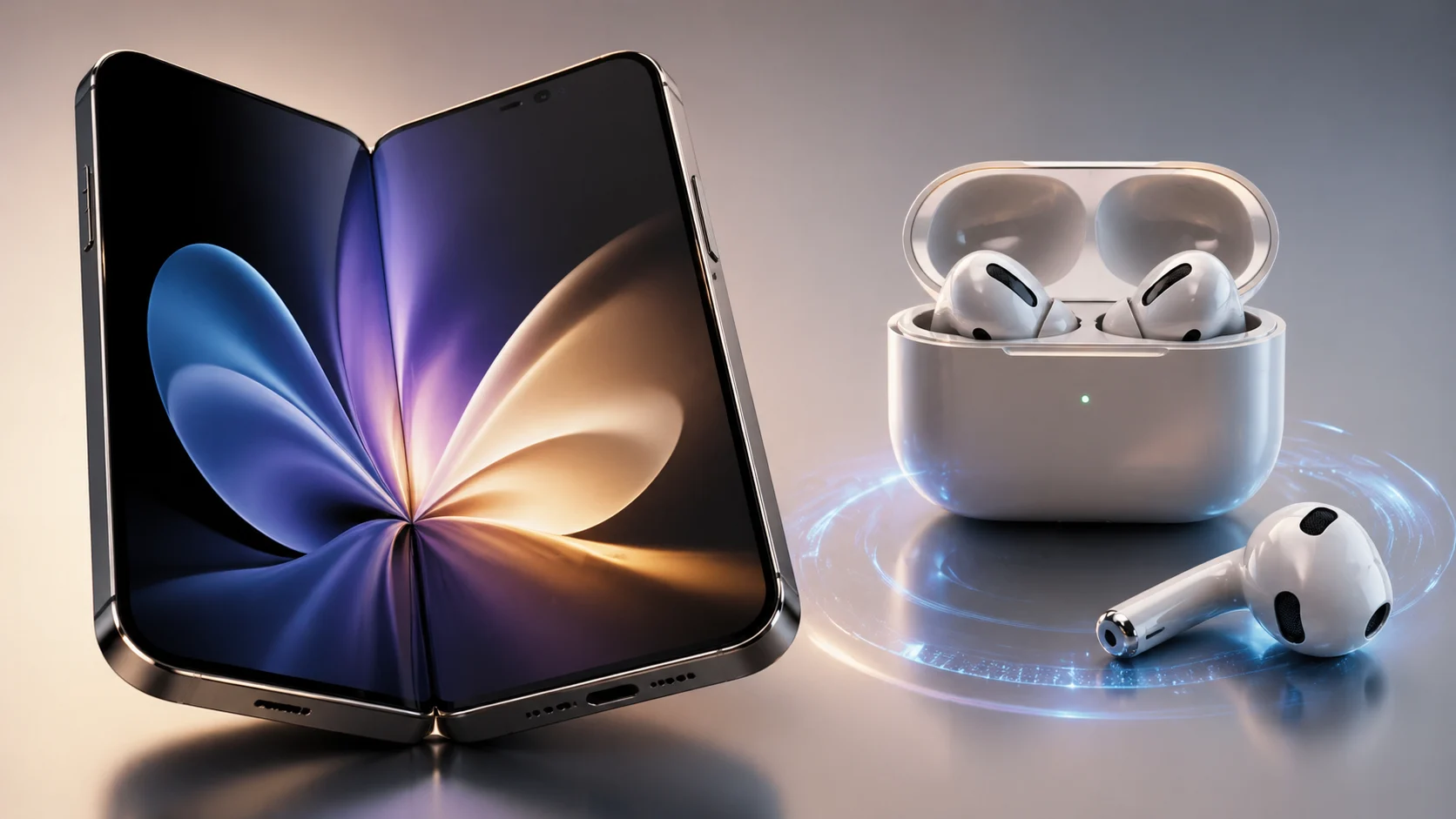
Apple is reportedly preparing one of its most ambitious hardware waves in years, with a foldable iPhone and next-generation AI-powered AirPods leading the conversation. For a company known for taking its time before entering new categories, this roadmap feels like a major signal. Apple has often waited until technology matures before launching products, and if recent reports are accurate, the company believes the timing is finally right. That means the smartphone market, wearable tech industry, and broader AI ecosystem could be heading toward another major reset.
For years, foldable phones were seen as experimental devices mostly dominated by Android brands. Companies like Samsung, Huawei, Honor, and Motorola pushed aggressively into foldables while Apple stayed silent. At the same time, wireless earbuds became common, but true intelligence inside audio devices remained limited. Now Apple may be preparing to challenge both spaces at once. A foldable iPhone would target premium mobile users, while AI AirPods could transform earbuds into always-available smart assistants.
This matters because Apple rarely launches products just to follow trends. The company usually waits, studies user behavior, and then enters a category with tight hardware-software integration. If Apple launches a foldable phone and AI-focused earbuds together or within the same cycle, it could create a connected ecosystem that rivals struggle to match. That ecosystem strategy has been Apple’s strongest weapon for over a decade.
The rumored roadmap also arrives during a critical moment. Smartphone growth has slowed globally, AI competition is heating up, and consumers are demanding devices that feel genuinely new. Incremental camera upgrades or slightly faster chips are no longer enough to excite everyone. Users want fresh form factors, smarter experiences, and hardware that solves real problems. Apple appears ready to answer that demand.
Why the Foldable iPhone Matters Now
The idea of a foldable iPhone has existed in rumors for years, but 2026 may finally be the turning point. Foldable display technology has improved significantly. Hinges are more durable, crease visibility has decreased, and battery efficiency has become better than early generations. These improvements reduce many of the concerns that kept mainstream buyers away.
Apple’s challenge is different from competitors. It does not need to be first. It needs to be the most polished. If Apple launches a foldable iPhone, expectations will be extremely high. Consumers will expect premium materials, excellent battery life, top-tier cameras, and seamless iOS optimization for dual-screen or larger-screen workflows.
A foldable iPhone could create a new category inside Apple’s lineup. Traditional iPhones would remain the mainstream choice, while the foldable model becomes the ultra-premium option. Think of it as the iPhone Pro Max strategy taken to another level. This would allow Apple to expand average selling prices while giving power users something truly distinct.
The timing also aligns with maturing user behavior. More people now use phones for work, gaming, video editing, note-taking, and multitasking. A foldable device can offer tablet-like productivity in a pocket-sized form. That balance between portability and screen space is exactly what many users have wanted.
Possible Foldable iPhone Design Direction
While official details remain unconfirmed, industry expectations usually point to two main designs: clamshell and book-style foldable. A clamshell folds vertically into a compact square shape, while a book-style model opens like a mini tablet. Apple may prefer the book-style route because it better supports productivity and media experiences.
Imagine an iPhone that looks standard when closed, then unfolds into a larger display for multitasking, gaming, reading, or editing content. Apple could combine this with iPad-inspired software features, allowing floating apps, split-screen tools, and drag-and-drop workflows. That would instantly separate it from many competitors that still struggle with software optimization.
Material quality will likely be central. Apple is known for premium finishes, precise machining, and refined durability. If it enters foldables, expect a major focus on hinge engineering, scratch resistance, and long-term reliability. Apple understands that premium buyers hate fragility.
Battery innovation would also be critical. Foldables need more power because they use larger displays. Apple may rely on custom silicon efficiency, denser batteries, and intelligent background power management. That combination could help the foldable iPhone outperform rivals in real-world endurance.
How AI AirPods Could Change Wearables
The second half of the roadmap may be even more disruptive. AI AirPods sound simple at first, but they could redefine how people interact with technology daily. Earbuds are already among Apple’s most successful products. Adding advanced AI features could turn them from accessories into essential computing devices.
Instead of only playing music and handling calls, AI AirPods could become personal assistants that live in your ears. Voice requests would be faster, more natural, and more context-aware. You might ask for translations, reminders, summaries, directions, or message responses without touching your phone.
Imagine walking through a city and hearing real-time navigation prompts naturally. Imagine attending meetings and receiving instant summaries later. Imagine language translation during travel that feels nearly seamless. These are the kinds of features that AI hardware companies are racing toward, and Apple has the ecosystem to deliver them at scale.
Because Apple controls iPhone chips, software, cloud systems, and wearables, AI AirPods could work better than standalone competitors. They would not need to replace the phone. They would extend it.
The Role of Apple Intelligence
Apple has already shown strong interest in AI through system-wide intelligence features. The next step is moving AI beyond screens. That is where AirPods become interesting. Instead of always opening an app, users could interact with intelligence passively throughout the day.
This shift matters because screens create friction. You need to unlock the device, open an app, and navigate menus. Audio interfaces remove steps. If Apple makes AI reliable enough, AirPods could become the fastest way to access information.
Apple also prioritizes privacy, which may help adoption. Many consumers remain cautious about always-listening devices and cloud AI tools. If Apple can process some requests on-device while protecting personal data, it gains a strong competitive advantage.
The company may also integrate AirPods with Siri’s next generation. Siri has long faced criticism for lagging behind newer AI assistants. AI AirPods could be the product that reintroduces Siri in a smarter and more useful form.
Why This Roadmap Is Smart Business
From a business perspective, the combination of a foldable iPhone and AI AirPods makes sense. Apple’s biggest revenue engine remains the iPhone, but growth from standard upgrades has slowed. New categories help restart momentum.
A foldable iPhone would create excitement at the premium end of the market. It gives loyal users a reason to spend more and upgrade faster. High-end hardware also tends to carry strong margins when executed well.
Meanwhile, AirPods already have a massive installed base. Adding AI features encourages upgrades from existing users. Many customers who would not buy a foldable phone might still buy smarter earbuds. That means Apple can capture growth from multiple price points.
Together, these products strengthen ecosystem lock-in. A user with iPhone, AirPods, Apple Watch, MacBook, and iCloud services becomes deeply connected to Apple’s world. Every new intelligent feature increases switching costs.
Pressure on Samsung and Android Brands
Apple entering foldables would immediately intensify competition. Samsung currently leads the foldable market in visibility, especially with the Galaxy Z Fold and Z Flip lines. Other Chinese brands have also pushed innovation aggressively.
But Apple changes markets simply by arriving. Even consumers who ignored foldables before may suddenly become interested once Apple launches its version. Retail attention, media coverage, accessory ecosystems, and developer support would all rise.
Android brands would need to respond faster on pricing, battery life, camera quality, and software polish. They would also need stronger AI ecosystems, because Apple would likely position its foldable device as part of a larger intelligent platform rather than a standalone gadget.
This means the foldable category could move from niche to mainstream far quicker than expected.
What Consumers Actually Want
The most important question is whether users truly want these devices. The answer depends on execution. Consumers do not buy concepts forever. They buy convenience.
For the foldable iPhone, users want:
- Bigger screen without carrying a tablet
- Strong battery life
- Reliable hinge durability
- Great cameras
- No awkward software bugs
For AI AirPods, users want:
- Accurate voice recognition
- Useful real-time help
- Comfortable battery life
- Strong privacy protection
- Natural conversation flow
If Apple solves these basics, demand could be massive. If it misses them, even great branding may not be enough.
Pricing Could Be the Biggest Barrier
Premium Apple hardware rarely launches cheap, and foldables are expensive by nature. A first-generation foldable iPhone could sit at the top of Apple’s pricing ladder. That may limit volume initially, but Apple often starts premium before scaling broader.
AI AirPods may be easier to adopt if features arrive in Pro-tier models first. Apple can then gradually expand certain capabilities to mainstream versions over time.
Pricing strategy will matter because consumers are increasingly selective. Economic pressure in many markets means buyers ask harder questions before upgrading. Apple must prove these products offer real value, not just novelty.
The Gen Z Angle
Younger consumers care about experience, speed, design, and identity. A foldable iPhone naturally appeals to visual culture because it looks different and feels futuristic. It becomes a conversation device, not just a phone.
AI AirPods fit lifestyle habits even more directly. Gen Z users already live with audio content, voice notes, podcasts, and multitasking. Smart earbuds that help manage schedules, summarize content, or translate conversations match how many younger users already behave.
If Apple markets these products well, it could dominate social attention quickly.
Software Will Decide Everything
Hardware headlines generate clicks, but software determines success. Apple’s biggest advantage is that it builds both sides of the experience. That means foldable iPhone apps can be optimized from day one, and AI AirPods can connect deeply into iOS services.
Developers would likely adapt quickly if Apple provides clear tools. Productivity apps, games, video editors, and creative platforms could all benefit from larger foldable screens.
For AirPods, software updates could continuously improve intelligence after launch. That creates long-term value instead of one-time hardware excitement.
What to Watch Next
As launch windows approach, several signals will matter:
- Supply chain leaks about foldable displays
- Patent activity around hinges and screen layers
- AirPods sensors and chip rumors
- Siri AI upgrades in software previews
- Battery technology breakthroughs
- Pricing and storage tier leaks
These clues often reveal how serious Apple’s plans really are.
Final Verdict
The rumored arrival of a foldable iPhone and AI AirPods could mark Apple’s boldest hardware era in years. Instead of relying only on faster processors and camera tweaks, the company appears ready to rethink how people use phones and wearables. That is exactly what the market has been waiting for.
A foldable iPhone could make premium smartphones exciting again. AI AirPods could make voice-first computing practical for millions. Together, they represent something larger than two products. They represent Apple trying to shape the next decade of personal technology.
Nothing is guaranteed until official announcements happen, but the direction is clear. Apple wants to lead the future again, not just refine the present. If execution matches ambition, 2026 could become one of the company’s most important years yet.
Want more gadget insights?
Explore more articles on smartphones, wearables, flagship launches, AI devices, and the future of consumer tech.

Related Articles
AI Wearables 2026 Are Replacing Smartphones

AI Smart Ring Trends Reshape Premium Gadgets