
Apple China Chips Bet Puts US Approval in Focus
 Vortixel
18 minutes read
Vortixel
18 minutes read
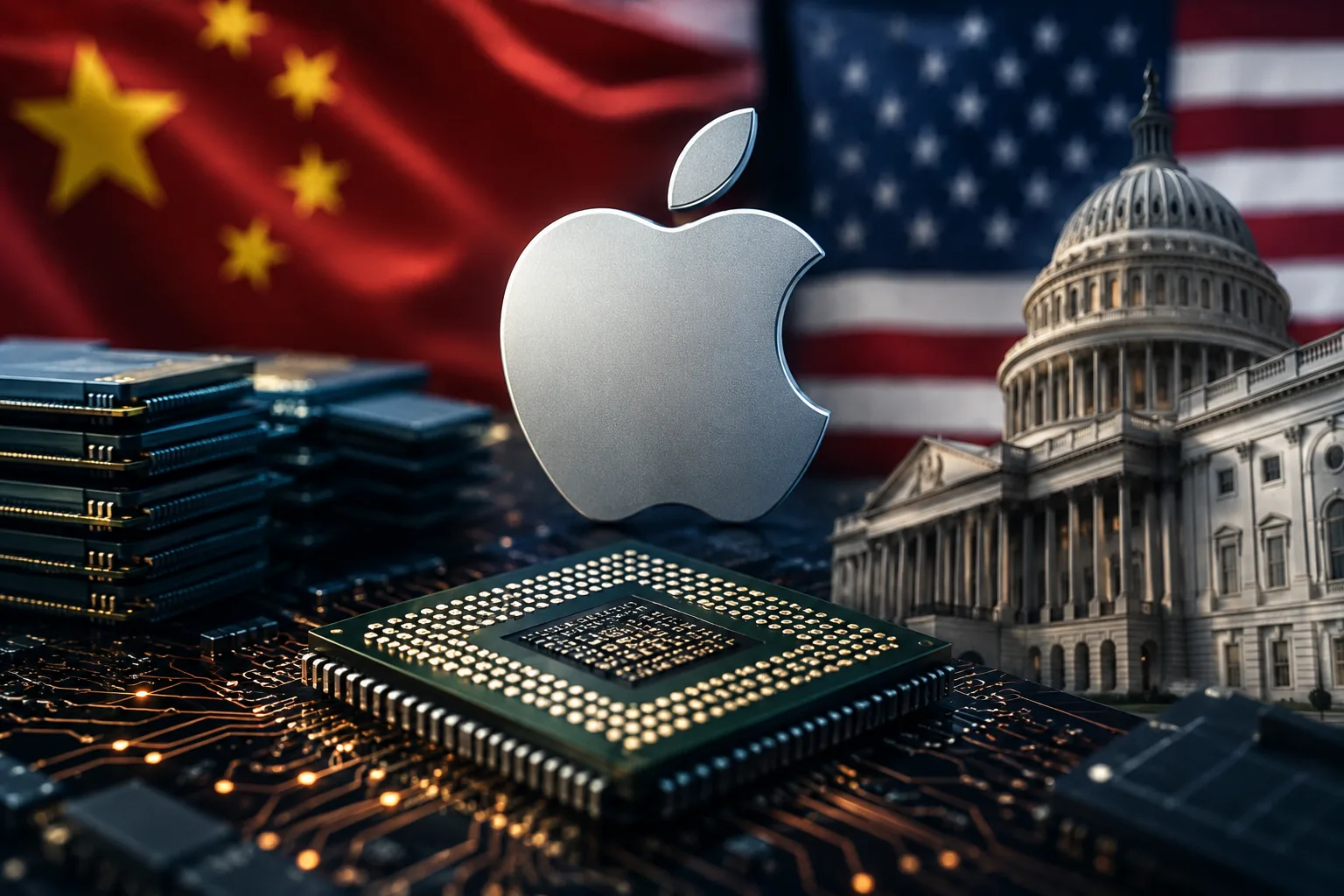
Apple China chips is suddenly one of the biggest gadget stories of the moment, not because it sounds flashy, but because it exposes how complicated the tech world has become behind the clean glass of an iPhone screen. Apple is reportedly seeking U.S. approval to buy memory chips from China’s ChangXin Memory Technologies, better known as CXMT, at a time when memory prices are climbing and AI demand is swallowing supply across the semiconductor market. For everyday users, this may look like another distant policy fight between Washington, Beijing, and Silicon Valley. But the outcome could quietly shape the future price of iPhones, iPads, MacBooks, and other devices people buy without thinking much about where every tiny part comes from. In a gadget market already pressured by higher component costs, longer upgrade cycles, and tighter consumer spending, Apple’s chip move is more than a supply-chain headline.
The story lands at a sensitive moment for the global tech industry because memory chips are no longer boring background parts. They are the backbone of smartphones, laptops, tablets, wearables, cloud servers, and the new wave of AI hardware that every major company wants to control. Apple has spent years building a reputation around privacy, performance, premium design, and tight hardware-software integration, but even Apple cannot escape the economics of memory supply. When the same chip factories are being pulled toward AI data centers, consumer gadgets start feeling the squeeze. That is why this report matters for Apple China chips coverage, gadget buyers, developers, investors, and anyone watching the next phase of the smartphone market.
Why Apple China Chips Became a Hot Topic
The phrase Apple China chips sounds simple, but the story behind it is layered with economics, politics, and supply-chain pressure. Apple is not just looking for any random supplier to save a few dollars on parts. Memory chips are essential components used to store and move data inside devices, and they affect everything from app performance to multitasking to AI features running on-device. If Apple can access cheaper or more available memory supply, it could gain breathing room as production costs rise across its biggest product lines. If it cannot, the pressure may show up in device pricing, storage tiers, product margins, or launch strategy.
For years, Apple has relied heavily on established memory suppliers such as Samsung, SK hynix, Micron, and other major players in the global chip ecosystem. That setup worked well when supply was more predictable and the biggest demand came from phones, PCs, and consumer electronics. Now the market has changed because AI data centers are competing aggressively for high-performance memory, advanced storage, and related chip capacity. The result is a tighter market where even a company as powerful as Apple has to think harder about where its parts come from. The reported interest in CXMT shows that Apple may be looking for more flexibility before chip costs become an even bigger problem.
CXMT is one of China’s most important memory chip companies, and that alone makes the situation politically sensitive. The company has drawn attention in Washington because of concerns around China’s military-linked technology ecosystem and the broader race for semiconductor independence. Even when commercial transactions are not automatically banned, the reputational and regulatory risks can be serious for a U.S. company. Apple’s brand depends heavily on trust, and anything connected to national security concerns can turn into a public-relations storm fast. That is why U.S. approval is not just paperwork; it is the deciding line between business strategy and political backlash.
The Memory Chip Crunch Behind the Move
The bigger backdrop is the memory chip crunch created by AI’s explosive growth. Companies building AI models and data-center infrastructure need enormous amounts of memory to train, run, and scale their systems. This demand does not just affect the servers sitting inside cloud facilities; it also changes the economics for consumer devices. When suppliers can make more money selling into AI infrastructure, the cost structure for smartphones and laptops becomes less comfortable. Apple, which ships devices at massive scale, feels that shift quickly because even a small increase in component cost can become huge across millions of units.
That pressure is especially important because modern Apple devices are increasingly memory-hungry. iPhones now support advanced computational photography, on-device intelligence, gaming, multitasking, and privacy-focused AI features that need stronger hardware. MacBooks and iPads are also being positioned as serious creative and productivity machines, which means users expect more RAM, faster storage, and better performance at every price point. Apple cannot easily reduce hardware quality without hurting the user experience that makes people pay premium prices. So the company’s options become complicated: absorb the costs, raise prices, change configurations, delay upgrades, or find new suppliers.
This is where CXMT enters the conversation. A new supplier could potentially help Apple reduce dependence on a small group of dominant memory providers. It could also give Apple more negotiating power at a time when the market is tight. However, the political side makes this very different from signing a normal component deal. Any move involving a Chinese chipmaker under U.S. scrutiny risks criticism from lawmakers, national security officials, and industry groups that want critical supply chains kept away from China. Apple is essentially trying to solve a hardware-cost problem inside one of the most sensitive tech-policy debates in the world.
Why U.S. Approval Matters So Much
U.S. approval matters because this is not only about whether Apple can buy chips at a lower price. It is about whether Washington is willing to give one of America’s most visible tech companies room to work with a Chinese supplier that has already attracted government concern. The U.S. has spent years tightening control over advanced semiconductor technology, export rules, and business ties with companies considered risky. Those policies are designed to protect national security and slow the transfer of critical technology to strategic rivals. Apple’s request therefore becomes a real-world test of how flexible those rules can be when a major American company faces rising costs.
There is also a difference between being blacklisted in a way that creates reputational risk and being fully blocked under stricter trade restrictions. That distinction can sound technical, but it matters a lot. If a company is under one type of U.S. designation, business may still be possible, though politically uncomfortable. If it lands under a more restrictive trade list, deals involving U.S. technology can become extremely difficult or effectively impossible. Apple appears to be trying to get clarity before committing to a supplier relationship that could later become a regulatory trap.
From Apple’s perspective, asking for approval early is a defensive move. The company does not want to build a supply plan around CXMT only to face a sudden policy reversal months later. It also does not want to be accused of ignoring national security concerns if political pressure grows. By approaching U.S. officials, Apple can frame the issue as a controlled, reviewed, and strategic request rather than a quiet workaround. That does not guarantee approval, but it gives the company a stronger position if the conversation becomes public and controversial.
What This Means for iPhone and MacBook Prices
For consumers, the biggest question is simple: will this affect prices? The answer is likely yes, at least indirectly, because memory costs are one of the forces shaping future device pricing. Apple already sells products in carefully designed storage and memory tiers, where small upgrades can add a noticeable amount to the final price. If memory components become more expensive, Apple has to decide whether to protect margins or protect customer value. That decision can influence whether entry-level devices stay attractive or start feeling underpowered compared with what users actually need.
The iPhone is the clearest example because it sits at the center of Apple’s business and global brand. Every new iPhone generation is expected to bring better cameras, faster performance, stronger AI features, and longer software support. Those upgrades require hardware investment, and memory is part of that equation. If Apple cannot control memory costs, it may become harder to offer generous base storage, stronger multitasking, or future-ready AI capability without raising prices. That is why a supplier decision happening far from the consumer spotlight could eventually show up on the product page.
MacBooks may feel the pressure even more because customers buying laptops often care deeply about RAM and storage configurations. Creative professionals, students, developers, and remote workers already know how quickly upgrade pricing can climb. If memory shortages continue, Apple could face a tougher balancing act between keeping base models affordable and making them powerful enough for modern workflows. The company has been pushing Apple Silicon as a performance and efficiency advantage, but memory pricing can still limit how much value users get at each tier. A cheaper or more available supply chain would help Apple keep the product story cleaner.
The AI Boom Is Changing Gadget Economics
The most interesting part of this story is how AI is changing gadget economics from the inside. A few years ago, AI felt like software living mostly in apps, search tools, and cloud services. Now AI demand is reshaping the physical supply chain that produces everyday devices. Memory chips, processors, servers, cooling systems, and power infrastructure are all being pulled into the AI race. As that happens, consumer gadgets are no longer insulated from the cost of building massive AI systems.
Apple is trying to move more intelligence onto its own devices, which fits its privacy-focused identity. On-device AI can reduce reliance on cloud processing, make features faster, and keep sensitive data closer to the user. But that strategy also requires capable hardware, including enough memory to run smarter features smoothly. If memory becomes too expensive, Apple’s AI roadmap could face more difficult trade-offs. The company may need to prioritize which devices get the best features first and which models receive lighter versions.
This is not just an Apple problem. Android phone makers, laptop brands, gaming device companies, and wearable manufacturers are all competing for the same broader supply ecosystem. The rise of AI PCs, AI phones, smart glasses, and edge devices means more products want better local processing and memory. That demand can push the entire gadget market into a new pricing era. For readers following Technology, this is one of the clearest examples of how AI hype becomes real hardware pressure.
Why Apple Cannot Simply Ignore China
Apple’s relationship with China has always been complicated because the country is both a major manufacturing base and a massive consumer market. Apple has spent years diversifying parts of its production into India, Vietnam, and other regions, but supply-chain transformation at Apple’s scale takes time. The company cannot flip a switch and replace every supplier, factory, logistics route, and engineering relationship overnight. China remains deeply embedded in the global electronics ecosystem, especially for high-volume device production. That reality makes clean political narratives difficult to apply to real hardware manufacturing.
At the same time, Apple knows the geopolitical risk is not going away. U.S.-China technology tensions now touch chips, AI, operating systems, cloud infrastructure, batteries, telecom equipment, and manufacturing tools. Every major tech company has to plan around sudden policy changes, new restrictions, and shifting political expectations. Apple’s reported attempt to get U.S. approval reflects that new operating environment. The company is not only managing suppliers; it is managing diplomatic risk as part of product planning.
This is why the CXMT situation feels like a preview of future gadget industry decisions. Companies may increasingly ask governments for guidance before working with sensitive suppliers. Regulators may become more involved in supply-chain choices that used to be private business decisions. Consumers may also become more aware of where components come from, especially when national security debates enter mainstream tech coverage. The simple act of buying memory chips has turned into a strategic decision with political, financial, and brand consequences.
The Brand Risk Apple Has to Manage
Apple is one of the few companies whose supply-chain decisions can become cultural news. People do not usually care deeply about which supplier provides memory inside a laptop, but Apple is different because the brand is tied to trust, privacy, and premium control. If Apple works with a Chinese supplier facing U.S. scrutiny, critics can frame the decision as putting cost savings above national security. Even if the technical and legal details are more nuanced, public perception often moves faster than policy explanations. Apple has to manage that risk carefully because its brand value is one of its strongest assets.
The company also has to think about how lawmakers might respond. Tech policy has become a high-profile political arena, and semiconductor supply chains are treated as strategic infrastructure. A deal involving CXMT could attract criticism from officials who want American companies to reduce exposure to Chinese tech firms. Apple may argue that it needs flexibility to manage costs and maintain product stability, but critics may argue that the long-term risk is too high. That tension could make any approval politically expensive even if it makes business sense.
Brand risk also extends beyond Washington. Customers in different regions may interpret the story differently depending on local politics, device pricing, and trust in Apple’s supply chain. Some buyers may not care as long as devices remain affordable and reliable. Others may worry about security, especially if headlines simplify the issue into a story about Apple buying chips from a blacklisted Chinese company. Apple’s challenge is to keep the conversation technical, controlled, and focused on quality assurance. In a viral news cycle, that is easier said than done.
How This Could Shape Future Apple Devices
If Apple receives approval and moves forward with CXMT, the most immediate impact may be supply-chain flexibility. A broader supplier base can help Apple negotiate better pricing, avoid bottlenecks, and reduce dependence on any single region or company. That could support more stable pricing across iPhone, iPad, and Mac lineups. It could also help Apple maintain ambitious hardware plans while AI demand keeps pressure on memory supply. However, the company would still need to prove that any new chips meet its standards for reliability, performance, efficiency, and long-term support.
If approval does not come, Apple may need to lean harder on existing suppliers and other diversification efforts. That could mean higher costs remain a problem, especially if AI demand keeps growing faster than memory supply. Apple may also choose to adjust product configurations, limit certain upgrades, or accept lower margins in specific categories. The company is large enough to absorb pressure better than smaller competitors, but it is not immune to market forces. Even Apple has to answer to cost curves, production timelines, and investor expectations.
The long-term effect could be a more cautious Apple roadmap. Future devices may be planned with more supply-chain flexibility baked in from the start. Apple could design products around multiple possible memory suppliers, regional compliance requirements, and shifting regulatory rules. That would make product development more complex but potentially more resilient. In a world where chip access can change with politics, resilience may become just as important as raw performance.
The Bigger Semiconductor Battle
The Apple-CXMT story is part of a much larger semiconductor battle that has been building for years. Chips are now treated like strategic resources because they power phones, cars, weapons systems, AI models, medical devices, and cloud platforms. Governments understand that controlling chip supply means controlling part of the future economy. That is why the U.S., China, Europe, Japan, South Korea, and Taiwan are all investing heavily in semiconductor policy. Apple’s request sits directly inside that global competition.
China wants to strengthen its domestic chip industry so it can rely less on foreign suppliers and reduce the impact of U.S. restrictions. The U.S. wants to protect advanced technology leadership while rebuilding more domestic manufacturing capacity. Companies like Apple are stuck between those goals because they operate globally and need efficient supply chains to keep products competitive. A purely political approach can create cost problems, while a purely business-driven approach can create security concerns. This is the uncomfortable middle ground where modern gadget companies now live.
The semiconductor battle also affects innovation speed. If companies face higher costs or limited supply, they may become more selective about which features make it into mainstream products. That can slow the rollout of better AI tools, improved cameras, stronger gaming performance, and more capable wearables. On the other hand, pressure can push companies to design more efficient hardware and reduce waste. Apple has often turned constraints into product advantages, but the current chip environment is unusually complex.
Practical Insight for Gadget Buyers
For gadget buyers, this story is worth watching because supply-chain shifts often show up later as price changes. If memory costs stay high, premium devices may become more expensive, and midrange devices may make more compromises. Buyers who care about long-term performance should pay close attention to base RAM and storage, not just processor names or camera specs. A phone or laptop with too little memory can feel outdated faster, especially as AI-powered features become more common. The smartest purchase may be the one that balances current budget with enough headroom for future software demands.
It is also a reminder not to judge gadget value only by launch-event highlights. A device’s real value comes from the parts inside, the supply chain behind it, and the software support that keeps it useful for years. If Apple can stabilize memory supply, future devices may offer better configurations without extreme price jumps. If the company faces continued pressure, customers may need to be more careful about choosing storage and memory tiers at purchase. In Apple’s ecosystem, upgrades after purchase are often limited or impossible, so the first configuration choice matters a lot.
For people planning to buy a MacBook, iPad, or iPhone soon, the practical takeaway is simple: avoid underbuying memory or storage just to save a small amount upfront. Apps, photos, videos, games, and AI features are only getting heavier. If prices rise later, today’s slightly better configuration could age more gracefully. At the same time, buyers should not panic-buy because one supply-chain story does not guarantee immediate price hikes. The better move is to follow pricing trends and compare real device needs before upgrading.
What It Means for Apple’s AI Strategy
Apple’s AI strategy depends on trust, privacy, and deep integration across hardware and software. That means the company needs enough memory in its devices to run smarter features without sending everything to the cloud. The more Apple leans into on-device intelligence, the more important memory becomes. Users may not see a memory chip, but they will notice when a device can summarize content quickly, edit photos smoothly, understand context, or run advanced features without lag. Hardware supply is now directly connected to the quality of the AI experience.
This is why the CXMT approval issue is not just about cheaper parts. It is about whether Apple can keep scaling AI features across its product lineup while controlling costs. If only the most expensive models get enough memory for advanced AI, Apple risks creating a wider gap between premium and entry-level users. If it can secure more affordable supply, it may be easier to bring stronger intelligence features to more devices. That matters because AI will likely become a basic expectation rather than a luxury feature.
Apple also has to compete with Android brands that move fast and often push aggressive hardware specs at lower prices. If Chinese and Korean smartphone makers can offer more memory at lower price points, Apple must justify its premium with performance, ecosystem value, and software quality. Supply-chain flexibility helps Apple compete without weakening its margins too much. But if that flexibility depends on politically sensitive suppliers, the company faces a tough strategic puzzle. The AI era rewards bold hardware planning, but geopolitics can limit how bold a company can be.
Why This Story Fits the Future of Gadgets
The future of gadgets will be shaped by more than screens, cameras, and battery life. It will be shaped by who controls memory, who controls AI chips, who controls manufacturing capacity, and who gets permission to use certain suppliers. Apple’s reported chip request shows how the gadget world is becoming more connected to policy decisions that most consumers never used to follow. The next big smartphone upgrade may depend as much on diplomatic clearance as on design talent. That is a major shift for an industry that likes to present innovation as smooth, inevitable, and effortless.
For Vortixel readers, this is exactly the kind of trend that deserves attention because it sits at the intersection of consumer tech, global strategy, and AI infrastructure. A memory chip deal may sound small compared with a new iPhone launch, but it can influence the economics behind every launch that follows. It also shows how the gadget market is entering a more serious phase where hardware decisions carry geopolitical weight. The companies that win may not simply be the ones with the best designs. They may be the ones that can navigate supply, regulation, pricing, and trust at the same time.
That is why Apple China chips should not be dismissed as a niche semiconductor story. It is a signal that even the most polished consumer technology depends on fragile global systems. Apple wants control, but the modern chip market is bigger than any single company. Governments want security, but companies need flexibility to build products at scale. Consumers want better gadgets, but those gadgets are now tied to one of the most intense economic competitions on the planet.
Conclusion: Apple’s Chip Choice Is a Market Signal
The Apple China chips story matters because it reveals the real pressure sitting behind the next generation of gadgets. Apple’s reported push for U.S. approval to buy memory chips from CXMT is not just a cost-saving attempt; it is a snapshot of a tech industry squeezed by AI demand, political tension, supply-chain risk, and consumer expectations. The company wants more room to manage rising memory prices, but that room depends on Washington’s willingness to allow a sensitive supplier relationship. Whether the request is approved or blocked, the decision will say a lot about how future gadget supply chains may operate. For Apple, this is a test of strategy; for the gadget market, it is a warning that the AI era is making every chip choice more important.
In the end, consumers may never see the name CXMT on a product box, but they may feel the impact in device prices, upgrade options, and feature availability. If Apple gains access to more flexible memory supply, it could protect product value at a time when AI hardware demand is rewriting the rules. If it does not, the company may need to rethink pricing, configurations, and supplier strategy more aggressively. Either way, this moment proves that the next chapter of consumer tech will not be decided only on keynote stages. It will also be decided in policy rooms, supply contracts, and the invisible chip networks powering every device in our hands.