
Android Quick Share Gets Closer to AirDrop
 Vortixel
17 minutes read
Vortixel
17 minutes read
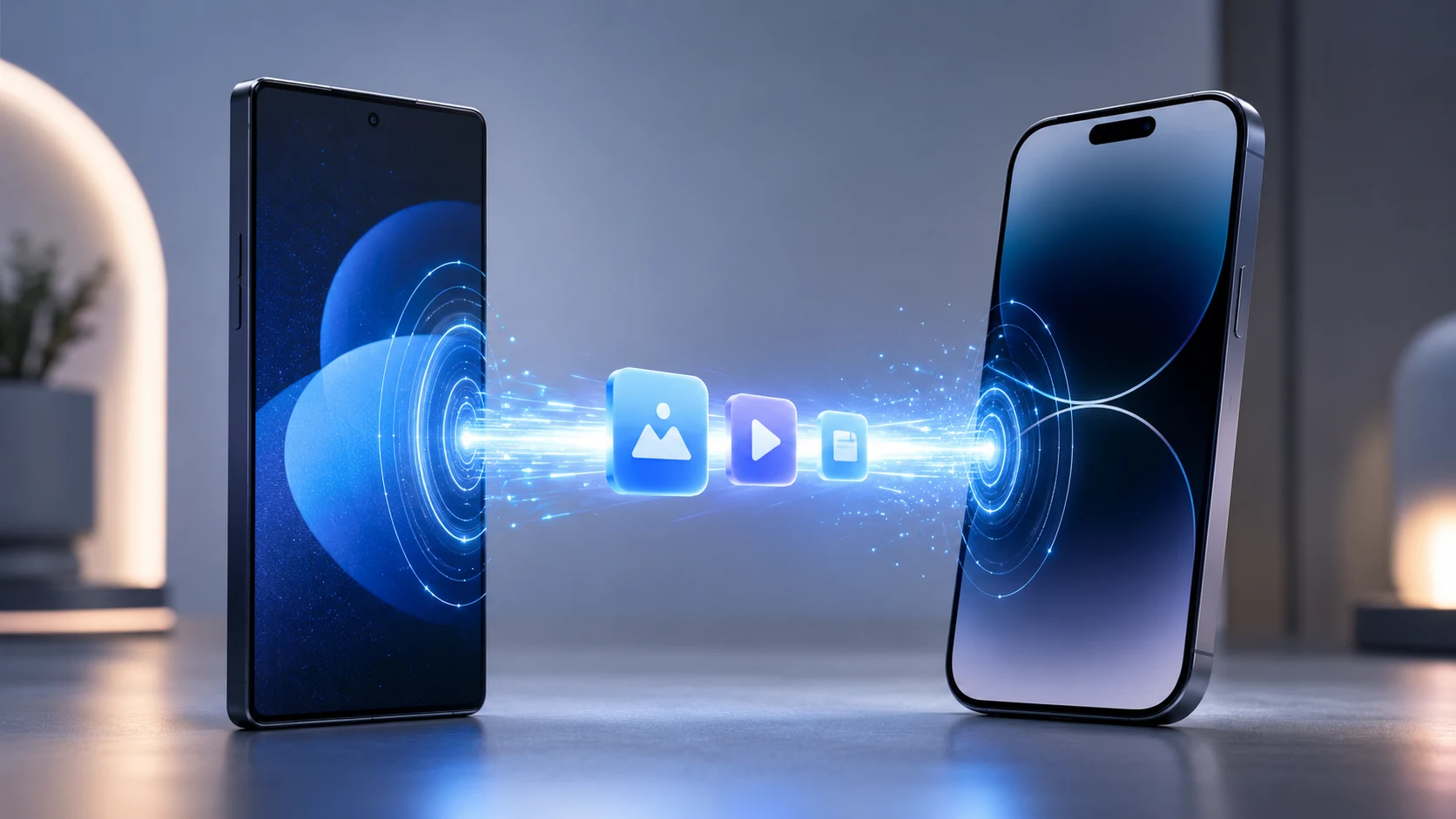
Android Quick Share is quietly turning into one of the most important features in the modern smartphone race, even if it does not look flashy at first glance. For years, AirDrop gave Apple users a simple kind of everyday magic: tap, send, done, no cables, no awkward compression, no messaging yourself just to move one photo across devices. Android users had powerful phones, fast chips, brilliant cameras, and increasingly smart AI tools, but cross-device sharing often felt more fragmented than it should have been. Now that Quick Share is expanding toward smoother sharing with iPhone, iPad, and Mac devices, the gap between Android convenience and Apple ecosystem polish is getting smaller in a very real way. This is not just a minor update hiding inside a settings menu; it is a sign that the next big smartphone battle may be less about specs and more about how easily our devices talk to each other.
The story matters because people do not use smartphones in neat, brand-locked bubbles anymore. A friend group can have two Galaxy phones, one Pixel, three iPhones, an iPad, a Windows laptop, and maybe a MacBook sitting on the same cafe table. Families are even more mixed, especially when parents, students, and siblings upgrade at different times or choose phones based on budget, camera quality, gaming performance, or carrier deals. In that kind of real-world setup, file sharing becomes more than a convenience feature; it becomes a small daily test of whether tech is helping or slowing everyone down. That is why Android Quick Share moving closer to AirDrop feels like a bigger cultural shift than a normal Android feature drop.
Why Android Quick Share Matters Right Now
Android Quick Share matters because it touches one of the most ordinary but annoying smartphone problems: sending something quickly without ruining the moment. Think about a concert clip, a group selfie, a restaurant menu scan, a travel document, or a high-resolution product photo someone needs immediately. If the person beside you uses the same ecosystem, the process is usually smooth, but if they are on another platform, things can get weird fast. People end up using messaging apps, cloud links, email, or social platforms, and each option adds friction, compression, privacy concerns, or extra steps. A better Quick Share experience turns file sharing back into what it should have always been: a fast, local, nearby action that does not require a mini tech support session.
AirDrop became famous not because it was complicated, but because it made the complicated part invisible. Apple users did not need to think about Bluetooth pairing, Wi-Fi Direct, temporary links, file limits, or whether a third-party app would compress a video into something blurry. Android has had nearby sharing tools for years, and Quick Share itself has become more unified after Google and Samsung aligned their sharing systems under one clearer brand. Still, the bigger win is not Android-to-Android sharing anymore; that part is already expected. The new pressure point is Android-to-Apple sharing, because that is where social life, workplace collaboration, and mixed-device households often collide.
For Gadget Vortixel readers, this trend is especially important because it shows where gadget innovation is heading after the era of pure hardware flexing. Smartphone brands still compete on camera sensors, battery chemistry, display brightness, AI photo editing, and gaming performance, but the user experience layer is becoming just as valuable. A phone can have a stunning camera, yet the experience feels incomplete if sending those large photos to a friend is clunky. A foldable can look futuristic, yet it still needs to perform basic sharing tasks without drama. In that sense, Android Quick Share is becoming part of a much larger conversation about ecosystem freedom, convenience, and practical smartphone intelligence.
The AirDrop Effect Changed User Expectations
AirDrop changed expectations because it trained users to believe that nearby sharing should feel instant. The feature became part of everyday behavior, especially among students, creators, office workers, and travelers who constantly move photos, PDFs, videos, and links between devices. It also became a social feature, not just a technical one, because sharing content in the same physical space often happens in casual moments. When someone says, “Send me that,” they do not want a five-step tutorial or a cloud upload delay. They want the file before the conversation moves on, and this is exactly the expectation Android Quick Share now has to meet.
For Android, the challenge has always been scale and variety. Apple controls both the hardware and software experience across iPhone, iPad, and Mac, which makes it easier to build a consistent sharing flow. Android is broader and more diverse, with devices from Samsung, Google, Nothing, Xiaomi, OnePlus, Motorola, and many others running different skins, hardware combinations, and update timelines. That diversity is one of Android’s strengths because it gives users more choice, but it can also make seamless ecosystem features harder to deliver evenly. When Quick Share expands in a way that feels more universal, it sends a message that Android is trying to keep its openness while reducing the chaos.
This matters even more because phone loyalty is increasingly shaped by invisible convenience. Many users do not stay with one brand because of a benchmark score or a spec sheet; they stay because their photos sync, their watch connects, their laptop receives files, and their earbuds switch automatically. The more frictionless those routines become, the harder it is to switch ecosystems. AirDrop has long been one of Apple’s strongest soft-lock features because it works best when everyone around you is already inside Apple’s world. If Android Quick Share can make cross-platform sharing feel normal, it could weaken one of the quietest reasons people hesitate to leave iPhone.
How Quick Share Is Moving Closer to AirDrop
The biggest shift is that Quick Share is no longer just about Android devices finding other Android devices nearby. The newer direction points toward compatibility with Apple devices, allowing select Android phones to send files to iPhone, iPad, and Mac users through a process that feels much closer to AirDrop behavior. In practice, that means users can share nearby without relying on a messaging app, a cloud link, or a third-party transfer tool. The experience still depends on device support, software updates, visibility settings, and rollout timing, but the intent is clear. Android wants nearby sharing to feel less like a workaround and more like a native cross-platform feature.
This expansion started with a limited set of newer Android devices and is gradually reaching more models from major brands. That rollout pattern is typical for modern mobile features, especially when security, wireless standards, and compatibility with another ecosystem are involved. Users should not expect every Android phone to gain the same capability overnight, especially older devices with slower update cycles. Still, the direction is promising because flagship devices often set the behavior that later spreads across midrange phones. Once users get used to cross-platform Quick Share, pressure will rise for more brands and carriers to support it widely.
The feature also fits into Google’s broader strategy of making Android feel more connected across phones, tablets, watches, earbuds, cars, and laptops. Quick Share is not standing alone; it sits beside improvements in device safety, AI assistance, personalization, and smarter account-based continuity. This is the same ecosystem logic that makes users expect their phone to unlock their laptop, their earbuds to move between devices, and their watch to reflect alerts without delay. File sharing is one piece of that puzzle, but it is a highly visible piece because it happens in front of other people. When Android Quick Share works well, it becomes a public demonstration that Android can be both open and polished.
What This Means for iPhone and Android Users
For iPhone users, better Quick Share support means fewer awkward moments when an Android friend asks for a photo or video. Instead of forcing everyone into a messaging app that compresses media or requires account matching, nearby sharing can make the exchange feel more natural. This is especially useful for creators, students, travelers, journalists, and small business teams that constantly collect visual content from different devices. It also makes mixed-device collaboration less annoying, which is important as more people use whatever phone fits their budget or workflow rather than copying the brand choice of their entire social circle. The end result is not that iPhone becomes less valuable, but that the walls around sharing start to feel lower.
For Android users, the benefit is emotional as much as technical. Android fans have long dealt with small moments where their device felt powerful but socially inconvenient in Apple-heavy spaces. Sending a full-quality video to an iPhone user could turn into a conversation about apps, links, or why the file looks worse after being sent through chat. Better Quick Share support gives Android users a cleaner answer in those moments. It says that choosing Android does not have to mean accepting second-class convenience when interacting with Apple devices.
For everyday users, the most noticeable change may simply be confidence. People will share more often when they trust that the process is fast, private, and easy to understand. Parents can send school documents, friends can swap vacation photos, coworkers can move presentation assets, and creators can collect raw footage without setting up a shared drive every time. That kind of low-friction flow does not sound dramatic, but it changes behavior over time. The best gadget features are often the ones users stop thinking about because they just work.
The Privacy Question Behind Nearby Sharing
Whenever a sharing feature becomes easier, privacy immediately becomes part of the conversation. AirDrop has had its own history of visibility settings, unwanted sharing, and user confusion, so Android has to be careful while chasing the same level of convenience. Quick Share needs to balance speed with control, which means visibility options matter a lot. Users should understand whether their device is visible to everyone nearby, only contacts, their own devices, or no one. A feature that feels magical can become annoying or risky if people do not know who can discover them.
The best version of Android Quick Share is not just fast; it is predictable. Users need clear prompts, obvious sender names, temporary visibility controls, and simple ways to turn receiving on or off. This is especially important in public places like schools, airports, events, cafes, and coworking spaces where many devices are nearby. A cross-platform sharing tool has to assume that users will not always read every setting carefully. Good design should make the safe option feel natural rather than hidden behind advanced menus.
There is also a trust issue between ecosystems. Apple users are used to AirDrop behavior, while Android users are used to more varied sharing menus and manufacturer-specific features. If Quick Share wants to become the default bridge between these worlds, it has to feel secure from both sides. That means clear recipient confirmation, local transfer behavior, and minimal confusion about whether files are being uploaded somewhere else. When privacy feels simple, users are more likely to adopt the feature instead of falling back to old habits.
Why This Is Bigger Than File Sharing
The deeper story is that smartphones are entering a phase where convenience features can matter as much as headline specs. Cameras are already excellent, displays are already bright, and even midrange phones can handle most daily tasks. That does not mean hardware is boring, but it does mean software polish has become a stronger reason to upgrade or switch. Users want phones that reduce little annoyances across the day, not just devices that win spec comparisons. In that context, Android Quick Share is part of a larger movement toward smarter, more connected gadgets.
This also connects with the rise of AI features on smartphones. AI can summarize messages, edit photos, detect scams, generate images, and organize information, but it still needs a smooth device ecosystem around it. A phone that can create a polished video recap should also make it easy to send that video to someone standing nearby. A camera app that captures pro-level footage should not trap that footage behind clumsy sharing steps. The future of mobile AI will feel incomplete if basic movement of files remains annoying.
Cross-platform sharing is also a business signal. It suggests that big tech companies are adjusting to a world where regulators, users, and market pressure all push against overly closed ecosystems. People still like brand ecosystems, but they increasingly expect them to cooperate when basic tasks are involved. No one wants to feel punished because one friend bought a different phone. The brands that understand this shift can win goodwill by making technology feel less tribal and more practical.
The Impact on Samsung, Pixel, and Nothing Phones
Samsung has a lot to gain from stronger Quick Share compatibility because Galaxy phones sit at the center of the premium Android market. Many Galaxy users interact with iPhone owners every day, and Samsung’s foldables and Ultra models are often compared directly against Apple’s highest-end devices. If Galaxy phones can send files to Apple devices more smoothly, Samsung gets another argument that its ecosystem is not only powerful but also flexible. That matters for users who want premium hardware without feeling locked out of social convenience. It also supports Samsung’s broader push to make Galaxy devices feel connected across phones, tablets, watches, earbuds, and laptops.
Pixel phones benefit in a different way because they often act as Google’s showcase for what Android can become. When a feature launches or matures on Pixel first, it gives users a preview of where the wider Android ecosystem may be heading. Quick Share compatibility with Apple devices makes Pixel feel less like a niche enthusiast phone and more like a practical daily driver for mixed-device environments. That is important because Pixel has been growing its identity around smart software, camera intelligence, and clean Android experiences. Better sharing adds another everyday reason to choose Pixel beyond photography and AI tools.
Nothing also fits this story because the brand has built attention around design, personality, and a younger tech audience that often lives across multiple platforms. Users who buy a Nothing phone may still own AirPods, a MacBook, an iPad, or have friends deeply inside Apple’s ecosystem. For that crowd, flexible sharing is not a bonus feature; it is part of modern digital life. If more Android brands support this kind of interoperability, the Android market becomes more attractive to users who like choice but hate friction. This is where Smartphone trends are moving: not just toward better devices, but toward better relationships between devices.
Practical Tips Before Using Quick Share
Before trying the newest Quick Share features, users should make sure their phone is fully updated. Many compatibility improvements arrive through system updates, Google Play services updates, or manufacturer software updates, so being behind can make the feature unavailable or inconsistent. It is also worth checking the Quick Share settings under the connected devices or sharing menu, depending on the phone brand. Users should look at visibility controls carefully because nearby sharing only works smoothly when the receiving device can actually be discovered. If a transfer fails, the issue may be as simple as visibility being set too restrictively.
- Update your phone first: new sharing features often depend on the latest system and services updates.
- Check visibility settings: make sure receiving is enabled for the right people or nearby devices.
- Keep both devices awake: nearby sharing usually works best when screens are on and devices are unlocked.
- Use high-quality local sharing for media: it can help avoid the compression that often happens in messaging apps.
- Turn visibility off afterward: this is a smart habit when sharing in public spaces.
Users should also remember that rollout timing can vary by region, model, and carrier. A friend with a newer flagship may see the feature before someone with an older midrange device. That does not always mean the older phone is broken; it may simply be waiting for a software update or may not support the full cross-platform feature yet. This is a normal part of the Android world, but it can be confusing when headlines make a feature sound universally available. The safest expectation is to treat Android Quick Share as a growing capability rather than a feature that appears everywhere at once.
What Could Still Hold Quick Share Back
The biggest challenge for Quick Share is consistency. A feature can be impressive on one flagship phone and still feel messy if users cannot rely on it across brands, regions, and older devices. Android’s strength is its diversity, but that same diversity can slow down the feeling of a single polished ecosystem. If Quick Share works beautifully on one device but is missing from another, the social trust around the feature takes longer to build. People only change habits when they believe a tool will work most of the time.
Another challenge is Apple’s side of the experience. Even when Android improves compatibility, the receiving behavior on Apple devices still has to feel familiar and safe for iPhone, iPad, and Mac users. If the process requires confusing settings, temporary visibility changes, or unclear prompts, some users may keep falling back to AirDrop inside the Apple world and messaging apps outside it. The real win will come when Android-to-Apple sharing feels as casual as Apple-to-Apple sharing. That is a high bar, but it is the bar users already expect.
There is also the branding problem. Apple users know AirDrop by name, and the word has become almost a verb in daily conversation. Quick Share is cleaner than older Android sharing labels, but it still has to build the same cultural recognition. Samsung users may know it, Pixel users may know it, and Android enthusiasts definitely know it, but casual users may still be learning what it does. For Android Quick Share to truly compete with AirDrop, it needs not only technical compatibility but also mainstream confidence.
Why Gen Z Users May Push This Forward
Gen Z users may be one of the biggest forces behind this shift because they live in the most mixed and media-heavy device environments. They shoot vertical videos constantly, swap memes, share class notes, collaborate on projects, and move content between phones, tablets, and laptops without thinking of it as “productivity.” For them, device borders feel outdated when the content itself is social and immediate. If a group is making a travel vlog, editing a presentation, or sharing event footage, nobody wants the person with a different phone to become the bottleneck. Better Quick Share support fits perfectly into that fast, informal, creator-driven workflow.
This younger audience also cares less about old ecosystem loyalty than tech companies sometimes assume. A person might love an iPhone camera, use a Windows gaming laptop, wear wireless earbuds from another brand, and keep an Android tablet for media or notes. They are not always trying to live inside one company’s perfect garden. They are trying to build a setup that feels affordable, stylish, powerful, and flexible. Cross-platform sharing respects that reality instead of pretending everyone made the same purchase decision.
That is why features like Quick Share can shape brand perception in subtle ways. A phone that plays well with others feels more modern, especially to users who do not want tech drama. When Android makes sharing with Apple devices easier, it sends a message that openness can be convenient instead of complicated. This could make Android more appealing to users who were previously afraid of losing social features by switching away from iPhone. In the long run, interoperability may become one of the strongest marketing points for Android devices.
The Bigger Trend: Gadgets Are Becoming Social Infrastructure
Smartphones are no longer just personal devices; they are social infrastructure. They hold IDs, tickets, school files, work documents, family memories, payment apps, health data, and creator tools. Because of that, every small feature that improves device-to-device connection has a larger impact than it would have ten years ago. Sharing a photo is not always just sharing a photo; it can be sharing proof, memory, work, evidence, inspiration, or a piece of someone’s online identity. The smoother that exchange becomes, the more natural digital life feels.
Quick Share also reflects a broader movement in gadget design where the best features are the ones that disappear into daily behavior. Nobody wants to think about wireless protocols while sending a file. Nobody wants to install another app just to move a video across a table. Nobody wants their device choice to create awkward social friction. The next wave of gadget loyalty may come from products that remove these tiny problems before users even complain about them.
That is why this update deserves attention beyond the Android enthusiast crowd. It is not only about matching AirDrop for the sake of a feature checklist. It is about making Android feel more confident in mixed ecosystems, where real people actually live. It is also about proving that open platforms can deliver polished experiences without giving up flexibility. If Android Quick Share keeps improving, it could become one of the most practical wins for everyday smartphone users in 2026.
Conclusion: Quick Share Is Becoming Android’s Everyday Flex
Android Quick Share getting closer to AirDrop is more than a feature update; it is a sign that the smartphone industry is finally taking cross-platform convenience seriously. For years, users accepted messy workarounds because Android and Apple lived behind different walls, but that old normal is starting to feel outdated. People want phones that share content easily, respect privacy, and fit into mixed-device lives without turning simple moments into technical problems. Quick Share still has work to do, especially around consistency, rollout speed, and mainstream recognition, but the direction is clearly positive. If Android can make nearby sharing with Apple devices feel reliable and natural, it will not just catch up to AirDrop; it will make the entire gadget experience feel more open, useful, and human.