
Stolen iPhone Crackdown Puts Apple on Notice
 Vortixel
19 minutes read
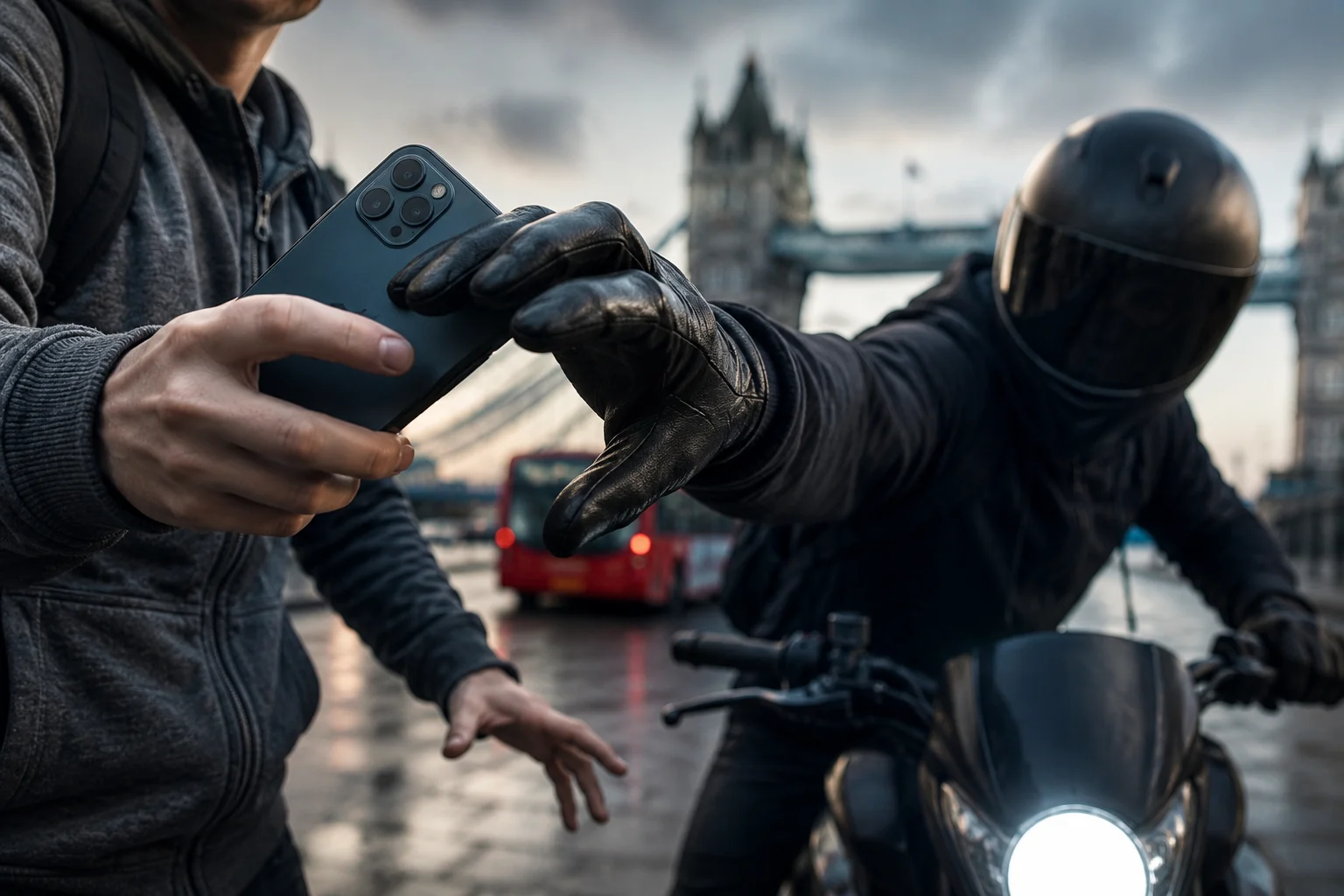
Stolen iPhone crackdown is no longer just a police slogan in London. It has become a direct challenge to Apple, Google, Samsung, wireless carriers, app platforms, repair networks, and every company that profits from the modern smartphone economy. London officials want stolen phones to become worthless the moment they leave the owner’s hand, not just harder to unlock after the damage is already done. The demand sounds simple, almost obvious, but it hits one of the messiest intersections in consumer tech: hardware security, resale markets, global logistics, privacy law, and the everyday panic of losing the most important device in your pocket. For a city where phone snatching has become part of street-crime anxiety, the push feels less like a niche policy debate and more like a public test of whether Big Tech can protect users beyond the glossy launch event.
The story starts with a familiar scene that feels too modern to be called old-fashioned theft. Someone steps out of a station, checks a message, opens a map, or answers a call, and in one fast move a thief on foot, bike, or scooter disappears with the phone. The stolen device is not just a slab of glass and metal; it is a wallet, camera roll, bank branch, work ID, transit pass, password vault, and social life packed into one object. That is why London’s pressure campaign matters far beyond the United Kingdom. If Apple can make a stolen iPhone dramatically harder to reuse, resell, strip, reset, or export, the same playbook could reshape smartphone security in every major city where street theft feeds a global black-market pipeline.
Why London Wants Stolen Phones to Become Bricks
London’s core argument is brutally practical: thieves steal phones because stolen phones still have value. Even if a device is locked, parts can be harvested, accounts can be attacked, or the handset can be moved through informal resale channels where buyers may not ask many questions. Police leaders are not only asking for better patrols or more arrests; they are asking tech companies to attack the business model behind the crime. A phone that cannot be activated, reset, repaired with mismatched parts, or connected to valuable services becomes a much less attractive target. In that sense, the stolen iPhone crackdown is really a fight over resale economics, not just device settings.
The phrase “make stolen phones unusable” sounds dramatic, but it reflects a shift in how cities think about gadget crime. Traditional policing focuses on the thief after the theft happens, while platform-level security can reduce the reason for stealing in the first place. London’s message to Apple and other smartphone giants is that the device maker has more leverage than almost anyone else in the chain. Apple controls iOS, iCloud, activation systems, hardware pairing, biometric security, and the user experience around lost devices. When those layers work together, a stolen iPhone can be transformed from a high-value product into a risky object that is difficult to monetize.
That is why the debate is bigger than one city calling out one company. Modern smartphones are sold as premium lifestyle devices, but their security responsibilities do not end at the checkout counter. A phone can be stolen in London, moved through a warehouse, shipped overseas, broken down for parts, or sold into markets where its origin becomes difficult to trace. Each stage creates another opportunity for criminals to profit and another failure point for victims trying to recover data, money, or peace of mind. London’s pressure campaign is asking whether the tech industry can close those gaps without making phones harder for honest users to repair, sell, or hand down.
The Apple Question at the Center of the Debate
Apple sits at the center of this conversation because the iPhone remains one of the most desirable stolen devices on the market. Its brand value, international demand, strong parts ecosystem, and high resale prices make it a natural target for organized theft networks. Apple already has several anti-theft tools, including Activation Lock, Find My, biometric authentication, passcodes, device encryption, and Stolen Device Protection. Yet London’s pressure suggests that officials believe the current system still leaves too much room for stolen phones to regain value. The point is not that Apple has done nothing; it is that the scale of theft has forced a harder question about what “enough” really means.
For years, Apple has promoted privacy and security as core parts of the iPhone identity. That branding has real substance, because iPhones are difficult to access without credentials and many stolen devices cannot be casually opened like an unlocked drawer. However, street theft is not always about reading the owner’s messages. Sometimes it is about flipping a device, moving components, bypassing normal reset flows, or exploiting buyers who do not understand what a locked phone can and cannot do. London’s demand pushes Apple to treat theft prevention not just as personal data protection, but as a full product-lifecycle problem.
That distinction matters for readers of stolen iPhone crackdown coverage because consumer tech security is often marketed in personal terms. Companies tell users to choose strong passcodes, turn on tracking, update software, and avoid risky behavior in public spaces. Those steps are still important, but they place much of the burden on the victim. London’s argument is more structural: the platform owner should make stolen devices and stolen parts less profitable by design. In other words, the safest phone is not only one that protects your data after theft, but one that makes the theft itself financially pointless.
How a Smartphone Kill Switch Could Actually Work
A real smartphone kill switch would need to be more sophisticated than a single panic button. At the simplest level, it could prevent a reported stolen device from being activated again, even after a factory reset. At a deeper level, it could connect device identifiers, cloud accounts, carrier blocklists, repair diagnostics, and parts authentication into one anti-theft net. If the phone appears in a different region, tries to pair with suspicious components, or attempts to reconnect after being marked stolen, the system could keep it locked out of normal use. The goal would be to make the device unattractive to thieves without creating chaos for legitimate secondhand buyers.
Apple already has pieces of that puzzle through its activation systems and secure hardware architecture. Google and Samsung have their own Android-based protections, including theft-detection features, account locks, and device security layers. Carriers also have IMEI blocking, which can prevent a stolen device from connecting to certain mobile networks. The problem is that these systems do not always operate globally, consistently, or in a way that eliminates the value of every stolen handset. A phone blocked in one place may still have value elsewhere, especially if criminal networks know where to send it.
The more advanced version of the idea would also focus on parts. If a stolen iPhone cannot be resold as a complete device, criminals may try to sell screens, cameras, batteries, logic boards, or other components. Apple’s increasing use of parts pairing and repair authentication could play a role here, but it also creates controversy around right-to-repair access. A security system that blocks stolen parts sounds useful, yet a repair system that makes independent repair too difficult can frustrate consumers and small repair shops. The best version of the stolen iPhone crackdown would need to protect owners without turning legitimate repair into collateral damage.
Why This Is Bigger Than London Street Crime
London may be the loudest voice right now, but phone theft is not a London-only problem. Major cities around the world deal with snatch-and-run thefts, organized resale networks, tourist-targeted robberies, and cross-border trafficking of high-value devices. A phone stolen in one country can become inventory in another, especially when the demand for premium used devices remains strong. That global movement makes local policing difficult because the stolen item may leave the city before the victim even finishes the first police report. Tech platforms, unlike local police departments, can operate across borders through activation servers, cloud accounts, and device ecosystems.
This is where the smartphone industry has a unique kind of power. Apple, Google, and Samsung do not control every carrier, retailer, repair shop, or customs checkpoint, but they do control the software environments that make a modern phone useful. A stolen phone without access to trusted activation, updates, app ecosystems, payment features, and cloud services becomes a much weaker product. That platform power is exactly why governments keep asking tech companies to do more. When the device economy is global, the anti-theft response also has to be global.
The pressure also reflects a larger public expectation that premium gadgets should come with premium protection. Consumers are paying more for phones that are marketed as smarter, safer, more personal, and more essential than ever. If those devices can still be stolen and monetized at scale, the gap between marketing and street reality becomes hard to ignore. London’s message is basically that innovation should not stop at better cameras, brighter displays, and faster chips. The next meaningful upgrade might be making theft less profitable in the first place.
The AI Angle Nobody Should Ignore
The next phase of anti-theft technology will likely involve more AI-driven detection. Phones already contain motion sensors, location awareness, biometric systems, behavior patterns, and contextual signals that can help identify suspicious activity. A device might detect a sudden snatch motion, rapid movement away from the owner, unusual unlock attempts, or an unfamiliar location combined with sensitive account changes. The challenge is making those systems accurate enough to help without locking people out during normal life. Nobody wants a phone that panics every time a user jogs for the bus or hands the device to a friend.
AI-powered theft detection could become one of the most practical uses of on-device intelligence. Unlike flashy chatbot demos, anti-theft AI has a clear job: spot danger fast, lock sensitive functions, and give the owner time to respond. It could delay password resets, block account changes, hide notification previews, freeze payment features, and require stronger biometric verification when risk signals stack up. That type of intelligence would fit naturally into Apple’s privacy-first message because the analysis could happen mostly on the device. For Gadget Vortixel’s AI Innovation readers, this is the kind of AI feature that feels less like hype and more like daily-life infrastructure.
Still, AI cannot solve everything alone. Criminals adapt quickly, and false confidence can be dangerous when people assume software makes them invincible. A thief may still grab a device for parts, intimidation, or quick resale before the lock status is obvious. A strong anti-theft ecosystem needs AI detection, activation blocking, cloud-level controls, carrier cooperation, police intelligence, and public education working together. The future is not one magic feature; it is a layered defense that makes every step of the stolen-phone pipeline harder.
What Users Can Do Right Now
Even while London pushes tech companies for stronger systems, users still have practical steps they can take today. The first is to keep software updated, because anti-theft improvements often arrive through system updates rather than new hardware. The second is to turn on built-in location and lost-device tools before anything happens, not after the phone is gone. The third is to use strong biometric protection and a passcode that is not easy to guess by watching over someone’s shoulder. These steps may not stop a physical snatch, but they can reduce the damage after the phone disappears.
Users should also treat their phone like a financial device, not just a communication device. That means securing banking apps, password managers, email accounts, social media accounts, crypto wallets, cloud storage, and payment cards with extra verification where possible. A stolen phone becomes much more dangerous when the thief can use it as a doorway into the owner’s digital life. People should know how to remotely lock or erase a device, contact their carrier, block SIM activity, and report the IMEI if the phone is stolen. Preparation feels boring until the moment it saves hours of panic.
There is also a street-awareness side that no software update can fully replace. Holding a phone loosely near a curb, using it near fast-moving bikes, typing a passcode in crowded places, or handing it to strangers can all increase risk. That does not mean victims are responsible for theft, because the thief is the problem. It simply means the reality of urban phone theft requires a more defensive relationship with devices that now carry nearly everything important. Until stolen phones are truly worthless, users need both smarter settings and sharper habits.
The Tension Between Security and User Freedom
The push to make stolen phones unusable raises a fair concern: who decides when a phone should be permanently blocked? A strong kill-switch system must avoid punishing people who buy legitimate secondhand devices, forget passwords, inherit phones, travel internationally, or repair older models. If the system is too aggressive, honest users could be trapped inside bureaucratic support loops. If it is too weak, criminals will find the gap and keep moving stolen phones through the market. The balance is delicate because smartphones are both personal property and platform-controlled devices.
Privacy is another major issue. Police want better ways to track stolen devices and understand where they go, while users rightly expect phone makers to protect sensitive location and identity data. Any partnership between law enforcement and tech companies has to be narrow, transparent, and focused on stolen-device identifiers rather than broad user surveillance. The public will support anti-theft tools more easily if they believe those tools will not become a backdoor into everyday phone activity. Trust is part of security, not a separate feature.
Right-to-repair advocates will also watch this debate closely. Parts authentication can help stop stolen components from being reused, but it can also strengthen manufacturer control over repairs. Consumers should not have to choose between safer phones and repairable phones. A better approach would allow legitimate repair shops to verify parts, reject stolen components, and keep devices serviceable without depending entirely on expensive official channels. The smartest stolen iPhone crackdown would make criminal resale harder while keeping legal ownership flexible.
Why Apple Has More to Gain Than It Might Admit
At first glance, pressure from London may look like a headache for Apple. It could require more engineering, more coordination with law enforcement, more support workflows, more edge-case handling, and more public scrutiny. Yet Apple also has a major brand opportunity here. If the company can make stolen iPhones meaningfully less valuable, it strengthens one of the iPhone’s biggest selling points: trust. In a crowded smartphone market where camera upgrades and chip gains feel incremental, real-world safety can become a powerful differentiator.
Consumers do not only buy phones for specs anymore. They buy ecosystems, support, continuity, privacy, resale confidence, and the feeling that the device will not become a disaster if something goes wrong. A stronger anti-theft system fits that larger story. It could also protect the secondhand iPhone market by making clean ownership easier to verify and suspicious devices easier to avoid. If done well, Apple could turn a public-pressure moment into a feature that users actually understand.
The same logic applies to Google and Samsung. Android phones dominate global smartphone volume, so anti-theft improvements cannot be limited to iPhones. A fragmented approach would leave criminals chasing the weakest device category, region, carrier, or resale channel. If the biggest players coordinate around stronger stolen-device standards, the entire market becomes harder to exploit. That kind of cooperation may not be glamorous, but it could matter more to everyday users than another thin-bezel design refresh.
How This Could Change the Smartphone Market
If London’s campaign succeeds, smartphone buying and selling could become more verification-heavy. Secondhand buyers may start checking activation status, IMEI history, repair authenticity, ownership transfer records, and platform locks as naturally as they check battery health today. Retailers and marketplaces may need stronger screening systems to prevent stolen devices from being listed. Repair shops may face more pressure to verify the origin of parts. The used-phone economy could become safer, but also more formal and less anonymous.
This shift could also influence how manufacturers design future phones. Security may become more deeply tied to individual components, making it harder to strip a stolen handset for value. Cloud services may become more active in blocking suspicious reactivation attempts. Carriers may improve international cooperation around reported stolen devices. App developers, especially banking and payment apps, may add more anti-theft triggers when device risk suddenly changes.
For consumers, the result could be a new definition of a premium gadget. The best phone would not simply be the one with the sharpest camera, fastest processor, brightest display, or longest battery life. It would also be the one that protects identity, money, memories, and ownership after a real-world crisis. This matters because phones have become too central to be treated like ordinary electronics. They are personal infrastructure, and personal infrastructure needs stronger failure protection.
The Impact on Thieves and Organized Networks
The most important target of this campaign is not the opportunistic thief alone. It is the organized network that turns thousands of stolen phones into predictable revenue. A street-level thief may steal the device, but someone else may buy it, move it, unlock what can be unlocked, sell parts, arrange export, or feed it into a wider resale system. That chain survives because the end product still has value somewhere. Break the value chain, and the street-level theft becomes less attractive.
A stronger device-blocking regime could force criminals into lower-margin, higher-risk activity. If stolen phones cannot be activated, cannot be repaired with stolen parts, and cannot easily access platform services, they become harder to sell quickly. That does not mean theft disappears overnight, but it changes the math. Criminal markets are sensitive to friction, especially when the product is traceable and increasingly difficult to monetize. Every extra barrier makes the business less appealing.
There is also a deterrent effect in public perception. If people know stolen iPhones are likely to become useless, buyers become more suspicious of cheap locked phones and sellers lose leverage. A black market depends not only on supply, but on confidence that the product can be made useful. Once that confidence erodes, resale prices can fall, and thieves have less reason to target phones. That is why London’s focus on making phones “worthless” is strategically sharper than simply asking users to be more careful.
Why This Moment Feels Different
Phone theft has been around for years, but the current moment feels different because smartphones are now more deeply connected to identity than ever. Losing a phone used to mean losing contacts, photos, and maybe a few text messages. Today it can mean losing access to banking, two-factor authentication, ride-hailing, travel documents, work apps, cloud accounts, private messages, and digital payment systems. The emotional weight of theft has grown because the phone has become the remote control for modern life. That makes the public less patient with half-measures.
The timing also matters because tech companies are racing to sell AI-first devices and smarter mobile ecosystems. If a phone can predict your schedule, summarize your emails, generate images, guide your health routine, and manage your payments, it should also be smart enough to defend itself when stolen. Consumers are being asked to trust their devices with more intimate data and more automated decision-making. Stronger theft protection is a natural extension of that trust. Without it, the promise of intelligent gadgets feels incomplete.
London’s challenge is therefore symbolic as well as practical. It tells the industry that real innovation is measured not only by what a phone can do in a demo, but by how it behaves under pressure in messy public life. A stolen phone is one of the most stressful moments a user can experience with a device. If Apple and its rivals can reduce that stress, they will solve a problem people immediately understand. That kind of innovation does not need a flashy keynote to matter.
What Gadget Buyers Should Watch Next
Over the next product cycles, buyers should pay closer attention to anti-theft features during phone launches. Look for stronger stolen-device modes, smarter lock delays, better biometric requirements, improved activation blocking, clearer lost-phone workflows, and stronger protections for sensitive settings. Also watch whether manufacturers explain these tools in plain language, because security features only work at scale when normal users understand them. A powerful setting hidden deep inside a menu will not help enough people. The best protection is the one that is active, understandable, and hard to bypass.
Buyers should also check how a phone handles secondhand ownership. A healthy resale market needs clean transfer tools, transparent lock status, reliable battery and repair history, and easy ways to confirm that a device is not stolen. If Apple, Google, Samsung, carriers, and marketplaces improve this process, used phones could become safer purchases. If they do not, buyers may face more risk from locked devices, fake listings, and suspiciously cheap offers. Security is becoming part of product value, not just a background technical detail.
For people comparing iPhone and Android, anti-theft protection may become a bigger deciding factor. Camera quality and performance still matter, but the everyday fear of theft is real in many cities. A phone that is harder to profit from after theft can protect both the owner and the broader community. That is why Gadget Vortixel will keep tracking this issue across Smartphone, Technology, and Trends coverage. The stolen-phone debate is quickly becoming one of the most practical gadget stories of the year.
The Practical Insight for the Tech Industry
The practical lesson for the tech industry is clear: security must follow the device after it leaves the owner’s hand. For years, companies have focused heavily on protecting data inside the phone, and that remains essential. But the stolen-phone economy shows that device value itself must also be protected. If criminals can still profit from the hardware, the theft incentive remains alive. A truly secure smartphone ecosystem should protect data, ownership, identity, and resale integrity together.
That requires coordination across groups that do not always move in sync. Manufacturers need stronger activation and parts systems. Carriers need better international blocking. Marketplaces need cleaner verification. Repair networks need legitimate ways to reject stolen components without being locked out of fair repair access. Governments need smart rules that push action without creating privacy overreach or consumer lock-in.
The smartest companies will treat this as a product-quality issue, not just a compliance problem. People remember how a device protects them when things go wrong. A phone that helps users recover quickly, blocks thieves, and keeps personal accounts safe earns loyalty in a way that spec sheets cannot. The companies that understand this first will define the next era of mobile trust. The ones that move slowly may find themselves pressured not only by police, but by customers who expect better.
Conclusion: The Future Phone Must Be Harder to Steal
The stolen iPhone crackdown in London is not just a local crime story. It is a preview of where smartphone security is heading as cities, users, and governments demand more from the devices that organize modern life. Apple is under pressure because it has the tools, ecosystem control, and brand promise to make stolen iPhones less valuable to criminals. Google, Samsung, carriers, marketplaces, and repair networks are part of the same conversation because theft does not respect platform boundaries. The next big smartphone security breakthrough may not be invisible encryption or a futuristic AI assistant, but a simple outcome everyone can understand: a stolen phone that is no longer worth stealing.
For users, the message is both hopeful and practical. Stronger industry action could reduce phone theft by attacking the money behind it, but personal preparation still matters today. Keep devices updated, turn on lost-phone features, protect sensitive apps, secure accounts, and understand how to respond quickly if a phone disappears. For the tech industry, the message is even sharper: premium gadgets must come with premium anti-theft protection. A smarter phone should not only know its owner better; it should know when it has been taken away from them and become useless to everyone else.