Galaxy Ring 2 Could Finally Connect to iPhone
 Vortixel
13 minutes read
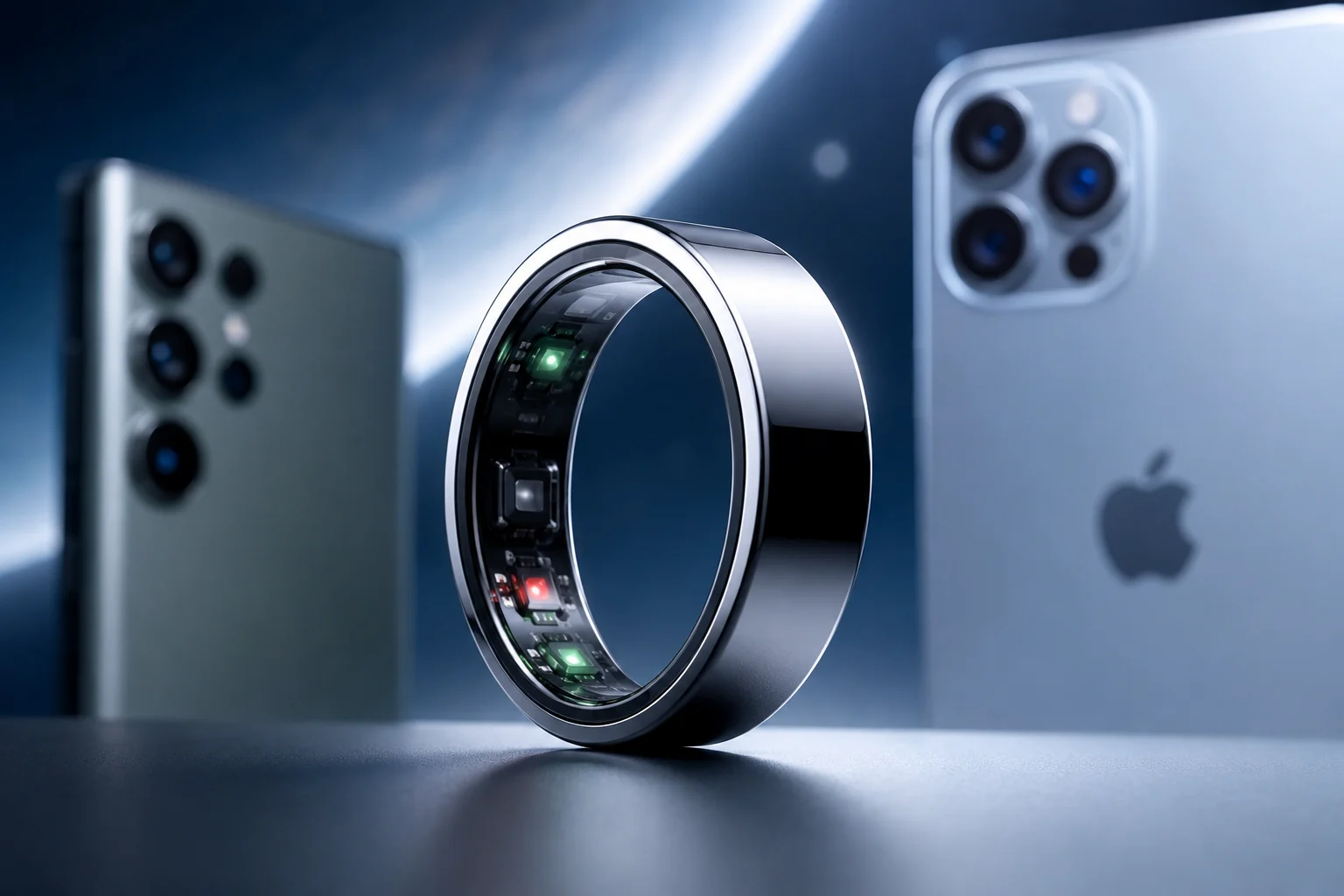
Samsung’s next smart ring is no longer just a rumor floating around wearable forums. The company has confirmed that it is working on a new generation, putting the Galaxy Ring 2 firmly on the future product map. What makes this development especially interesting is not simply the promise of better sensors or longer battery life. Samsung has also opened the door to something that once looked highly unlikely: compatibility with the iPhone. That possibility could transform the ring from a Galaxy ecosystem accessory into a serious mainstream rival across the wider wearable market.
The wording matters because Samsung has not officially announced that iPhone support is guaranteed. Instead, senior leadership has strongly suggested that broader compatibility is being considered as the company develops its next wearable platform. In other words, the Galaxy Ring 2 itself has been confirmed, while its relationship with iOS remains a promising direction rather than a finalized feature. That distinction may sound technical, but it is important for anyone already thinking about buying the device. Until Samsung publishes a compatibility list, an iPhone connection should be treated as likely potential rather than a launch-day promise.
Galaxy Ring 2 Confirmation Changes the Story
The original Galaxy Ring introduced Samsung to a category that had been gaining attention for years but remained relatively niche. Instead of placing another screen on the wrist, the ring focused on passive health monitoring through a compact device that could be worn day and night. It measured signals related to sleep, activity, heart rate, and skin temperature while feeding those results into Samsung Health. The product made the most sense for people already using Galaxy phones, watches, and services. That tight integration was useful for loyal customers, but it also limited the ring’s appeal outside Samsung’s existing audience.
Confirmation of the next generation signals that Samsung sees long-term value in the category. A second model gives the company an opportunity to correct first-generation limitations instead of treating the ring as an experimental side project. Samsung can improve comfort, refine the software, strengthen health insights, and make the product useful to more people. It can also decide whether the ring should remain a supporting accessory for Galaxy owners or become a platform that stands on its own. The possibility of iPhone compatibility suggests that the company may be leaning toward the second path.
Why iPhone Support Would Be a Major Shift
Samsung and Apple have spent years building ecosystems designed to keep customers inside their respective platforms. Apple Watch requires an iPhone, while many advanced Galaxy wearable features work best with Samsung smartphones. This strategy makes commercial sense because each accessory gives users another reason to stay loyal to one brand. A smart ring, however, does not have to follow the same rules as a smartwatch. Its value comes mainly from continuous data collection, long battery life, discreet design, and useful health interpretation rather than deep control over the phone itself.
Opening the Galaxy Ring 2 to iPhone users would give Samsung access to a huge group of consumers who currently have few reasons to consider a Galaxy wearable. Some iPhone owners want sleep and recovery tracking but do not enjoy wearing an Apple Watch overnight. Others prefer a ring because it has no bright display, fewer distractions, and a form factor that fits more naturally into daily life. These customers often turn to independent smart ring brands because cross-platform compatibility is essential. Samsung could enter that conversation immediately if its next ring works properly with iOS.
The move would also show that Samsung understands the smart ring market differently from the smartwatch business. A watch can act as an extension of a phone, displaying messages, apps, calls, maps, and media controls. A ring is closer to a quiet health sensor that disappears into the background until the user opens an app. That model depends less on operating-system loyalty and more on trust, accuracy, comfort, and clear insights. Supporting both Android and iOS could therefore make the ring more competitive without weakening Samsung’s smartphone strategy as much as an iPhone-compatible Galaxy Watch might.
Software May Matter More Than New Sensors
Samsung’s health leadership has indicated that wearable companies are beginning to use increasingly similar sensor technologies. That means the next competitive battle may not be decided by who places the largest number of sensors inside the smallest device. The real advantage will come from what a company does with the information after it has been collected. Raw heart rate, temperature, movement, and sleep data can quickly become overwhelming without useful interpretation. Samsung appears to believe that smarter services, personalized guidance, and connected health experiences will matter more than another page of technical specifications.
This approach could shape the entire identity of the Galaxy Ring 2. Instead of presenting isolated measurements, Samsung may focus on translating daily patterns into practical recommendations that users can understand. A person might receive guidance about sleep consistency, recovery, stress, activity balance, or changes that deserve closer attention. The ring could become more valuable over time as it learns an individual’s normal patterns rather than comparing every user with the same generic benchmark. That kind of personalization would make artificial intelligence useful in a quiet and practical way rather than turning it into a flashy marketing feature.
The strongest version of this idea would combine information from multiple devices and services. A Galaxy phone could contribute movement patterns and daily routines, while a Galaxy Watch could add workout data and real-time measurements. Smart home devices could provide environmental context, such as sleep temperature, lighting, or nighttime activity. The ring would then fill in the gaps by collecting data when wearing a watch feels uncomfortable or unnecessary. Samsung could use this broader picture to create health summaries that feel more complete than anything produced by a single gadget.
Battery Life and Comfort Still Need Attention
Software may be the strategic focus, but hardware improvements will still determine whether people enjoy wearing the device. Smart rings are supposed to remain on the finger for long periods, including during sleep, exercise, work, and travel. Even a small amount of extra thickness can become noticeable when the wearer grips gym equipment, carries bags, or types for hours. The original model showed that Samsung could build a polished ring, but a second generation needs to feel lighter and less intrusive. Comfort is not a bonus feature in this category because it directly affects how consistently the product collects data.
Battery life will be equally important because continuous tracking becomes frustrating when charging interrupts the routine too often. Reports surrounding the next model have pointed toward the possibility of longer endurance, potentially moving beyond the roughly week-long experience associated with the first generation. Samsung has not finalized or publicly confirmed a specific battery estimate, so those numbers should remain in the rumor column. Still, longer life would be one of the most meaningful upgrades the company could deliver. Every additional day reduces the chance that users remove the ring, forget to put it back on, and create gaps in their health history.
Charging design will matter almost as much as battery capacity. A portable case can make the ring easier to recharge during trips without carrying another specialized cable or dock. Clear battery indicators could also help users choose the right moment to charge without losing a full night of sleep tracking. Samsung has experience building compact charging cases for wireless earbuds, which could influence future ring accessories. A better charging routine would not attract the same attention as a new sensor, but it could improve the everyday experience far more.
The Smart Ring Market Is Getting More Serious
Smart rings are moving beyond the stage when they were viewed as unusual gadgets for early adopters. Consumers are becoming more familiar with sleep scores, recovery metrics, temperature trends, and readiness estimates. At the same time, many people are questioning whether they need another screen constantly demanding attention. A ring offers a different relationship with technology because it can monitor the body without turning every notification into a wrist vibration. That combination of health tracking and digital minimalism is one reason the category continues to attract major technology companies.
Samsung’s presence adds credibility, retail distribution, engineering resources, and a globally recognized brand to the market. It also creates pressure on established smart ring makers to improve their apps, prices, subscription policies, and hardware. Competition could lead to more accurate measurements and clearer explanations of what health scores actually mean. It may also encourage companies to support more phone platforms instead of locking users into a narrow ecosystem. Readers following the wider wearable devices market should watch this shift because the decisions made around the Galaxy Ring could influence the entire category.
Apple’s position makes the situation even more interesting. The company has not released a consumer smart ring, leaving iPhone owners to choose products from third-party brands. If Samsung delivers an excellent ring that works with iOS, it could establish a relationship with Apple customers before Apple decides whether it wants to enter the category. That would be an unusual reversal in a market where Apple normally controls the most seamless accessories for its devices. Samsung would effectively be offering iPhone users a health-focused product that Apple itself does not currently sell.
What iPhone Compatibility Would Actually Require
Connecting the ring through Bluetooth would be only the beginning of a credible iPhone experience. Samsung would need an iOS app capable of pairing the device, installing firmware updates, displaying battery status, managing settings, and presenting health information. That app would also need to run reliably in the background so the ring could synchronize without forcing users to troubleshoot it every day. Ideally, Samsung would offer feature parity between iPhone and Android rather than creating a limited companion app. A technically compatible product can still feel disappointing when major insights are reserved for another operating system.
Apple Health integration would be another major consideration. Many iPhone users rely on Apple’s health database as the central place where information from multiple devices and apps is stored. Allowing Galaxy Ring measurements to flow into that system would make the product easier to adopt without asking customers to abandon years of existing records. Samsung might still encourage users to spend time inside Samsung Health, but data portability would build trust. A closed system would make iPhone compatibility feel more like a marketing checkbox than a genuine cross-platform strategy.
Privacy expectations will also be high because a smart ring collects intimate information over long periods. Users need clear controls over what is measured, where it is stored, and whether it is used to train personalized services. Samsung will have to explain how account requirements, cloud synchronization, AI analysis, and third-party integrations work across different platforms. Simple language will be more effective than dense policy pages that most customers never read. The company that makes health data understandable and manageable may earn a stronger advantage than the one that merely collects the most information.
Health Tracking Must Become More Actionable
Wearables already generate an enormous amount of information, but more data does not automatically create better habits. A user can know that sleep quality declined without understanding why it happened or what should change next. The next generation of smart rings needs to move beyond charts and provide context that fits real life. Recommendations should consider recent activity, bedtime consistency, stress patterns, and the user’s own baseline. They should also avoid presenting every small variation as a serious problem.
Samsung has an opportunity to create guidance that feels supportive instead of judgmental. A useful system might explain that a lower recovery score is normal after a difficult workout or several nights of travel. It could suggest an earlier bedtime, lighter training, or a short walk without pretending to replace a medical professional. Over time, the ring could highlight recurring relationships between behavior and well-being. These patterns are more valuable than a single morning score because they help people understand which habits consistently make a difference.
The challenge will be balancing simplicity with scientific responsibility. Health features can easily sound more precise than the underlying measurements really are, especially when they are packaged into a clean number. Samsung should be transparent about what the ring can estimate and what requires professional testing. It should also explain when data quality may be affected by fit, movement, temperature, or inconsistent wear. Trust grows when technology communicates uncertainty honestly instead of acting as though every algorithmic conclusion is absolute.
Should Current iPhone Users Wait for It?
Anyone shopping for a smart ring today should avoid making a purchase decision based only on an unconfirmed future feature. Samsung has confirmed development, but it has not provided a final release date, complete specifications, official price, or guaranteed iPhone compatibility. The device may not arrive until 2027, and development priorities can change before launch. People who need sleep or recovery tracking now already have cross-platform alternatives available. Waiting makes the most sense for buyers who prefer Samsung’s approach and are comfortable keeping their current setup for a while longer.
Existing Galaxy phone owners face a different decision because the first-generation ring already offers a more complete ecosystem experience for them. A discounted current model could still be attractive for someone who values subscription-free tracking and does not need the latest hardware. However, users who care about maximum battery life, a slimmer design, or the newest health services may prefer to see what the second generation delivers. The lack of an official launch schedule makes that choice less straightforward. Buying decisions should therefore be based on current needs rather than fear of missing an unreleased upgrade.
Fit should remain a priority regardless of which model a person chooses. Smart ring sizing is not always identical to traditional jewelry sizing, and finger dimensions can change throughout the day. A ring that is too loose may collect inconsistent measurements, while one that is too tight can become uncomfortable during sleep or exercise. Using an official sizing kit is usually more reliable than guessing based on another ring. Good fit improves both comfort and sensor contact, making it essential to the overall experience.
A Bigger Test of Samsung’s Ecosystem Strategy
The most important question surrounding the next ring is not whether Samsung can build impressive hardware. The company has already demonstrated its ability to design compact wearables, develop advanced sensors, and connect devices through a large software platform. The bigger test is whether it can create a product that feels valuable even when the user does not own a Galaxy phone. That requires Samsung to compete on health intelligence, app quality, battery life, comfort, and trust. It also requires resisting the temptation to hold back essential features simply to reward customers who buy more Samsung products.
A genuinely cross-platform ring could strengthen Samsung rather than weaken its ecosystem. iPhone owners might begin using Samsung Health, become familiar with the company’s AI services, and consider other connected products later. The ring could serve as a low-friction entry point because switching a health accessory is easier than replacing a smartphone. Samsung would gain users without demanding an immediate ecosystem migration. That approach reflects a more flexible version of platform competition, where companies win customers through useful services instead of strict hardware barriers.
There is also a broader lesson for the technology industry. Consumers increasingly expect accessories to work across devices, especially when those products collect personal information that should remain useful for years. People change phones, operating systems, and brands more often than they change their health history. A wearable that becomes useless after switching smartphones creates frustration and unnecessary electronic waste. Cross-platform support can therefore be both a competitive advantage and a more responsible product decision.
Galaxy Ring 2 Could Redefine Samsung Wearables
The confirmed development of the Galaxy Ring 2 gives Samsung another chance to define what a screen-free wearable should become. Better battery life, improved comfort, refined sensors, and smarter health guidance would all strengthen the product. Yet potential iPhone support may be the upgrade that changes its audience most dramatically. It could move the ring beyond Galaxy loyalists and place it in direct competition for millions of users across both major mobile platforms. That would make the second generation more than a routine hardware refresh.
For now, expectations should remain grounded because Samsung has shared a direction rather than a finished specification sheet. The next ring is being developed, but its release timing and final compatibility remain unsettled. Even so, the company’s willingness to discuss broader access reveals an important shift in strategy. Samsung appears to recognize that the future of health wearables may depend less on exclusive hardware and more on useful, trusted services that travel with the user. If the Galaxy Ring 2 truly connects to the iPhone without major compromises, it could become one of the most significant wearable launches of its generation.