
AI Wearables 2026 Are Replacing Smartphones
 Vortixel
10 minutes read
Vortixel
10 minutes read
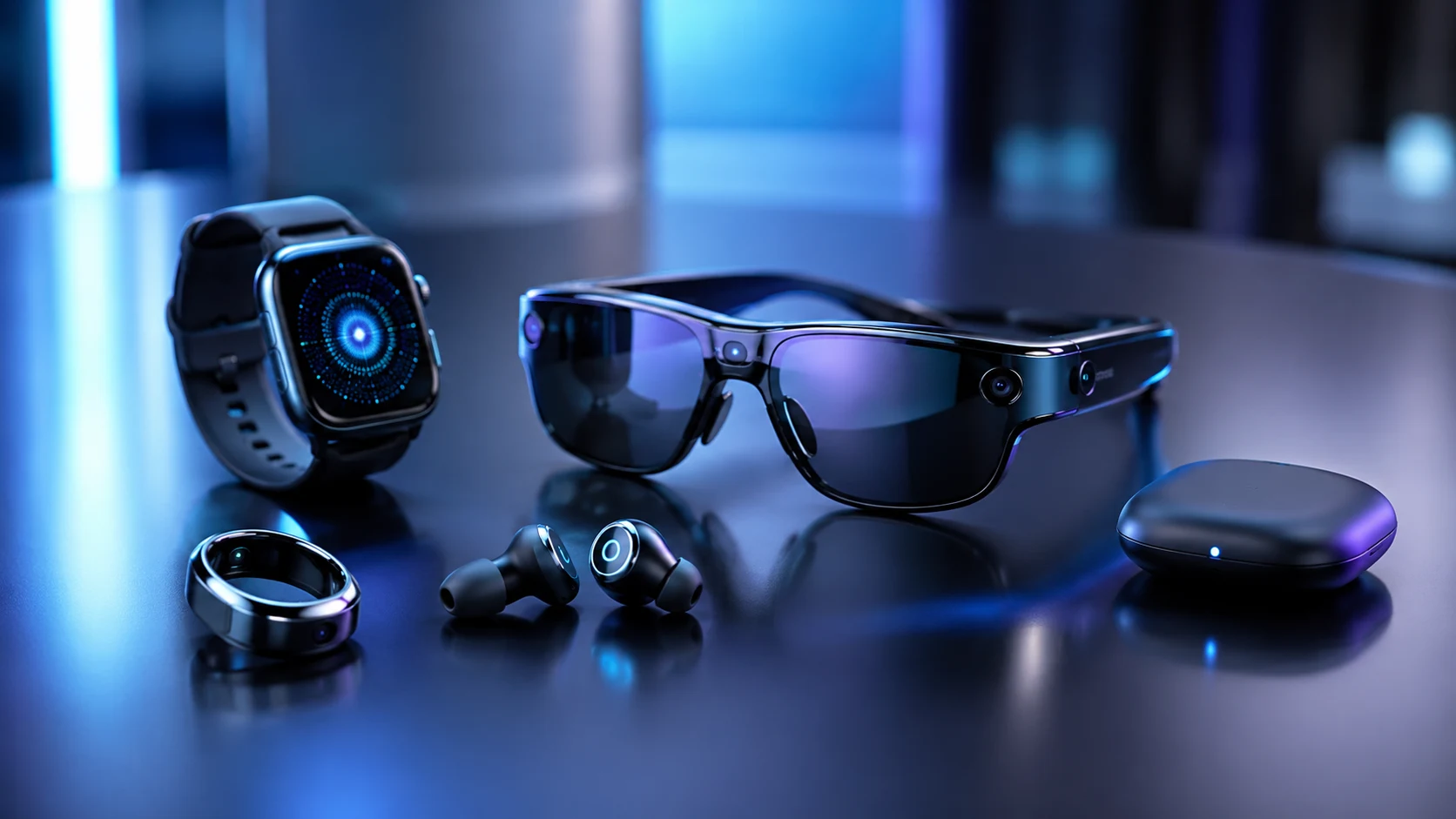
The way people interact with technology is changing faster than most expected. Just a few years ago, smartphones felt untouchable, almost like the final form of personal tech. Everyone depended on them for communication, entertainment, work, navigation, shopping, and basically every digital activity imaginable. But now, something different is starting to happen across the global tech industry. In 2026, AI wearables are slowly moving from experimental gadgets into devices that could realistically replace smartphones for millions of users.
At first, the idea sounded ridiculous. Nobody seriously believed that smart glasses, AI pins, wearable assistants, or voice-first devices could compete with the dominance of smartphones. Yet the conversation shifted quickly after major tech companies began redesigning their ecosystems around artificial intelligence instead of screens. Suddenly, people were no longer asking which smartphone had the best camera. They started asking which device could understand context better, automate tasks faster, and reduce screen dependency altogether.
The biggest reason behind this shift is surprisingly simple. People are getting tired of staring at screens all day. Notifications never stop, apps constantly demand attention, and smartphones have quietly become exhausting digital companions. Tech companies understand this frustration better than anyone because they helped create it. That is why the next generation of devices is focused less on endless scrolling and more on invisible computing powered by artificial intelligence.
What makes this moment different from previous wearable trends is the maturity of AI itself. Earlier smartwatches and fitness bands were mostly passive trackers that collected data without truly understanding it. Modern AI wearables behave more like intelligent assistants that continuously interpret surroundings, user behavior, voice commands, biometric signals, schedules, and digital habits in real time.
This transition is no longer limited to startup experiments either. Massive brands are investing billions into AI-native ecosystems involving smart glasses, AI earbuds, wearable displays, sensor-based assistants, and contextual computing platforms. Industry events throughout 2026 have already shown that the future of consumer technology may become less dependent on smartphones than anyone imagined.
The Rise of AI Wearables in 2026
For years, wearable technology existed as an accessory category. Smartwatches extended smartphone functionality while fitness trackers focused on health metrics. They were useful, but they still depended heavily on phones. That dependency is now beginning to disappear as AI processing becomes powerful enough to operate directly on wearable devices.
The biggest transformation comes from on-device intelligence. Modern wearable chips are capable of processing voice interactions, environmental awareness, live translation, biometric analysis, and contextual recommendations without constantly relying on cloud servers. This creates faster responses, lower latency, and better privacy protection for users.
Another important factor is the rise of edge AI. Instead of sending every task to remote servers, wearable devices now process more information locally. This reduces delays while also helping battery efficiency improve significantly compared to older wearable generations. Researchers and hardware manufacturers have spent years solving issues involving heat dissipation, energy management, and miniaturization, and those advancements are finally reaching commercial products.
The design philosophy behind these products also feels completely different from traditional smartphones. Smartphones demand active attention because users need to unlock screens, open apps, search manually, and interact visually with information. AI wearables are moving toward passive computing where the technology quietly assists users without forcing constant engagement.
That subtle difference changes the entire relationship between humans and devices. Instead of people adapting to apps, AI systems are adapting to human behavior. Devices are learning schedules, preferences, communication patterns, routines, and environments automatically. The goal is not just convenience anymore. The goal is frictionless digital interaction.
Why Smartphones Are Losing Their Dominance
The smartphone industry has reached a strange point where innovation feels increasingly incremental. Every year brings slightly better cameras, slightly faster processors, and slightly brighter screens, but the overall experience rarely changes in meaningful ways. Consumers have started noticing this stagnation.
At the same time, younger generations are becoming more conscious about digital overload. Constant notifications, social media fatigue, endless doomscrolling, and screen addiction have created a growing desire for technology that feels less intrusive. AI wearables position themselves as the solution to this exact problem.
Companies like OpenAI, Meta, Apple, Samsung, Google, and Qualcomm are all exploring wearable-first strategies because they understand that the future of computing may revolve around ambient intelligence instead of app ecosystems.
Another major reason smartphones are losing dominance is context awareness. Smartphones only respond after users manually open applications or enter commands. AI wearables continuously analyze surroundings and anticipate needs before users even ask. That proactive experience feels fundamentally different from traditional smartphone interaction.
During recent technology conferences, many demonstrations focused on devices capable of interpreting user intent across multiple services simultaneously. Some systems could automatically organize travel plans, summarize conversations, manage reminders, or generate contextual recommendations with minimal user input.
This level of automation changes expectations completely. Once people experience AI systems that understand context naturally, manually navigating dozens of apps on a smartphone begins to feel outdated.
Smart Glasses Are Leading the Revolution
Among all wearable categories, smart glasses are currently receiving the most attention. Industry analysts increasingly believe that AI-powered glasses could become the closest thing to a smartphone replacement within the next few years.
The reason is obvious when looking at how humans naturally interact with the world. Vision already dominates human attention, so integrating AI directly into eyewear creates a seamless experience without requiring users to constantly hold a separate device.
Modern smart glasses can already provide navigation overlays, live language translation, object recognition, contextual notifications, hands-free recording, and real-time AI assistance. Some prototypes even integrate voice-driven AI companions capable of responding naturally to conversations and environmental cues.
Unlike smartphones, smart glasses also reduce physical friction. Users no longer need to reach into pockets, unlock screens, or type constantly. Information simply appears when necessary through voice interaction, gesture controls, or augmented visual interfaces.
This shift might sound futuristic, but adoption is already beginning in practical ways. Many consumers initially use smart glasses for micro-tasks like navigation, instant translation, quick searches, or wearable video capture. Over time, those small conveniences gradually reduce reliance on smartphones altogether.
Fashion and design improvements are accelerating this transition too. Early smart glasses looked awkward and experimental, which limited mainstream appeal. Newer generations focus heavily on aesthetics, lightweight materials, and subtle integration that resembles normal eyewear instead of sci-fi prototypes.
AI Assistants Are Becoming Invisible
One of the most important changes happening in 2026 is the evolution of AI assistants themselves. Traditional voice assistants felt robotic, limited, and frustrating because they relied on scripted interactions. Modern AI assistants powered by large language models feel significantly more conversational and contextually aware.
This matters because wearable technology depends heavily on natural interaction. Nobody wants to speak to devices that misunderstand simple requests or require repetitive commands. AI advancements are finally making voice-first computing practical for everyday use.
Wearable AI systems now remember conversations, understand personal habits, track ongoing tasks, and respond more naturally during interactions. Some experimental systems can even interpret emotional tone, environmental context, and behavioral patterns to improve assistance quality over time.
The long-term vision is clear. Future AI wearables may disappear into daily life entirely, becoming intelligent companions rather than visible gadgets demanding constant attention. Technology companies are increasingly designing experiences where AI fades into the background while still remaining continuously available.
That philosophy differs radically from smartphone-centered ecosystems where apps compete aggressively for user engagement. AI wearables instead aim to reduce unnecessary interaction while still delivering relevant information instantly.
This is why many analysts describe wearable AI as a shift from “smart devices” to “intelligent environments.” The focus is no longer individual hardware specifications. The focus is intelligent ecosystems capable of understanding human intent continuously.
Health and Biometric Tracking Become Essential
Health technology is becoming one of the strongest drivers behind wearable adoption. Modern AI wearables can continuously monitor heart rate, stress levels, sleep quality, oxygen saturation, movement patterns, and other biometric signals in real time.
Unlike traditional fitness trackers, AI-enhanced health wearables now interpret data contextually instead of simply displaying raw statistics. Devices can generate personalized insights, detect unusual patterns, and recommend preventive actions before health issues escalate.
Preventive healthcare is especially important in 2026 because consumers increasingly prioritize wellness, longevity, and personalized medical insights. Investors and technology firms recognize this trend clearly, which explains why health-focused wearable innovation is accelerating rapidly.
Another advantage of wearables is passive data collection. Smartphones only gather information during active usage, but wearables remain attached to the body almost continuously. This creates richer datasets that AI systems can analyze more effectively over time.
The healthcare industry is also beginning to integrate wearable data into broader digital health ecosystems. Some systems already support AI-driven coaching, medication reminders, fitness optimization, stress management, and lifestyle analysis.
For many users, these features create stronger emotional attachment than smartphones ever did. Smartphones feel transactional, while wearable health assistants feel personal because they directly connect to physical wellbeing.
The Challenges AI Wearables Still Face
Despite all the excitement, AI wearables are not replacing smartphones overnight. Significant technical and social challenges still exist before mainstream adoption becomes universal.
Battery life remains one of the biggest problems. AI processing requires substantial energy, especially for always-on contextual awareness. Manufacturers are improving efficiency rapidly, but wearable devices still struggle to match the convenience of smartphone battery endurance.
Privacy concerns also remain extremely important. AI wearables collect massive amounts of sensitive personal data including conversations, locations, health metrics, behavioral patterns, and environmental information. Many consumers remain uncomfortable with the idea of constantly monitored devices attached to their bodies.
Social acceptance presents another challenge. Smart glasses especially raise concerns about surveillance, hidden recording, and public discomfort. Society still needs time to establish norms around wearable AI behavior.
There is also the issue of ecosystem fragmentation. Different companies are building incompatible AI ecosystems, which may create confusing experiences for consumers. Smartphones succeeded partly because app ecosystems became standardized globally. Wearable AI still lacks that level of universal integration.
Cost is another barrier. Premium AI wearables remain expensive products targeting early adopters rather than mass-market consumers. Prices will likely decrease over time, but affordability still limits widespread adoption in 2026.
Most importantly, smartphones still offer unmatched versatility. Many users continue relying on large screens for gaming, productivity, content creation, and media consumption. AI wearables may reduce smartphone usage dramatically without eliminating phones entirely.
The Future of Human-Device Interaction
What makes the wearable AI revolution fascinating is that it represents more than just another gadget cycle. This transition could fundamentally redefine how humans interact with technology itself.
For decades, digital interaction revolved around screens. People stared at displays, tapped icons, typed commands, and navigated visual interfaces constantly. AI wearables challenge that entire paradigm by making computing more ambient, contextual, and invisible.
The next generation of technology may prioritize awareness over attention. Devices will increasingly understand users passively instead of waiting for direct input. That transformation changes everything from communication and productivity to entertainment and healthcare.
This future also aligns with broader trends involving edge computing, autonomous AI systems, and multimodal interfaces. Technology companies no longer view devices as isolated products. They view them as interconnected intelligence layers integrated into everyday environments.
Some experts believe smartphones will evolve into secondary hub devices while wearables become the primary interface layer. Others think smartphones may eventually disappear entirely for many users, especially younger generations growing up with AI-native experiences.
Either way, the direction feels increasingly obvious. The center of consumer technology is shifting from screens toward intelligent assistance.
Conclusion
The rise of AI wearables in 2026 marks one of the most important transitions in modern consumer technology. Smartphones are not disappearing tomorrow, but their dominance is clearly being challenged by a new generation of intelligent wearable devices designed around context, automation, and seamless interaction.
What started as simple fitness trackers and smartwatch notifications has evolved into a much larger movement toward ambient computing powered by artificial intelligence. Smart glasses, AI assistants, biometric wearables, and contextual devices are gradually reshaping how people communicate, work, navigate, and consume information every day.
The biggest reason this trend matters is not just convenience. It reflects a deeper cultural shift away from screen addiction and toward technology that feels more natural, less distracting, and more integrated into human behavior. Consumers increasingly want devices that assist quietly instead of constantly demanding attention.
There are still obstacles involving privacy, battery life, affordability, and ecosystem fragmentation. However, the momentum behind wearable AI continues growing because the technology finally feels practical instead of experimental.
For the first time in over a decade, the smartphone industry genuinely faces a possible successor. Whether smartphones disappear completely or simply evolve into background devices, one thing is becoming impossible to ignore. The future of personal technology is no longer just in your pocket. It is moving onto your body.