Apple Broadcom Chip Deal Localizes iPhone Tech
 Vortixel
16 minutes read
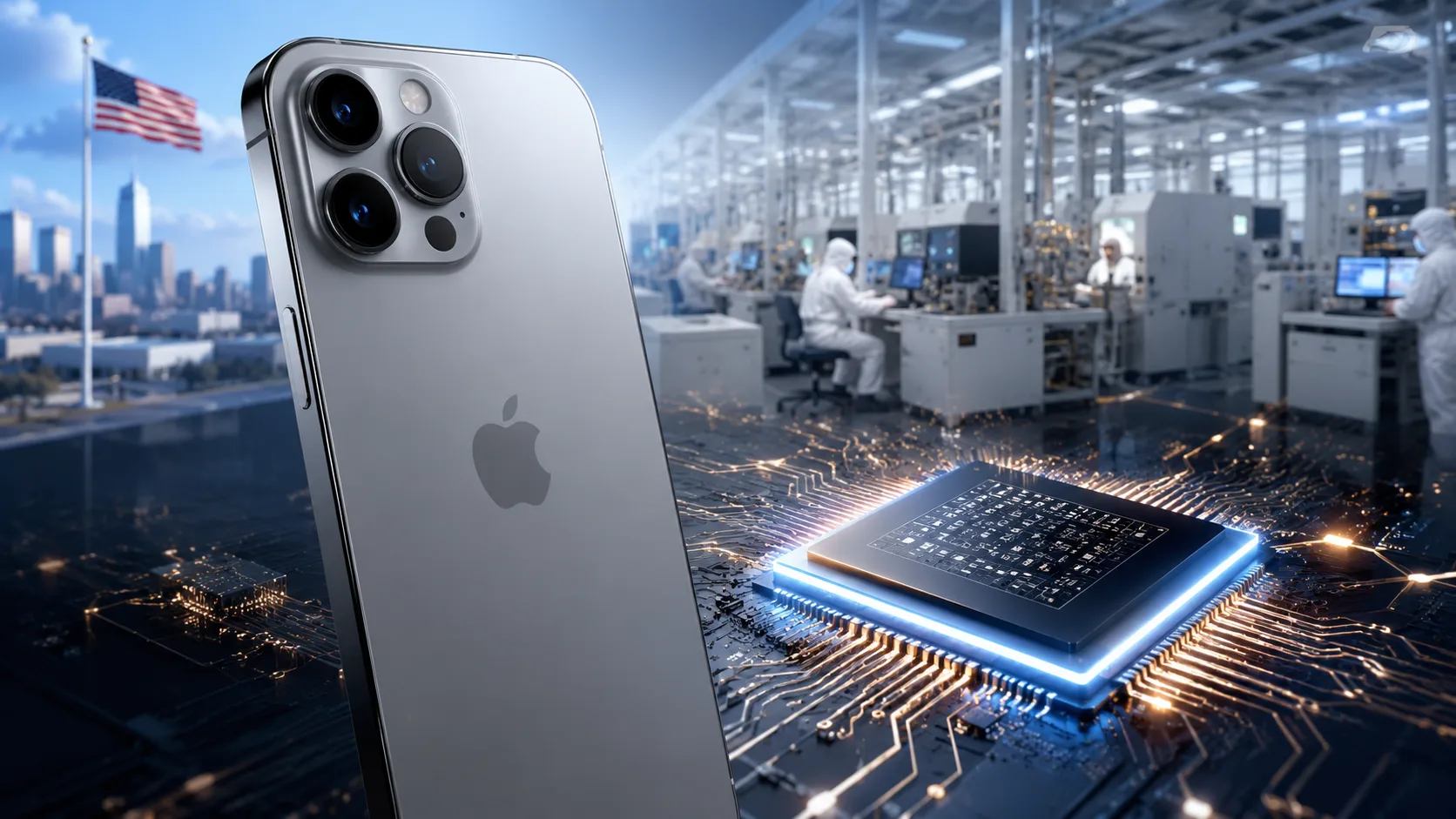
The Apple Broadcom chip deal is not just another supplier announcement buried inside the machinery of Big Tech. It is a signal that the iPhone’s future is being pulled closer to home, one tiny radio component at a time. Apple is committing more than $30 billion to Broadcom in a multiyear push to design and produce billions of U.S.-made chips for Apple devices. The deal centers on custom silicon and wireless connectivity components, the kind of invisible tech that quietly keeps an iPhone connected to 5G, Wi-Fi, Bluetooth, GPS, and the wider digital world. For everyday users, this may sound like supply chain talk, but it could shape how future iPhones are built, priced, repaired, marketed, and trusted.
There is something very Apple about the timing of this move. While the consumer-facing conversation is usually about camera bumps, thinner frames, AI features, and whether the next iPhone finally feels different, Apple is making one of its biggest plays behind the scenes. It is investing heavily in the parts most people never see but use every second. That is where the modern smartphone war is becoming more serious, because the device in your pocket is no longer defined only by the screen or the processor. It is defined by how efficiently every layer of silicon works together, from the main chip to the smallest wireless component.
Why the Apple Broadcom Chip Deal Matters
The Apple Broadcom chip deal matters because it sits at the intersection of technology, manufacturing, politics, and consumer trust. Apple has spent years building its image around control, from designing its own A-series and M-series processors to tightly managing software and hardware as one ecosystem. This deal extends that control deeper into the supply chain, especially around wireless components that support core iPhone experiences. Broadcom is expected to help produce more than 15 billion U.S.-made chips under the expanded agreement. That scale tells us Apple is not testing a side project; it is building a long-term production lane for a huge part of its device ecosystem.
For Apple, chips are not just parts on a board. They are the foundation of product identity, power efficiency, privacy, battery life, connectivity, and long-term performance. A phone can have a beautiful display and still feel broken if it drops signal, overheats, struggles with wireless handoff, or drains battery too fast. That is why radio frequency components and connectivity chips deserve more attention than they usually get. They decide how smoothly an iPhone talks to networks, accessories, satellites, routers, wearables, and cars. In a world where the smartphone is basically a personal command center, connection quality is no longer a background feature.
The move also strengthens the story of “local” tech manufacturing in a way that feels more practical than symbolic. The iPhone will not suddenly become fully made in the United States, because global electronics manufacturing is far too complex for that kind of instant shift. However, Apple can localize critical layers of the production chain, especially in areas where American chip expertise already exists. Broadcom’s manufacturing footprint in Fort Collins, Colorado, becomes a key part of that story. Apple can now point to a major domestic chip pipeline while still relying on a broader global network for displays, memory, assembly, and advanced processors.
A Local iPhone Story Without the Hype
The phrase “iPhone makin lokal” sounds bold, but the more accurate story is layered. Apple is not moving the entire iPhone supply chain into one country, and it probably will not do that anytime soon. What it is doing is making selected strategic components more local, especially chips tied to wireless performance and device connectivity. This is still a big deal because smartphones are built from hundreds of decisions, not one headline factory. When Apple localizes even a small but important slice of the iPhone’s technology stack, it gains more influence over availability, quality control, compliance, and long-term planning.
That matters because the last few years have taught the tech industry how fragile supply chains can be. A missing component, a shipping delay, a regional disruption, or a sudden trade restriction can ripple through the entire product calendar. Apple is famous for launching products with almost theatrical precision, but that precision depends on a supply chain that has to move like a living organism. By investing deeper in U.S.-made chips, Apple gives itself another layer of resilience. It does not eliminate global risk, but it reduces the chance that one bottleneck can slow everything down.
There is also a branding angle that Apple understands extremely well. Consumers may not study radio frequency chips, but they do respond to ideas like reliability, security, domestic manufacturing, and premium engineering. A future iPhone campaign does not need to explain every technical detail to benefit from this investment. Apple can simply frame the device as more advanced, more secure, and more deeply engineered across its entire stack. For a company that sells trust as much as hardware, the supply chain itself becomes part of the product story.
What Broadcom Actually Brings to the iPhone
Broadcom is not a random name in Apple’s orbit. It has long been tied to wireless connectivity and custom chip technologies, which makes it important to devices that depend on seamless communication. The components involved in this deal are expected to support technologies such as 5G, GPS, Wi-Fi, and Bluetooth. These are not flashy features on a spec sheet, but they are the everyday backbone of the iPhone experience. Every AirPods pairing, every map refresh, every mobile payment, every hotspot session, and every cloud sync moment relies on this invisible layer working properly.
The best smartphones now compete on how invisible their complexity feels. Users do not want to think about antennas, modem behavior, frequency bands, or wireless handoff. They just expect the phone to connect quickly, stay stable, and use as little battery as possible while doing it. That is where custom silicon becomes powerful, because Apple can optimize hardware and software around the exact behaviors it wants. The more custom the component, the more room Apple has to tune the experience instead of accepting an off-the-shelf compromise.
Broadcom’s role becomes especially interesting as the iPhone turns into a hub for more devices. The Apple ecosystem now includes watches, earbuds, tablets, Macs, smart home devices, spatial computing hardware, and potentially more AI-driven wearables in the future. That ecosystem only feels magical when connections are fast, stable, and low-friction. If wireless components improve, the benefits may show up in small but meaningful ways across the entire lineup. Better pairing, lower latency, more efficient location services, and stronger accessory behavior can all become part of the same quiet upgrade cycle.
The Bigger Trend: Smartphones Are Becoming Supply Chain Products
For years, smartphone coverage focused heavily on design leaks, camera sensors, battery capacity, and processor benchmarks. Those details still matter, especially for readers who follow smartphone technology closely. But the bigger trend in 2026 is that smartphones are becoming supply chain products as much as consumer gadgets. The companies with the strongest control over chips, manufacturing, logistics, and component sourcing are the companies with the best chance of staying stable during global pressure. Apple knows this, and the Broadcom agreement shows it is playing the long game.
This is why the deal feels bigger than a single iPhone generation. It is not about one model or one launch event. It is about building a production foundation that can support multiple devices over several years. Apple’s products often look simple from the outside, but the business behind them is deeply engineered. A $30 billion commitment suggests Apple wants supply certainty, technical control, and political alignment all moving in the same direction.
Other tech companies are watching this kind of move closely. Samsung, Google, Qualcomm, MediaTek, Nvidia, and many others are all operating in a market where chip access has become a strategic advantage. The smartphone is now connected to AI, cloud computing, automotive software, health tracking, gaming, and spatial experiences. That means chip strategy is no longer just a manufacturing department problem. It is a product strategy, marketing strategy, and national technology strategy all at once.
How This Could Shape Future iPhones
The most immediate impact of the Apple Broadcom chip deal may not be obvious when the next iPhone lands. Most buyers will not open the spec page and search for which radio component came from which factory. The changes may appear as better connection stability, improved power efficiency, faster accessory pairing, or more reliable wireless performance in crowded areas. Apple may also use the deal to support more advanced features that depend on constant communication between hardware, software, and network systems. In other words, the result may feel less like a new feature and more like the phone simply working better.
Future iPhones could also benefit from tighter integration between Apple’s main processors and supporting wireless chips. Apple already designs its own high-performance silicon, and that gives it major control over the iPhone’s speed and energy profile. When supporting chips become more custom and more predictable, Apple has more room to optimize the whole device. This is especially important as phones handle more AI processing, higher-resolution cameras, satellite features, spatial content, and always-on background tasks. Every efficiency gain matters when users expect thinner designs without giving up battery life.
There is also the possibility that this deal helps Apple move faster in areas where wireless performance is becoming a competitive battlefield. Location accuracy, ultra-wideband interactions, device-to-device discovery, smart home control, and wearable syncing all depend on strong wireless architecture. If Apple wants the iPhone to remain the center of a personal tech universe, it needs that architecture to be extremely reliable. Broadcom’s custom components could help support that ambition. The iPhone of the next few years may be less about one huge redesign and more about dozens of invisible upgrades that make the ecosystem feel tighter.
Why This Deal Connects to AI and On-Device Intelligence
At first glance, wireless connectivity chips may not sound directly connected to AI. But the modern AI device is not only about neural engines and large models. It also depends on fast data movement, efficient sensors, stable networking, low-latency communication, and reliable device coordination. If Apple wants more AI features to run smoothly across iPhone, Apple Watch, AirPods, Mac, and future wearables, the invisible connectivity layer becomes more important. A smarter device is only useful if it can sense, sync, and respond without friction.
On-device AI also raises the value of privacy-focused hardware control. Apple has often positioned itself as a company that prefers to process sensitive experiences locally when possible. That strategy requires strong chips, efficient wireless behavior, and deep integration between components. If the iPhone handles more personal AI tasks, from summarizing messages to interpreting images or managing health signals, every connection between hardware layers needs to be trusted. The stronger Apple’s control over that stack becomes, the easier it is to tell a premium privacy story.
This does not mean Broadcom chips are suddenly the face of Apple’s AI strategy. They are not replacing the A-series processor, Neural Engine, or cloud infrastructure. But they can support the environment in which AI features feel seamless. AI on a phone is not just a model running in isolation; it is a full-device experience involving cameras, microphones, sensors, networks, apps, accessories, and cloud services. The Apple Broadcom chip deal gives Apple more control over one of the layers that keeps that experience moving.
The U.S. Manufacturing Angle Is Real, But Complicated
Apple’s expanded commitment to U.S.-made chips arrives during a period when domestic semiconductor manufacturing is being treated as a national priority. The company has framed the Broadcom partnership as part of a much larger American investment plan. Broadcom is also expected to invest heavily in expanding and modernizing its Fort Collins facility. That gives the deal a clear jobs-and-manufacturing narrative, which matters both for public perception and regulatory relationships. Apple is not just buying parts; it is placing itself inside a broader push to rebuild advanced manufacturing capacity.
Still, it is important not to oversimplify what “made locally” means in consumer electronics. A chip may be designed in one place, fabricated or assembled in another, packaged somewhere else, and then integrated into a device assembled across a global network. The iPhone remains one of the most international products ever created. Its supply chain touches multiple countries, specialized factories, raw materials, shipping corridors, and highly skilled labor networks. So when Apple moves more chip production into the United States, it is meaningful, but it is not the same as turning the iPhone into a fully domestic product.
That nuance actually makes the story more interesting. Apple is not trying to erase globalization overnight. It is trying to rebalance risk while keeping the efficiency of a global system. The company can localize strategic components while still using international partners for other pieces that require scale, specialization, or cost advantages. This hybrid model may become the new normal for premium gadgets, where brands diversify production not for marketing alone, but for survival.
What It Means for Consumers
For regular iPhone users, the first question is simple: will this make the iPhone better? The honest answer is that it could, but not in a dramatic overnight way. Users may not see a “Broadcom edition” label or a flashy setting that announces the change. Instead, the benefit could appear through stronger wireless reliability, fewer supply-related delays, more consistent device quality, and better long-term support for future features. This is the kind of upgrade that matters most when it disappears into the experience.
The second question is whether it will make iPhones cheaper. That is less likely, at least in the short term. Local manufacturing and custom silicon are expensive, especially when a company is investing billions into production capacity. Apple usually uses supply chain control to protect margins, improve product consistency, and strengthen differentiation, not necessarily to lower prices quickly. If users benefit financially, it may come through fewer shortages, stronger resale value, or devices that age better rather than a sudden price drop.
The third question is whether this affects trust. For some buyers, a stronger domestic chip supply chain may make the iPhone feel more secure and premium. For others, the manufacturing location will matter less than battery life, camera quality, storage options, and monthly payment plans. Apple knows both audiences exist. That is why the company can use the manufacturing story in the background while continuing to sell the iPhone through lifestyle, design, and ecosystem benefits.
What It Means for Apple’s Competitors
The Apple Broadcom chip deal also sends a message to the rest of the smartphone industry. Apple is not waiting for the market to stabilize on its own. It is locking down strategic supply, investing in custom components, and strengthening its ability to control the user experience from deep inside the device. Competitors that rely more heavily on standard parts may still move fast, but they may not have the same level of vertical control. In premium gadgets, that control can become a serious advantage.
Samsung remains one of the few companies with enough scale and manufacturing power to answer Apple from multiple angles. Google is building deeper custom silicon ambitions through Tensor, while Qualcomm continues to push powerful platforms for Android brands. But Apple’s strategy is different because it links hardware, software, services, retail, and brand narrative into one closed loop. When it secures chips, it is not just securing components for a phone. It is securing the future behavior of an ecosystem that includes payments, health, wearables, accessories, cloud services, and AI tools.
This may pressure other smartphone brands to talk more seriously about where their components come from and how reliable their supply chains are. Consumers are becoming more aware of chip shortages, privacy concerns, repair issues, and long-term software support. A premium phone can no longer rely only on launch-day excitement. It has to prove that the company behind it can support the device for years. Apple’s Broadcom move gives it another argument in that long-term trust conversation.
Practical Insight for Gadget Buyers
If you are planning to buy an iPhone soon, this deal should not make you pause your purchase in fear of missing out. The impact will likely unfold across multiple product cycles rather than one sudden launch. A phone released this year may include some supply chain benefits, while deeper improvements could appear gradually as production scales. The smarter way to read this news is not as a buying warning, but as a sign of where Apple is steering its hardware future. The company is investing in the invisible parts that make premium devices feel stable over time.
For gadget enthusiasts, this is a reminder to look beyond megapixels and benchmark scores. The best phone is not always the one with the loudest spec sheet. It is often the one with the strongest total system, including chip design, network performance, battery efficiency, software updates, repair support, accessory behavior, and ecosystem reliability. Apple’s Broadcom partnership speaks directly to that total-system philosophy. It shows that the next smartphone battle may be won in factories and component roadmaps long before the product appears on stage.
For creators, gamers, travelers, students, and professionals, connectivity is becoming a real productivity feature. A phone that keeps stable signal during video uploads, map navigation, mobile gaming, hotspot use, or wearable syncing can make daily life smoother. These are not always features people notice in reviews until something goes wrong. Apple is betting that better control over wireless components can reduce those rough edges. That is not as glamorous as a new color option, but it may matter more after six months of real use.
The Trend Behind the Deal
The deeper trend here is that gadget companies are becoming infrastructure companies. Apple is no longer just designing devices and asking suppliers to deliver parts. It is investing in production capacity, shaping supplier roadmaps, and building a manufacturing story that supports its brand identity. This is what happens when smartphones become essential tools instead of optional electronics. The more central the device becomes to money, identity, communication, work, and health, the more control Apple wants over every layer that keeps it running.
The deal also reflects a shift away from pure globalization toward strategic redundancy. Companies still want global scale, but they do not want to depend too heavily on one region, one factory, or one geopolitical path. Apple’s supply chain will remain global, but it is clearly becoming more distributed and more politically aware. That is a major trend across the tech industry, especially in semiconductors. The next generation of gadgets may be marketed through design, but they will be protected through supply chain diversification.
There is a cultural angle too. Gen Z and younger millennial consumers are more comfortable questioning how products are made, where parts come from, and what kind of systems they support. They may not read every manufacturing report, but they understand that tech is not magic. It is labor, minerals, factories, logistics, patents, software, energy, and politics packed into a polished rectangle. Apple’s challenge is to make that complicated reality feel responsible, premium, and future-ready without turning every product launch into a supply chain lecture.
Conclusion: A Small Chip Story With Big iPhone Energy
The Apple Broadcom chip deal is a reminder that the most important gadget stories are not always the loudest ones. A $30 billion chip commitment may not look as exciting as a foldable phone leak or a new AI demo, but it can shape the future of the iPhone in a deeper way. By investing in U.S.-made custom silicon and wireless connectivity components, Apple is strengthening the foundation beneath its most important products. The iPhone becomes more local not because every part suddenly comes from one place, but because Apple is pulling more strategic technology closer to its core. In a market where trust, performance, resilience, and ecosystem control matter more every year, that may be one of Apple’s smartest moves yet.