
Samsung Smartphone Prices Face a New Squeeze
 Vortixel
14 minutes read
Vortixel
14 minutes read
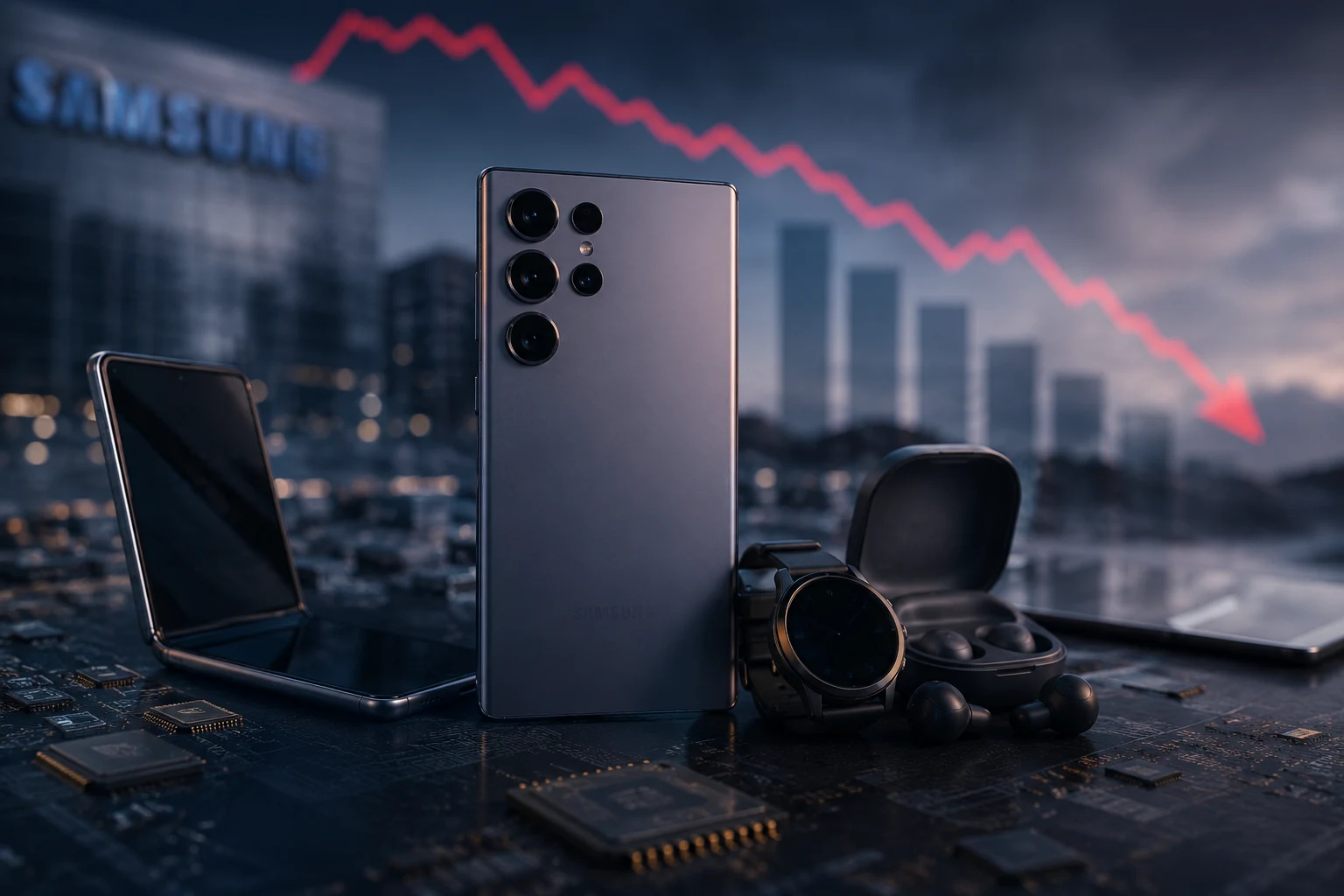
The story around Samsung smartphone prices has suddenly become bigger than one company’s quarterly headache. What looked like a routine earnings season has turned into a warning sign for anyone planning to buy a phone, tablet, watch, laptop, or gaming handheld in the next upgrade cycle. Samsung’s mobile business is feeling pressure from rising component costs, especially memory chips, even while the company’s semiconductor side benefits from the AI boom. That split creates a strange moment where Samsung can win big from selling chips and still struggle to keep its own gadgets affordable. For everyday buyers, the message is simple but uncomfortable: the next wave of premium gadgets may not just be smarter, thinner, and faster, but also noticeably more expensive.
This is not the usual “phones are getting pricey because brands want bigger margins” conversation. The pressure is coming from deep inside the supply chain, where memory chips have become one of the hottest pieces of modern tech infrastructure. AI servers, cloud companies, laptops, smartphones, wearables, and gaming devices are all competing for similar types of advanced memory. When demand gets that crowded, companies that build consumer gadgets have fewer ways to protect prices. Samsung is in the middle of that storm because it is both a memory-chip giant and one of the world’s most important mobile brands.
Why Samsung Smartphone Prices Are Under Pressure
The biggest reason Samsung smartphone prices are under pressure is that memory has become more expensive and more strategic than it used to be. A few years ago, buyers cared about RAM and storage mostly as specs on a comparison chart. Today, those parts are tied directly to AI features, faster multitasking, better camera processing, smoother gaming, and longer device life. If a phone wants to run more on-device AI, hold larger photo models, process video faster, and keep multiple apps alive in the background, it needs stronger memory support. That makes memory less like a boring internal part and more like the nervous system of the modern gadget.
Samsung has an unusual advantage here because it manufactures memory chips, but that advantage does not make its mobile division immune. Internal supply still has value, and corporate divisions still face real cost pressures when the market price of memory rises. If server customers are willing to pay more for high-performance chips, the opportunity cost of using similar capacity in phones becomes harder to ignore. That is why a booming chip market can create pain for a smartphone business inside the same company. The mobile division has to build attractive devices while the parts needed to build them become more valuable somewhere else.
This tension matters because smartphones have reached a point where hardware upgrades are no longer easy to sell unless they feel meaningfully better. A brighter screen, a slightly faster processor, or a cleaner camera pipeline may not convince users to upgrade every year. AI features are supposed to create that next big reason to buy, but AI also increases demand for memory and computing resources. In other words, the very thing brands are using to make phones exciting again can also make those phones more expensive to produce. That is a tough business loop, especially when buyers are already sensitive to inflation, subscriptions, and upgrade fatigue.
The AI Boom Is Rewriting Gadget Economics
The AI boom has changed the economics of consumer electronics in a way that is easy to miss from the outside. Most people see AI as a software feature, like a smarter assistant, better photo editing, faster search, or live translation. Behind the scenes, AI is also a hardware race, and memory is one of its most important battlegrounds. Data centers need enormous amounts of advanced memory to train and run large models, while phones need more efficient memory to support local AI tasks. That means a phone buyer and a cloud giant can end up competing indirectly for the same supply chain priority.
For Samsung, this creates a powerful but awkward contrast. Its chip division can benefit when AI companies want more memory, stronger supply guarantees, and premium components. At the same time, its mobile division has to absorb or pass along higher costs when it builds Galaxy phones, foldables, tablets, and wearables. That is why the latest financial pressure on Samsung Mobile should not be read as a simple brand failure. It is more like a preview of the new gadget economy, where AI demand can lift semiconductor profits while squeezing the consumer devices that rely on those same components.
This shift also explains why the gadget market feels more divided than ever. Premium devices are being packed with AI-ready chips, extra RAM, brighter displays, titanium frames, advanced cooling, and stronger cameras. Midrange devices, meanwhile, face a harder balance because buyers expect flagship-like features without flagship pricing. If memory and storage costs climb, brands may reduce base specs, delay upgrades, remove small extras, or raise prices. The result could be a market where premium phones become even more premium, while affordable phones have to make more visible compromises.
What This Means for Galaxy Phones
Galaxy phones are not just another product line inside Samsung. They are the public face of the company’s mobile identity, the devices most buyers compare against iPhones, Pixels, Xiaomi flagships, OnePlus models, and other Android rivals. If production costs rise, Samsung has to decide how much of that pressure it can pass to customers without weakening demand. A small price increase on a premium Ultra model may be easier to justify if the camera, display, battery, and AI features improve. A similar increase on a midrange Galaxy A device may feel much harsher because buyers in that segment are more price-conscious.
The challenge becomes even more complicated for foldables. Devices like the Galaxy Z Fold and Galaxy Z Flip already carry higher prices because their screens, hinges, durability engineering, and compact designs are more expensive to produce. Samsung has spent years trying to make foldables feel less like experimental luxury gadgets and more like normal phones with a new form factor. If component costs keep climbing, that mission gets harder. Foldables need better pricing to go mainstream, but the supply chain may be pushing in the opposite direction.
Samsung may still have room to protect buyers by adjusting its product strategy. It can offer more trade-in deals, longer software support, better preorder bundles, or more aggressive carrier partnerships. It can also spread premium AI features across fewer models at first, then bring them to cheaper devices once costs improve. However, those moves do not erase the basic pressure created by expensive memory. They simply decide who feels the pressure first: Samsung, retailers, carriers, or customers.
The Bigger Impact on Gadget Prices
This story is bigger than Galaxy phones because the same memory squeeze can affect many gadget categories. Tablets need more RAM to handle desktop-style multitasking, creative apps, and AI tools. Laptops need faster memory for local AI features, gaming, video editing, and productivity workflows. Gaming handhelds need strong memory bandwidth to run modern titles smoothly without draining battery life too quickly. Even wearables are becoming more advanced as brands add health sensors, offline intelligence, and tighter phone integration.
That is why readers of Samsung smartphone prices trends should watch the entire gadget market, not only the next Galaxy launch. When a major supplier like Samsung signals pressure in mobile economics, competitors rarely stay untouched. Apple, Xiaomi, Oppo, Vivo, Google, Lenovo, ASUS, MSI, Logitech, and smaller gadget makers all operate within the same global component environment. Some may have better contracts, stronger inventory, or different pricing strategies, but no major brand is completely outside the supply chain. If memory remains expensive, the whole industry has to make choices that eventually reach buyers.
The most obvious outcome is higher retail pricing, but that is not the only possibility. Brands may keep prices stable while offering less storage in base models. They may reserve higher RAM options for expensive trims and make entry-level versions feel less future-proof. They may delay major redesigns because new hardware platforms become too costly to launch aggressively. They may also push subscriptions, cloud features, and ecosystem bundles harder to recover margin after the device sale.
Why Budget and Midrange Buyers Should Care
Premium phone buyers often expect prices to rise, but budget and midrange buyers may feel this shift more sharply. A $50 increase on an expensive flagship is annoying, but a $50 increase on a midrange phone can change the entire buying decision. Many shoppers in the affordable segment compare phones by storage, RAM, battery size, camera quality, and years of software updates. If brands cut memory to protect price, the device may feel slower sooner. If brands keep memory strong and raise price, the device may lose its value advantage.
This is especially important because modern apps are not getting lighter. Social apps, short-video platforms, camera tools, games, shopping apps, and AI features all consume more resources over time. A phone that launches with barely enough RAM may feel fine during the first few months and then start struggling as apps update. Storage pressure is also real because high-resolution photos, 4K video, offline maps, downloads, and large games can fill a phone quickly. When memory prices rise, the temptation to ship weaker base models becomes stronger, and buyers need to pay closer attention.
For shoppers, the practical takeaway is to look beyond the headline price. A cheaper phone with too little RAM or storage may become expensive if it needs replacing sooner. A slightly more expensive model with better memory, longer support, and stronger battery life may be the better long-term buy. That does not mean everyone needs a flagship. It means the value equation is changing, and specs that once felt optional now matter more for device longevity.
Samsung’s Brand Problem Is Also a Trust Problem
Samsung has built a reputation around giving buyers options at nearly every price point. There are premium Ultra phones, stylish foldables, mainstream Galaxy S models, budget-friendly Galaxy A devices, tablets, watches, earbuds, and connected home products. That broad lineup is a strength, but it also means Samsung has more places where rising costs can create friction. If buyers see higher prices without understanding the supply chain story, they may assume Samsung is simply charging more because it can. That perception can be dangerous in a market where people already keep phones longer than they used to.
The company also has to protect the emotional side of the Galaxy brand. People do not buy phones only because of benchmark scores. They buy based on camera confidence, design taste, ecosystem comfort, trade-in convenience, repair expectations, battery trust, and the feeling that the device will stay useful for years. If price increases arrive alongside strong software support and meaningful upgrades, users may accept them. If price increases arrive with smaller improvements, weaker base specs, or confusing AI paywalls, frustration can build quickly.
That is where communication matters. Samsung does not need to turn every product launch into a lesson about DRAM and NAND economics, but it does need to make upgrades feel concrete. Buyers should understand why a new model costs more, whether it offers better durability, stronger on-device intelligence, longer updates, improved repairability, or genuinely better performance. The more expensive gadgets become, the more buyers demand proof. A premium price now needs a premium explanation.
How AI Features Could Justify Higher Prices
AI is the most likely feature category Samsung will use to defend higher prices. Galaxy AI, smarter camera tools, live translation, generative editing, contextual search, voice assistance, and productivity features can make a phone feel more useful in daily life. If those tools work fast, privately, and reliably on the device, better memory and stronger chips become easier to justify. Buyers may accept paying more if the phone saves time, improves photos, organizes information, and handles tasks that used to require multiple apps. The problem is that AI features must feel essential, not decorative.
There is a risk that brands overestimate how much people will pay for AI branding alone. Many users are curious about AI, but they are also skeptical when features feel unfinished, locked behind accounts, or dependent on cloud processing. A phone that says “AI” in the keynote but still delivers average battery life, limited storage, or weak thermal performance may not win trust. Samsung has to make AI feel integrated into the full device experience. That means better photos, smarter notifications, easier editing, stronger accessibility, faster search, and fewer moments where the software feels like a gimmick.
This is where hardware and software strategy meet. More memory can help phones keep AI tools responsive, but only if the software uses it well. Stronger chips can support on-device processing, but only if battery life remains acceptable. Better storage can keep local data available, but only if privacy and security feel trustworthy. The brands that win the next gadget cycle will not be the ones that simply add AI labels; they will be the ones that make AI feel invisible, practical, and worth the cost.
What Buyers Should Do Before Upgrading
Anyone planning to upgrade should take a calmer and more strategic approach this year. First, check whether your current phone actually fails at something important, such as battery life, camera quality, storage, security updates, or app performance. If your device still receives updates and handles your daily tasks well, waiting may be smarter than rushing into a more expensive cycle. Second, compare memory and storage carefully because base models may become less generous as brands protect margins. Third, watch preorder deals and trade-in windows because those promotions may become the easiest way to reduce the impact of higher retail prices.
Buyers should also pay attention to long-term software support. A phone with seven years of updates can make more sense than a cheaper model that loses support quickly. Battery replacement options, repair costs, and durability should also influence the decision because keeping a device longer is one of the best ways to fight rising gadget prices. For gamers and creators, RAM, storage speed, cooling, and display quality matter more than flashy launch slogans. For casual users, battery life, camera consistency, security updates, and storage capacity may be more valuable than the most advanced AI features.
The smartest move is to avoid buying based only on launch hype. Wait for real-world reviews, battery tests, camera comparisons, and durability feedback before committing. Check whether the model you want has enough storage for at least three years of use. Look at the price gap between storage tiers because the cheapest version may not always be the best value. If Samsung or any other brand raises prices, buyers should respond by demanding devices that last longer, perform better, and offer clearer benefits.
The Trend Gadget Vortixel Readers Should Watch
The key trend for smartphone readers is that gadget pricing is becoming tied to AI infrastructure. This sounds abstract, but it affects real purchases. A company building data centers for AI can influence the cost of the phone in your pocket because both depend on advanced chips and memory supply. That connection did not feel obvious during earlier smartphone eras, when upgrades were mostly about cameras, screens, and processors. Now, the gadget market is connected to the same global race powering AI servers, cloud platforms, and enterprise computing.
This could reshape how brands design products over the next few years. Instead of chasing only thinner bodies or higher megapixel counts, companies may focus on memory efficiency, smarter compression, better local processing, and longer software optimization. Phones may become less about raw spec flexing and more about how intelligently they use limited hardware resources. At the same time, premium models may pull further ahead because they can afford stronger components. The gap between affordable and flagship gadgets could become more noticeable if supply pressure stays high.
There is also a chance this pressure encourages better innovation. When components get expensive, companies sometimes become more disciplined. They optimize software, improve thermal design, extend device support, and make older hardware perform better. That would be a good outcome for buyers because the industry has spent years pushing yearly upgrades that many users no longer need. If higher costs force brands to build devices that last longer and age better, the market could become healthier even if prices remain uncomfortable.
Conclusion: Samsung Smartphone Prices Signal a New Era
The pressure around Samsung smartphone prices is not just a temporary business headline. It is a signal that the gadget world is entering a new era where AI demand, memory supply, and consumer electronics pricing are tightly connected. Samsung’s mobile business may be feeling the squeeze now, but the same forces can move through phones, tablets, wearables, laptops, and gaming devices across the wider industry. Buyers should expect brands to talk more about AI, performance, and long-term value as they try to justify higher costs. The real question is whether those upgrades will feel useful enough to earn the extra money.
For Samsung, the path forward is clear but not easy. It has to keep Galaxy devices competitive while protecting margins in a supply chain where memory has become incredibly valuable. It has to make AI features feel practical, not forced. It has to protect midrange buyers from feeling abandoned while still pushing premium innovation. Most of all, it has to prove that higher prices come with better experiences, longer life, and real everyday benefits.
For consumers, this is the moment to become more selective. Do not upgrade just because a keynote says the next phone is smarter. Look at RAM, storage, battery life, update promises, repairability, and whether the AI tools actually match your routine. If prices rise, your standards should rise too. In the new gadget economy, the best device is not the one with the loudest launch campaign, but the one that stays useful, fast, secure, and worth carrying long after the hype fades.