
Apple Foldable iPhone Delay Sparks Innovation Doubts
 Vortixel
8 minutes read
Vortixel
8 minutes read
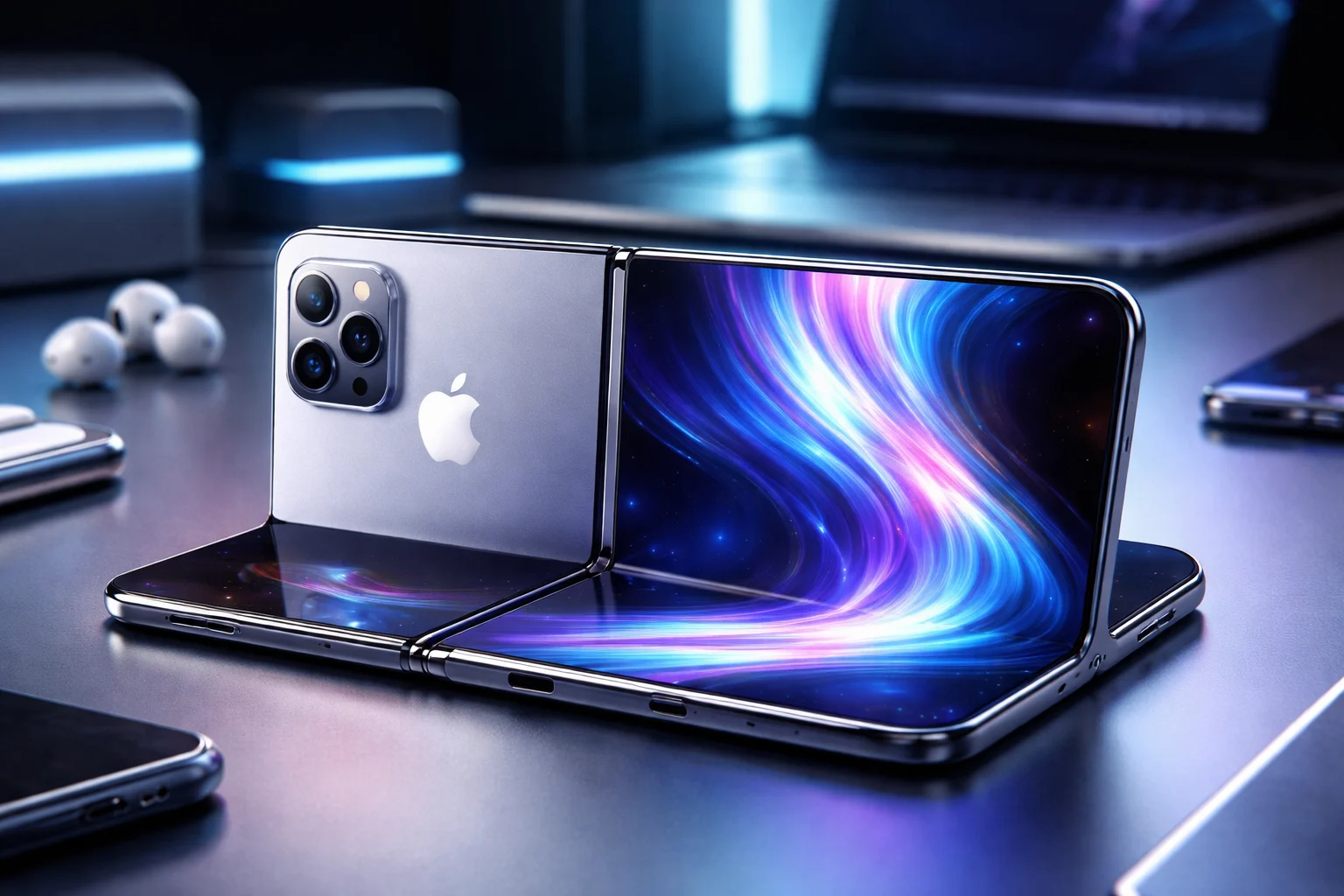
Introduction: When Apple Slows Down, the Market Talks
The foldable iPhone delay has quickly become one of the most discussed topics in the global tech industry, especially as competitors continue to push boundaries in the foldable smartphone space. For years, rumors about Apple entering the foldable market have circulated, building anticipation among both consumers and investors. However, recent reports indicate that Apple is postponing its foldable iPhone project, raising serious questions about the company’s pace of innovation in 2026. In an era where AI-powered devices, flexible displays, and next-gen hardware are defining the future of smartphones, Apple’s delay feels unusually out of sync with market momentum.
What makes this situation more interesting is the contrast between Apple and its rivals. Brands like Samsung, Huawei, and even emerging Chinese manufacturers are aggressively iterating on foldable technology, refining durability, usability, and software optimization. Meanwhile, Apple—once seen as the industry’s innovation leader—is now being viewed as cautious, even reactive. This shift in perception is significant, especially for a company whose brand identity is deeply tied to pushing the limits of design and user experience.
The big question now is simple but powerful: is Apple strategically waiting for the right moment, or is it genuinely falling behind in one of the most important hardware trends of this decade? The answer will likely shape not just Apple’s future, but the entire direction of the smartphone industry.
The Rise of Foldable Smartphones in 2026
The global smartphone landscape has changed dramatically over the past few years, with foldable devices evolving from experimental concepts into mainstream products. Early iterations were criticized for fragile screens, bulky designs, and high prices, but by 2026, those issues have been significantly reduced. Today’s foldables are thinner, more durable, and increasingly affordable, making them attractive to a wider audience.
Samsung remains the dominant force in this category, with its Galaxy Z Fold and Flip series leading both in sales and innovation. Huawei and Oppo have also made strong moves, particularly in Asia and Europe, offering sleek designs and competitive pricing. These brands are not just improving hardware—they are also optimizing software experiences, ensuring seamless multitasking and enhanced productivity for users.
The growth of foldables is also tied to changing user behavior. Consumers are no longer satisfied with incremental upgrades; they want devices that feel fundamentally different. Foldable phones offer that novelty by combining the portability of a smartphone with the screen real estate of a tablet. This hybrid experience is especially appealing for content consumption, gaming, and productivity tasks.
Against this backdrop, Apple’s absence in the foldable market becomes more noticeable. While the company continues to dominate in traditional smartphone segments, its lack of presence in foldables raises concerns about whether it is missing a critical shift in consumer expectations.
Why Apple Is Delaying the Foldable iPhone
Apple’s decision to delay its foldable iPhone is not entirely surprising when viewed through the lens of its historical strategy. The company has always prioritized polish over speed, often entering markets later than competitors but delivering more refined products. However, the foldable category presents unique challenges that may be contributing to the delay.
1. Durability and User Experience Concerns
One of the biggest hurdles for foldable devices is durability. Despite improvements, issues like screen creases, hinge wear, and long-term reliability remain concerns. Apple is known for its strict quality standards, and it is likely unwilling to release a foldable device until these issues are fully resolved. The company understands that a flawed first impression could damage its reputation more than a delayed launch.
2. Software Optimization Challenges
Foldable devices require a fundamentally different approach to software design. Apps need to adapt seamlessly to changing screen sizes, and multitasking must feel intuitive. Apple’s ecosystem is tightly integrated, and ensuring that iOS—or a modified version of it—works flawlessly on a foldable device is a complex task. This level of optimization takes time, especially when compared to Android, which has already adapted to diverse form factors.
3. Supply Chain and Cost Factors
Another key factor is Apple’s supply chain. Foldable displays are still relatively expensive to produce, and Apple’s scale demands consistent quality across millions of units. Securing reliable suppliers while maintaining profit margins is a significant challenge. Delaying the foldable iPhone allows Apple to wait for costs to decrease and manufacturing processes to mature.
4. Strategic Timing
Apple has a history of entering markets at the “right moment” rather than the earliest moment. The company may be waiting for the foldable category to stabilize before launching its own version. By doing so, it can avoid early pitfalls and introduce a product that sets a new standard, rather than simply competing with existing devices.
Market Reaction: Investors and Consumers Respond
The news of the Apple foldable delay has triggered mixed reactions across the market. Investors, in particular, are closely monitoring the situation, as Apple’s ability to innovate directly impacts its long-term growth prospects. Some analysts view the delay as a sign of caution and discipline, while others see it as a potential red flag.
From a consumer perspective, the reaction is equally divided. Loyal Apple users tend to trust the company’s approach, believing that the final product will be worth the wait. On the other hand, tech enthusiasts—especially those who have already embraced foldable devices—are beginning to question Apple’s relevance in cutting-edge hardware innovation.
Social media and online forums have amplified these discussions, with debates ranging from “Apple is playing it smart” to “Apple is falling behind.” This shift in narrative is important because perception plays a crucial role in the tech industry. Even if Apple eventually delivers a superior foldable device, the current perception of delay could influence consumer expectations and brand loyalty.
The Competitive Landscape: Apple vs. The Foldable Leaders
To understand the implications of Apple’s delay, it is essential to look at the broader competitive landscape. Companies like Samsung have not only established themselves as leaders in foldables but have also created ecosystems around these devices. From accessories to optimized apps, the foldable experience is becoming increasingly comprehensive.
Chinese manufacturers are also accelerating innovation, often introducing features that challenge the status quo. These companies are willing to take risks, experimenting with new designs and technologies at a rapid pace. This approach allows them to iterate quickly and capture market share, especially among younger consumers who value innovation and uniqueness.
Apple, by contrast, operates with a different philosophy. Its focus on ecosystem integration, user privacy, and long-term reliability has historically set it apart. However, in a fast-moving market like foldables, this approach can appear slow. The challenge for Apple is to balance its traditional strengths with the need to remain competitive in emerging categories.
Innovation Beyond Hardware: Apple’s AI Strategy
While the foldable iPhone delay has raised concerns, it is important to consider Apple’s broader innovation strategy. In recent years, the company has been heavily investing in AI-powered features, which are becoming a central focus of modern devices. From on-device machine learning to advanced personalization, Apple is positioning itself as a leader in AI integration.
This shift suggests that Apple may be prioritizing software-driven innovation over hardware experimentation. Instead of rushing into the foldable market, the company could be focusing on creating a seamless AI ecosystem that enhances user experience across all devices. If successful, this approach could redefine what innovation means in the smartphone industry.
However, this strategy is not without risks. Consumers often associate innovation with visible, tangible changes—like new form factors. Without a foldable device, Apple may struggle to convey its advancements in a way that resonates with the broader market.
What This Means for the Future of Apple
The iPhone foldable delay is more than just a product postponement; it is a moment that could define Apple’s trajectory in the coming years. If the company successfully launches a foldable device that surpasses competitors, the delay will be seen as a strategic masterstroke. However, if Apple continues to lag behind, it could face increasing pressure from both competitors and consumers.
Looking ahead, several scenarios are possible. Apple could introduce a foldable device that integrates seamlessly with its ecosystem, offering unique features that set it apart. Alternatively, the company could pivot away from foldables entirely, focusing instead on other innovations such as augmented reality or advanced AI capabilities.
The key factor will be execution. Apple’s reputation has been built on delivering products that “just work,” and maintaining that standard will be crucial, regardless of the direction it chooses.
Conclusion: Delay or Strategic Reset?
The debate surrounding the Apple foldable iPhone delay ultimately comes down to perspective. For some, it is a sign that Apple is losing its edge in hardware innovation. For others, it is a calculated move that reflects the company’s commitment to quality and long-term success.
In the fast-paced world of technology, timing is everything. Enter too early, and you risk releasing an imperfect product. Enter too late, and you risk being left behind. Apple is walking a fine line between these two extremes, and the outcome will shape not only its own future but also the evolution of the smartphone industry.
For now, the industry watches and waits. Whether this delay becomes a defining moment of missed opportunity or a prelude to a groundbreaking release remains to be seen. One thing is certain: when Apple finally makes its move in the foldable space, the entire market will be paying attention.