
Samsung AI Glasses Face Privacy Light Test
 Vortixel
15 minutes read
Vortixel
15 minutes read
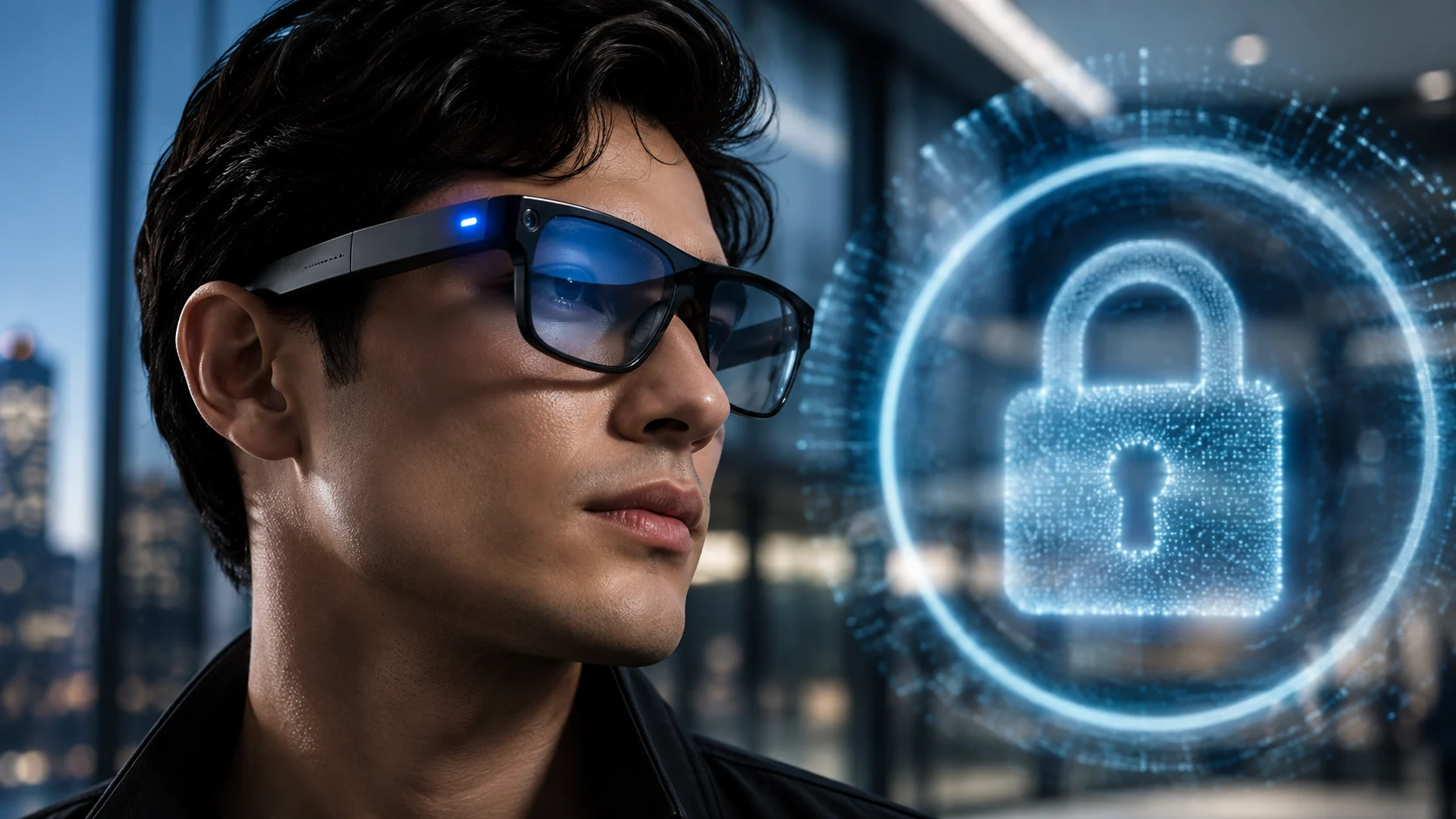
Samsung AI glasses are walking into a tech moment that feels both exciting and awkward, because the next big screen might not be a screen at all. It might be a pair of normal-looking glasses that can listen, see, translate, summarize, guide, and quietly turn daily life into a hands-free computing session. That sounds futuristic in the best way until one small detail steals the spotlight: the privacy light. A tiny indicator on smart glasses may seem like a minor hardware choice, but in 2026 it has become the difference between helpful wearable AI and a social trust problem waiting to happen. Samsung’s new eyewear push is not just about specs, design, or artificial intelligence; it is about whether people will feel comfortable standing next to someone whose glasses might be capturing the world around them.
The drama around Samsung AI glasses is not random, and it is not just another internet overreaction. Smart glasses carry a different kind of tension from phones, watches, earbuds, or even VR headsets because they sit directly on the face and point outward at everyone else. A phone camera is visible when someone raises it, while glasses can blend into a coffee shop, subway line, airport lounge, classroom, or office meeting without changing the wearer’s body language. That creates a new etiquette problem for the AI era, where convenience for the user can feel like uncertainty for everyone nearby. Samsung’s privacy light is supposed to answer that concern, but the bigger question is whether a glowing indicator can carry the full weight of public trust.
Why Samsung AI Glasses Became a Privacy Story
The headline around Samsung AI glasses is bigger than a wearable launch because it lands at the exact moment when people are already tired of invisible data collection. Consumers have spent years learning that apps track behavior, phones listen for commands, cameras scan faces, and AI systems can turn small signals into surprisingly detailed profiles. Now that same intelligence is moving onto the face, where a device can understand what the user sees and potentially respond in real time. That shift makes smart glasses feel more intimate than a smartwatch and more socially complicated than a smartphone. Samsung is entering a category where the product has to be useful, stylish, and emotionally acceptable all at once.
The privacy light matters because it gives bystanders a visible clue that recording or camera-based features may be active. In theory, this turns an invisible action into a social signal, similar to a red recording dot on a phone or a webcam light on a laptop. The problem is that glasses live in a messier world than laptops, where people move fast, lights shift, faces turn, and strangers do not always know what a tiny LED means. A privacy indicator only works if people notice it, understand it, and trust that it cannot be easily bypassed. That is why the conversation around Samsung’s AI eyewear has quickly moved from “What can it do?” to “Can people trust what it is doing?”
Samsung’s timing is also important because the smart glasses market has already been shaped by earlier attempts, public jokes, and awkward first impressions. The first wave of camera glasses created a strong cultural memory: people did not like feeling watched by someone’s face computer. Newer AI glasses look more normal, but that normal look is both the selling point and the risk. If a device looks like ordinary eyewear, people may accept it more easily, but they may also find it harder to know when technology is active. That is the strange design conflict Samsung has to solve as it tries to make wearable AI feel natural without making public spaces feel monitored.
The New Wearable AI Pitch
Samsung is not presenting these glasses as a niche toy for early adopters who want to look like they stepped out of a sci-fi demo. The pitch is much broader and more everyday, built around the idea that AI should be available without pulling out a phone every few minutes. With Android XR, Gemini-powered assistance, and Samsung’s own ecosystem layered into the experience, the glasses are designed to understand context through voice, vision, and location-aware computing. That means the wearer could ask for directions while walking, get live translation during a conversation, summarize a message, identify something in view, or receive reminders without staring at a slab of glass. The ambition is clear: make AI feel less like an app and more like a companion that rides along with the user’s normal day.
This is exactly why the glasses are more culturally sensitive than a phone upgrade. A faster chip or brighter screen affects the owner, but outward-facing AI affects everyone around the owner. When wearable cameras combine with real-time intelligence, the device is no longer just capturing memories; it can interpret scenes, read text, recognize objects, and help the user act on what it sees. That capability is powerful for accessibility, travel, work, education, and navigation, but it also raises questions about consent in shared environments. Samsung has to convince buyers that the glasses are useful while convincing everyone else that they are not being turned into background data.
The design partnerships around stylish eyewear also show where this category is heading. Tech companies learned that people do not want smart glasses that scream “developer kit” or “prototype headset” in public. They want frames that look like something they would actually wear to brunch, class, a meeting, or a night walk through the city. That fashion-first strategy could help Samsung avoid the clunky reputation that slowed earlier augmented reality hardware. Still, when the glasses look too normal, the privacy light becomes even more important because it may be the only visible reminder that the frames are not just frames.
The Privacy Light Is a Tiny Feature With Huge Pressure
The privacy light is small hardware with a big social job. It is supposed to tell nearby people when the camera is active, giving the device a visible boundary between passive eyewear and active capture. That sounds simple, but real-world trust is rarely simple, especially when people already worry about AI systems collecting more data than they realize. A light can signal transparency, but it cannot explain what is being captured, where the data goes, how long it is stored, or whether AI analysis is happening on-device or in the cloud. For Samsung, the light is a starting point, not the whole privacy answer.
A strong privacy system for AI glasses needs layers that work together. The light should be visible enough to matter, difficult to cover or disable, and connected to software rules that shut down capture if the indicator is blocked. The glasses also need clear user controls, obvious recording states, reliable permission settings, and transparent data policies that normal people can understand without reading a legal novel. Wear detection can add another layer by making sure the camera does not work when the glasses are removed or used in a suspicious way. These details sound technical, but they shape whether the product feels responsible or creepy.
The challenge is that bystanders do not get to tap through a privacy menu before someone else wears AI glasses near them. They only get signals in the moment, and those signals must be intuitive. A small LED may be enough for people who follow tech news, but it may not mean much to someone sitting across the room at a café. Samsung may need to educate users and the public about what the light means, the same way people gradually learned laptop webcam lights and phone recording icons. Without that shared understanding, the privacy light could become a feature that satisfies product checklists but does not fully calm real-world discomfort.
Why This Drama Is Really About Public Etiquette
The privacy debate around Samsung’s glasses is not only about data security; it is also about manners. Technology often moves faster than social rules, and smart glasses are a perfect example of that gap. Nobody needed a formal class to learn that holding up a phone can mean someone is taking a picture, but face-worn cameras blur that signal. People may not know whether the wearer is recording, translating, asking AI for help, reading a notification, or simply looking in their direction. That uncertainty can make normal interactions feel slightly off, even when the user has harmless intentions.
Public spaces will need new norms if AI glasses become common. Restaurants may need policies about recording at tables, offices may need rules for meetings, schools may need classroom guidelines, and gyms may need stronger restrictions around cameras. Concert venues, airports, medical facilities, and government buildings could also treat AI eyewear differently from regular glasses. These rules will not be created by Samsung alone, but Samsung’s design choices will influence how quickly institutions react. If the glasses feel respectful by default, the category has a better chance of growing without immediate backlash.
There is also a generational angle to the drama. Younger users often adopt new gadgets quickly, especially when the device saves time, looks good, and connects smoothly with existing apps. At the same time, Gen Z is extremely aware of being recorded, clipped, posted, stitched, and judged online without context. That means the same audience that may love hands-free AI could also be skeptical of always-available cameras in social spaces. Samsung cannot assume that younger buyers will ignore privacy concerns just because the product feels futuristic.
What Samsung Gets Right So Far
Samsung appears to understand that smart glasses cannot win on hardware alone. The company is treating privacy as part of the product story, not as a small note buried after the AI demo. That matters because users have become more cautious about devices that see and hear the world around them. By including a privacy light and anti-abuse ideas like wear detection, Samsung is signaling that the glasses are being designed with public perception in mind. The smartest move here is not pretending the privacy concern does not exist.
Samsung also benefits from building within a broader Android XR ecosystem rather than trying to invent the entire wearable future alone. Android XR gives developers and partners a more familiar platform for building experiences across headsets, glasses, and spatial devices. Gemini integration gives the glasses a clearer AI identity, especially if the assistant can understand what the user is looking at and respond naturally. Samsung’s own device ecosystem can also make the glasses feel more useful for people already using Galaxy phones, watches, tablets, earbuds, and laptops. If the company connects all of that smoothly, the glasses could become more than a novelty accessory.
The fashion angle is another smart play. Wearables succeed when people forget they are wearing technology, or when the technology fits their identity instead of fighting it. If Samsung’s frames look like real eyewear rather than a mini headset, the product has a better chance of becoming part of daily style. That matters for adoption because most people will not wear face tech that makes them feel awkward in public. The trick is making the glasses look normal without hiding the fact that they are capable of advanced AI features.
Where Samsung Still Has to Prove Itself
The biggest unanswered question is how the glasses will handle data in real situations. AI features may need visual context, voice input, location signals, messages, and app connections to feel genuinely useful. Each of those inputs can improve convenience, but each one also adds privacy risk if the rules are vague or the controls are buried. Users will want to know what is processed locally, what is sent to servers, what is saved, and what can be deleted. Bystanders will want assurance that being near someone wearing the glasses does not mean becoming part of an invisible AI session.
Battery life and performance will also shape the privacy conversation in a sneaky way. If the glasses can last long enough for all-day use, they become more practical, but they also become more present in public life. If camera-based AI features are limited by battery drain, users may activate them in short bursts, which makes social signaling easier. If the device is powerful enough to run constant context awareness, Samsung will need stronger rules for when the camera is actually active. The better the hardware gets, the more important the privacy architecture becomes.
Samsung also needs to avoid making privacy feel like a marketing slogan. Tech audiences have heard plenty of “privacy-first” promises that became complicated once real products shipped, settings changed, or business incentives shifted. Clear defaults matter more than polished launch language. The safest version of these glasses would make privacy protections automatic, visible, and hard to weaken by accident. The worst version would depend on users manually finding settings that most people never touch.
The Bigger Trend Behind AI Glasses
Samsung’s move is part of a wider shift from pocket computing to ambient computing. For years, smartphones trained people to open apps, tap screens, search manually, and manage notifications through a rectangle. AI assistants are pushing the opposite direction, where technology listens for intent and acts through context instead of waiting for a traditional interface. Smart glasses fit that future because they can sit at eye level, understand surroundings, and offer help at the moment it is needed. That makes them one of the most important wearable categories to watch on Wearable Devices over the next few years.
This trend could reshape how people travel, shop, learn, and work. A traveler could read foreign signs through live translation, a mechanic could ask for hands-free repair guidance, a student could get explanations for visual material, and a commuter could receive directions without staring down at a phone. Accessibility could be one of the strongest use cases, especially for people who benefit from scene descriptions, object recognition, or voice-first interaction. The productivity angle is also obvious because quick summaries, reminders, and contextual prompts could reduce the constant phone-checking loop. The promise is huge, which is exactly why trust has to be built early.
There is also a major platform battle hiding inside the product. Smart glasses could become the next gateway to search, apps, AI subscriptions, payments, navigation, shopping, and messaging. If users start asking glasses for answers instead of opening phone apps, the company that controls the assistant gains enormous influence over daily behavior. Samsung, Google, Meta, Apple, and other players all understand that the next interface shift may not look like a phone replacement at first. It may look like a lightweight accessory that slowly becomes the first place people ask questions.
Practical Insight for Buyers
For early buyers, the smartest approach is to judge Samsung AI glasses by real-world usefulness, not just the launch demo. Ask whether the glasses solve a daily problem that your phone cannot solve easily. Live translation, navigation, quick capture, accessibility, and hands-free AI can be genuinely valuable, but only if they work smoothly and do not make social situations uncomfortable. Buyers should also check whether the privacy light is obvious, whether camera controls are simple, and whether recording states are impossible to miss. A wearable this personal should earn its place on your face, not just ride hype from a keynote.
Battery life should be another major buying factor. Smart glasses that die before the afternoon will feel like a tech demo, while glasses that last through a full day could become part of a daily routine. Comfort matters just as much because even a brilliant AI assistant becomes annoying if the frames feel heavy, hot, or awkward after an hour. Prescription support, lens options, frame styles, water resistance, repairability, and replacement parts will also matter for normal users. The best smart glasses will not feel like gadgets pretending to be eyewear; they will feel like eyewear that happens to be smart.
Privacy settings deserve the same attention as camera quality or AI features. Before using smart glasses in public, owners should understand what the indicator light means, how to stop capture quickly, and what happens to recorded or analyzed data. They should also think about where glasses are appropriate, because not every location that allows phones will welcome face-worn cameras. A respectful user will be clear in sensitive situations, remove the glasses when needed, and avoid treating other people as background content. In the AI glasses era, good tech etiquette may become part of being a good gadget owner.
Impact on the Gadget Market
If Samsung gets this right, AI glasses could become the most important wearable category since smartwatches. The market has been waiting for a device that makes AI feel more natural than typing prompts into a phone or laptop. Glasses offer that possibility because they combine voice, sight, movement, and context in one always-near interface. That could pull attention away from smartphones for small tasks, even if phones remain the main computing device. The first successful AI glasses will not replace the phone overnight, but they could reduce how often people need to touch it.
This would also create pressure across the entire gadget industry. Phone makers would need tighter AI integration, app developers would need hands-free experiences, accessory brands would chase compatible designs, and privacy regulators would pay closer attention to wearable cameras. Retailers might need to explain AI glasses in stores with the same care once given to smartphones and smartwatches. Reviewers would need new testing categories, including bystander awareness, privacy indicator visibility, social comfort, and real-world AI accuracy. The product category is new enough that even the review language still has to catch up.
The drama could actually help Samsung if the company handles it well. Privacy controversy often sounds negative, but it can also force clearer standards before a product becomes mainstream. If Samsung uses the discussion to build stronger protections, explain them better, and make the privacy light more meaningful, the glasses could benefit from the scrutiny. Consumers may trust a product more when the uncomfortable questions have been addressed openly. Silence would be riskier than debate because smart glasses are too visible, too personal, and too socially sensitive to launch without a serious trust conversation.
Conclusion: Samsung AI Glasses Need Trust First
Samsung AI glasses are not just another shiny wearable entering a crowded gadget market. They represent a bigger shift toward AI that moves with users, sees what they see, and offers help without demanding a phone screen every time. That future could be genuinely useful, especially for travel, accessibility, communication, work, and everyday productivity. But the same features that make the glasses exciting also make them socially delicate, because wearable cameras change how people feel in shared spaces. The privacy light is Samsung’s first public test, and it needs to be more than a tiny glow on the frame.
The real challenge is not whether Samsung can build stylish frames or connect them to powerful AI. The company has the hardware reach, software partnerships, and ecosystem strength to make smart glasses feel polished. The harder challenge is earning trust from people who are not wearing the device but may still be affected by it. If Samsung can make privacy visible, controls simple, data rules clear, and public etiquette part of the product culture, the glasses could help define the next era of wearable computing. If not, the privacy light drama may become the warning signal everyone remembers before AI glasses ever get their mainstream moment.