
Galaxy S27 Ultra Camera Could Lose Its 3x Lens
 Vortixel
15 minutes read
Vortixel
15 minutes read
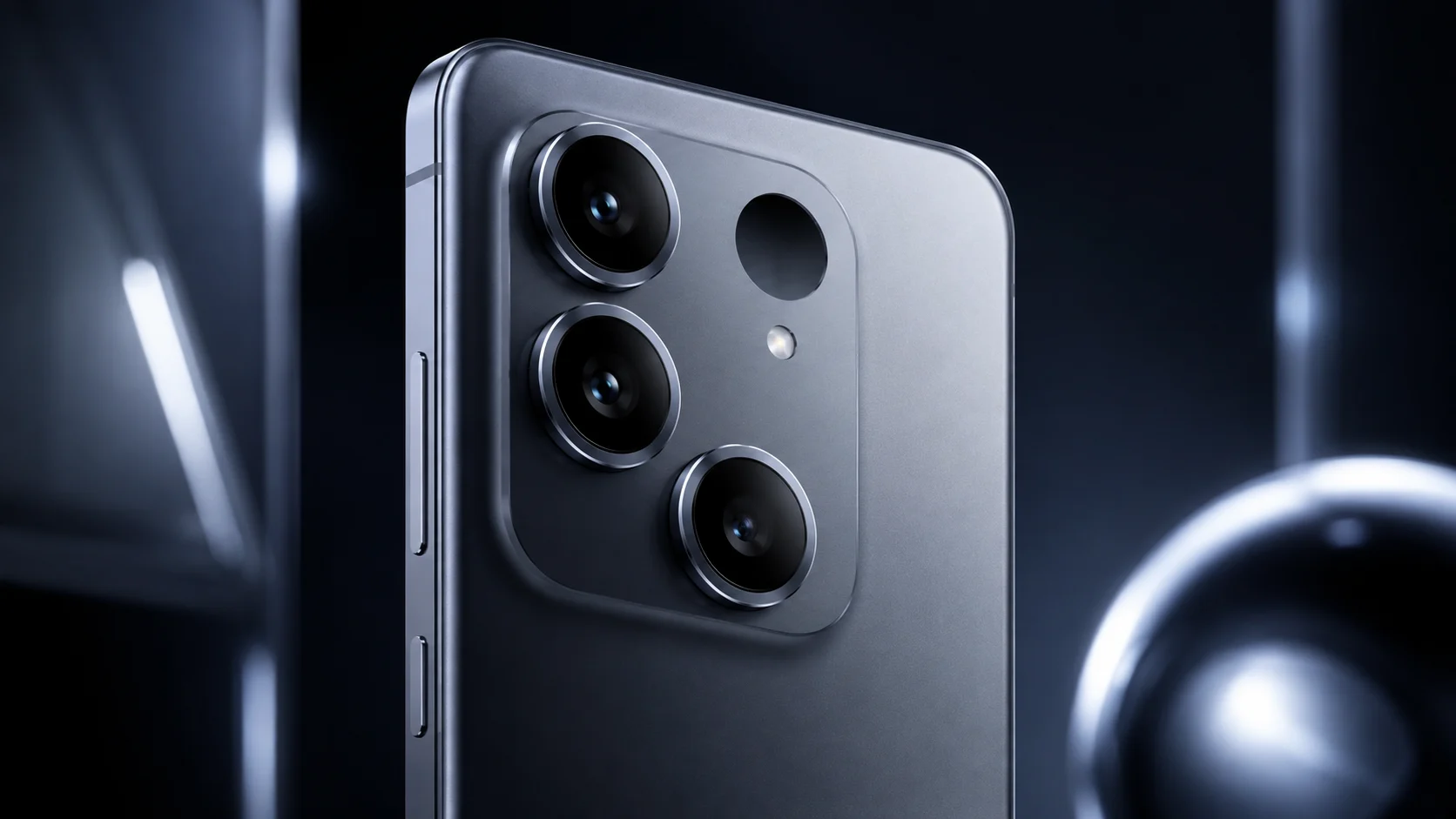
For years, Samsung’s Ultra phones have made a simple visual promise before the camera app even opens: more lenses mean more possibilities. That idea may be about to change. A new industry report claims the next flagship could move from four rear cameras to three, removing the short-range telephoto lens that currently handles 3x optical zoom. The rumored Galaxy S27 Ultra camera system would instead depend on its main sensor and longer telephoto camera to cover the missing range. Nothing has been officially announced, but the possibility already raises a bigger question than the camera count alone: can smarter processing make one less lens feel like an upgrade rather than a downgrade?
That question matters because the 3x camera is not some obscure component used only by professional photographers. It sits in one of the most useful parts of a smartphone’s zoom range, close enough for portraits, pets, food, street scenes, concerts, and everyday details. Users may not know which lens is active when they tap the 3x button, but they understand the result when a face looks naturally framed without forcing them to walk closer. Removing that camera would therefore affect a familiar shooting habit, not merely a line on a specification sheet. Samsung would need to prove that the replacement experience is at least as reliable in bright daylight, dim restaurants, moving scenes, and indoor portraits.
Why the Galaxy S27 Ultra Camera May Change
The reported redesign suggests Samsung may be reconsidering what an Ultra camera system needs to look like in a market increasingly shaped by computational photography. Instead of assigning every zoom level to separate hardware, manufacturers can use large, high-resolution sensors to crop into the image while preserving enough detail for a usable result. The rumored setup would retain a high-resolution main camera, an ultrawide camera, and a longer telephoto unit while allowing software to fill the distance between them. In theory, that creates a cleaner system with fewer overlapping components. In practice, its success would depend on sensor size, lens quality, image processing, stabilization, and how quickly the phone can switch between different focal lengths.
There is also a practical engineering argument for reducing the number of rear cameras. Every module consumes physical space inside a phone that must also accommodate a large battery, cooling hardware, wireless charging coils, antennas, speakers, and an increasingly complex motherboard. Camera sensors and stabilization systems are especially demanding because they require both depth and room to move. Dropping one module could give Samsung more freedom to enlarge another sensor, improve the remaining telephoto lens, redesign the camera housing, or make internal packaging more efficient. The decision would make more sense if the saved space produced a visible benefit elsewhere rather than simply lowering manufacturing complexity.
Cost may be another part of the equation, even at the premium end of the market. Flagship phones are becoming more expensive to build as advanced processors, memory, displays, batteries, and camera parts compete for the same budget. A company can keep adding components, but every extra part must justify its impact on the final experience. Samsung may believe that the aging short telephoto sensor no longer delivers enough value compared with what a modern main camera can achieve through sensor cropping. That reasoning is understandable, although buyers paying Ultra-level prices will expect the change to improve photography rather than merely protect profit margins.
What the Dedicated 3x Lens Does Today
A dedicated 3x telephoto camera gives photographers something that digital zoom cannot automatically guarantee: a lens designed to capture a narrower field of view optically. That focal range is particularly flattering for people because it reduces the exaggerated facial proportions commonly produced when a wide main camera is held too close. It also lets users isolate subjects from cluttered backgrounds without stepping far away. At events, the lens can bring a performer, speaker, athlete, or architectural detail closer while keeping the framing manageable. The current Ultra generation uses separate short and long telephoto cameras, giving it dedicated hardware around both 3x and 5x magnification.
The usefulness of 3x zoom becomes obvious when someone tries to photograph a child or pet without interrupting the moment. Moving physically closer can change the subject’s behavior, while staying back with the main camera leaves too much empty space around the frame. A short telephoto lens offers a comfortable middle ground that feels more intimate without becoming difficult to aim. It is also easier to use than a longer lens indoors, where walls and furniture limit how far a photographer can move. This is why losing the dedicated module may sound more serious to everyday users than removing a feature built for extreme zoom demonstrations.
However, dedicated hardware does not always guarantee superior output. Small telephoto sensors can struggle when light levels fall, forcing the camera software to use slower shutter speeds, aggressive noise reduction, or even a crop from the main camera. Many phones quietly switch between lenses depending on brightness, subject distance, and stabilization conditions. The camera interface may still display 3x while the device chooses whichever sensor it believes will produce the strongest image. Samsung could argue that replacing an inconsistent small sensor with a predictable high-quality crop would simplify this behavior and make results more uniform.
How Samsung Could Replace Optical 3x Zoom
The most obvious replacement would be an in-sensor crop from the primary camera. A high-resolution sensor captures far more pixels than a standard final image requires, allowing the phone to use the center portion of the frame as a tighter photograph. When the optics, sensor, and processing pipeline are strong enough, this technique can produce convincing results at moderate zoom levels. It is not identical to using a separate telephoto lens because the perspective still comes from the main camera’s physical position and focal length. Still, users may care less about the method if the final photo remains sharp, natural, and consistent.
Samsung could also combine information from multiple cameras rather than relying on a single cropped frame. The main sensor might provide brightness and texture, while the longer telephoto camera contributes detail from the center of the image. Computational fusion could then merge those inputs into a photograph designed to look cleaner than either source would appear alone. This approach sounds elegant, but it becomes complicated when subjects move, leaves shake, hair blows, or lighting changes between frames. Poor fusion can create double edges, artificial textures, or patches of detail that look strangely disconnected from the rest of the picture.
Another possibility involves a larger or more advanced main sensor that is intentionally designed to support multiple effective focal lengths. Rather than treating cropped zoom as an emergency feature, Samsung could optimize the sensor readout, lens sharpness, and image pipeline around commonly used levels such as 2x and 3x. Some modern camera systems already market sensor-based zoom as an optical-quality option when enough native resolution remains. The important phrase is “optical quality,” not true optical zoom, because the lens itself does not physically change focal length. Samsung’s challenge would be making that distinction irrelevant during actual use.
Fewer Cameras Do Not Automatically Mean Less
Smartphone marketing has trained buyers to count visible lenses as if each circle on the back represents an independent upgrade. That logic was never completely reliable. Budget phones have often included weak macro or depth sensors mainly to make their camera islands look more impressive, while some excellent premium cameras achieve better results with fewer modules. Image quality depends on the entire system, including the sensor, aperture, optics, stabilization, autofocus, color science, and processing. A three-camera Galaxy S27 Ultra could therefore outperform a four-camera predecessor if Samsung invests more heavily in the cameras that remain.
The real issue is coverage rather than quantity. A strong flagship camera should move smoothly from ultrawide landscapes to natural everyday framing, portraits, medium zoom, and distant subjects without obvious drops in detail or color. Four cameras can make those transitions easier because each lens handles a narrower role. Three cameras can still succeed, but the hardware and software must bridge wider gaps between focal lengths. Buyers will notice immediately if 3x photos appear softer, noisier, or more processed than images captured at 1x and 5x.
This is where Samsung’s reputation creates both an advantage and a problem. The company has years of experience tuning multi-camera systems and gathering real-world data from millions of Galaxy devices. It understands how people switch focal lengths and which shooting conditions expose hardware limitations. At the same time, Ultra customers are highly attentive to camera changes because photography is one of the main reasons they choose the most expensive model. A component removal will be judged more harshly than an ordinary specification adjustment, especially if Samsung describes the new phone as a major leap forward.
The Biggest Risk Is Portrait Photography
Portraits may become the most important test for the rumored redesign. A 3x lens provides comfortable working distance and a compressed look that many users associate with dedicated cameras. It lets the photographer fill the frame with a face or upper body while avoiding the stretched features that can appear when using a wide lens too closely. A crop from the main sensor can imitate the framing, but it may not reproduce the same optical rendering, depth separation, or fine detail. Computational blur can help, although inaccurate hair edges or overprocessed skin can quickly break the illusion.
Low-light portraits would be even more revealing. Restaurants, city streets, parties, and indoor events are exactly where people want flattering zoom without carrying additional equipment. A large main sensor may collect more light than a small 3x telephoto sensor, potentially giving cropped images an advantage in dark conditions. Yet cropping also magnifies noise and reduces the amount of native image data available for the final photograph. Samsung would need to balance brightness, shutter speed, facial detail, skin tone, and motion without turning every portrait into a heavily processed painting.
Video creators would have their own concerns because a missing focal length can affect transitions during recording. Smoothly moving from 1x to 3x and then 5x requires consistent exposure, color, focus, and stabilization across the system. If 3x becomes a crop from the main sensor, the transition could potentially look smoother because there would be no physical lens switch at that point. It could also reveal a sudden decline in texture if the crop lacks enough detail. The best outcome would make the change invisible, allowing creators to reframe a scene without thinking about which camera is operating underneath.
A Wider Shift Toward Computational Cameras
The rumor fits a broader movement across the smartphone industry, where software increasingly determines how camera hardware is used. Modern phones rarely produce a final image from one untouched exposure. They capture multiple frames, align them, reduce noise, recover highlights, brighten shadows, identify faces, sharpen textures, and adjust color within moments. Zoom photography is becoming another computational problem that manufacturers believe can be solved through sensor data and machine learning. The danger is that technically cleaner images can become visually less believable when processing grows too aggressive.
That tension is especially relevant for Samsung, whose camera style has often favored bright, vivid, immediately shareable photos. Many users enjoy that look because it produces energetic images without editing. Others prefer softer sharpening, calmer colors, and textures that resemble what their eyes actually saw. Removing a lens would place even more responsibility on the processing pipeline, making Samsung’s choices about contrast and detail more visible. The company would need to resist the temptation to hide missing optical information behind excessive sharpening and artificial texture reconstruction.
Artificial intelligence will probably become part of the conversation, but the label alone will not answer the practical concerns. AI can recognize subjects, predict detail, reduce blur, and improve exposure, yet it cannot change the physical light that reached the sensor. The most trustworthy camera systems use computation to preserve a scene rather than inventing one. If Samsung relies on generative reconstruction at intermediate zoom levels, users may question whether fine patterns, distant lettering, or facial details were captured or estimated. Transparency and consistency will matter as much as dramatic before-and-after demonstrations.
What Samsung Could Gain From the Removal
A removed camera module could create room for improvements that users have requested for years. Samsung might use the available space for a physically larger long-range telephoto sensor, stronger stabilization, brighter optics, a larger battery, or better thermal management. Each of those changes could have a greater daily impact than preserving an underused or aging short telephoto component. A larger 5x sensor could improve distant photography while also contributing better data to computational zoom at intermediate levels. The redesign would feel strategic if those gains were substantial enough to outweigh the lost dedicated focal length.
There could also be a design benefit. Ultra phones have developed increasingly complex camera islands, with multiple rings occupying a large section of the rear panel. Reducing the number of modules could lead to a cleaner layout, less visual clutter, or a more balanced device when placed on a table. It might also reduce weight slightly, although meaningful weight changes usually require broader structural decisions. Design alone would not justify weaker photography, but a more coherent exterior could support the idea that the Ultra line is becoming more refined rather than simply accumulating hardware.
Reliability is another possible advantage that receives less attention. Fewer moving stabilization assemblies and camera modules mean fewer components that must be calibrated and synchronized. Manufacturing consistency can affect autofocus accuracy, lens alignment, edge sharpness, and transitions between cameras. A simpler system might be easier to tune across millions of units, reducing variation between individual phones. That benefit would remain invisible to most customers, but it could contribute to a more dependable camera experience over the device’s lifetime.
Why Ultra Buyers May Still See a Downgrade
The word “Ultra” creates an expectation that buyers will receive the maximum version of everything Samsung can offer. Removing hardware from that model can therefore feel wrong even before image comparisons appear. Customers do not purchase a premium flagship because they want the company to find the minimum number of cameras required for acceptable results. They choose it because they expect flexibility, headroom, and specialized tools that cheaper models lack. Samsung must communicate a clear advantage, or the triple-camera design could look like cost cutting dressed as simplification.
The timing could also make the decision risky. Premium smartphone competition is no longer limited to processor speed or display brightness, because most flagships already perform smoothly and look excellent. Cameras remain one of the few areas where consumers can notice meaningful differences during ordinary use. Rivals are investing in large telephoto sensors, variable apertures, advanced portrait modes, and increasingly ambitious imaging partnerships. If Samsung removes a lens while competitors add more capable optical systems, specification comparisons may become uncomfortable even when real-world performance remains competitive.
There is also a trust issue created by software-dependent upgrades. Hardware improvements are easy to understand because a larger sensor or brighter lens remains physically present throughout the life of the device. Computational features can be harder to evaluate, and their behavior may change after updates. A camera that looks excellent in carefully selected launch samples may behave differently with children, pets, movement, mixed lighting, or darker skin tones. Reviewers will need to test the rumored system across messy real-world situations rather than relying on controlled daylight scenes.
What Potential Buyers Should Watch For
Anyone interested in the Galaxy S27 Ultra should focus less on the number of cameras and more on the gaps between them. The key comparison will be image quality at 2x, 3x, 4x, and 5x, especially when lighting is imperfect. Look closely at hair, fabric, foliage, text, animal fur, and facial features because those textures quickly expose weak cropping or aggressive reconstruction. Consistency also matters, so compare white balance and skin tone as the phone moves through different zoom levels. A strong system should not make every focal length look as though it came from a completely different device.
Shutter speed should receive equal attention because detail is meaningless when a moving subject becomes blurry. A dedicated telephoto camera may produce a sharper optical view, but a brighter main sensor crop could freeze motion more effectively indoors. Reviewers should test people walking, pets turning their heads, musicians performing, and vehicles moving through the frame. Those situations reveal whether Samsung’s processing can maintain detail without creating ghosting or unnatural edges. They are also more representative of daily photography than static buildings under clear skies.
Portrait mode should be tested at multiple distances rather than through one carefully framed headshot. The phone needs to recognize glasses, curls, hats, hands, loose clothing, and objects that overlap with the subject. Background blur should fade naturally instead of forming a flat cutout around the person. Skin texture should remain present without becoming harsh or waxy. If the new camera system handles those details confidently, most users may stop caring whether the image came from a dedicated 3x lens.
The Rumor Is Early, and Details Can Change
It is important to treat the reported camera configuration as a developing plan rather than a finished product announcement. Flagship phones move through multiple prototypes, supplier discussions, testing stages, and internal decisions before mass production begins. A lens design shared with component partners may reflect the current direction without guaranteeing the final retail hardware. Samsung could revise the system if image quality, production yield, cost, or market feedback fails to meet expectations. Even accurate leaks can describe a device that changes significantly before its public launch.
The final camera experience will also depend on details that a simple sensor list cannot explain. Aperture size, sensor dimensions, pixel design, lens coating, autofocus technology, stabilization range, readout speed, and processing all influence image quality. Two phones with identical megapixel numbers can produce completely different photographs because those numbers reveal only a small part of the system. This is why declaring the change a downgrade today would be premature. It is equally premature to assume computation will replace the missing lens perfectly.
A Smaller Camera Count Faces a Bigger Test
The rumored Galaxy S27 Ultra camera redesign could become one of Samsung’s smartest simplifications or one of its most controversial compromises. Removing the dedicated 3x telephoto lens would challenge a feature that quietly supports portraits, events, street photography, pets, food, and everyday framing. Samsung can make the change work if the main sensor delivers genuinely strong cropped zoom and the longer telephoto camera helps create smooth, consistent coverage. The company must also use the saved space or cost to produce improvements that buyers can see and feel. Anything less would make the missing lens difficult to defend on a phone carrying an Ultra name and an Ultra price.
Ultimately, the camera count will not decide whether the phone succeeds. The photographs will. If users can tap 3x in a dim room, capture a moving subject, and receive a natural image with convincing detail, the removed lens may quickly become trivia. If the results look soft, artificial, or inconsistent, no amount of AI branding will prevent the redesign from feeling like a step backward. Samsung is reportedly betting that intelligence can replace specialization, and the Galaxy S27 Ultra may become the clearest test yet of whether smartphone photography is ready for that trade.